Key takeaways
- Measure the path, not just the room: Note your narrowest doorway, stair turn, and elevator depth before anything else. Flat-pack sofas ship in cartons roughly 30–40 inches long, which is why they beat pre-assembled loveseats in walk-up buildings almost every time.
- Look for hardwood or plywood frames: Solid wood and multi-ply beat particleboard for screw retention — chipboard strips out after one or two disassemblies. If you plan to move within a year, frame material matters more than upholstery.
- Check cushion density and cover removal: High-density foam or a foam-over-webbing sandwich holds shape; loose polyester fill flattens fast. Zippered, washable covers let you refresh instead of replace, and they make DIY re-stuffing trivial later.
- Decide whether you need it to sleep someone: Convertible futons and reclining backrests add real guest capacity but usually mean a firmer seat and a metal hinge mechanism. If overnight guests are rare, a fixed loveseat will be more comfortable day to day.
- Count the useful extras honestly: USB ports, cup holders, and side pockets earn their keep in a studio where the sofa doubles as your desk and nightstand. Skip them if you already have a side table — they add cost and bulk.
What's inside
Anyone who has tried to wrestle a full-size three-seater through a 30-inch apartment doorway knows the real problem with small-space furniture shopping: the listing photo never tells you whether the thing will actually fit through the stairwell, let alone the room. Manufacturers photograph compact sofas in cavernous studios with wide-angle lenses, and a “small” sectional can still eat 80 inches of wall. Meanwhile the genuinely apartment-sized options often cut corners where it counts — stapled frames, foam that pancakes in a season, legs that wobble the first time someone sits down hard.
I build and repair furniture on weekends, which means I’ve had the covers off enough budget sofas to know what separates a decent flat-pack from a landfill candidate. This guide looks at six small-space sofas through that lens: frame material, how the panels join, whether cushion covers actually come off, and how honest the footprint numbers are. I’ve flagged which ones assemble tool-free, which ones benefit from a few DIY reinforcements, and which layouts each shape suits best.
As an Amazon Associate we earn from qualifying purchases.


How to Choose a/an Sofa Small Space (2026)
- Measure the path, not just the room: Note your narrowest doorway, stair turn, and elevator depth before anything else. Flat-pack sofas ship in cartons roughly 30–40 inches long, which is why they beat pre-assembled loveseats in walk-up buildings almost every time.
- Look for hardwood or plywood frames: Solid wood and multi-ply beat particleboard for screw retention — chipboard strips out after one or two disassemblies. If you plan to move within a year, frame material matters more than upholstery.
- Check cushion density and cover removal: High-density foam or a foam-over-webbing sandwich holds shape; loose polyester fill flattens fast. Zippered, washable covers let you refresh instead of replace, and they make DIY re-stuffing trivial later.
- Decide whether you need it to sleep someone: Convertible futons and reclining backrests add real guest capacity but usually mean a firmer seat and a metal hinge mechanism. If overnight guests are rare, a fixed loveseat will be more comfortable day to day.
- Count the useful extras honestly: USB ports, cup holders, and side pockets earn their keep in a studio where the sofa doubles as your desk and nightstand. Skip them if you already have a side table — they add cost and bulk.
The Best Sofa Small Space (2026)s Reviewed
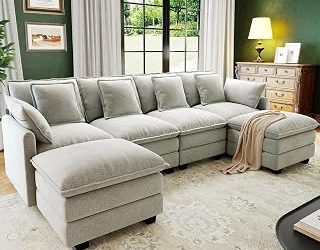
73.6″ Convertible Sectional with Reversible Ottoman
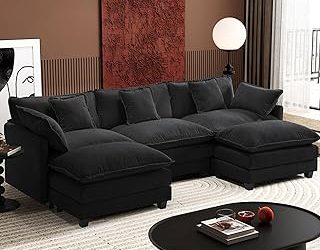
The reversible ottoman is the genuinely clever part here: slide it left, right, or pull it out as a standalone seat, which means one piece of furniture adapts to three different room layouts. At 73.6 inches it’s the largest option on this list, so measure your wall twice — but assembly is straightforward and the L-shape swallows a surprising amount of lounging.
CHYMSUN 57″ Faux Leather Loveseat
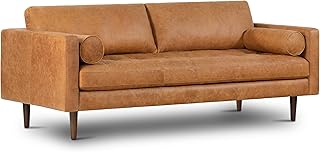
A tidy mid-century silhouette with tufting, USB charging ports, and side pockets, which makes it the obvious pick for a dorm or home office where the sofa is also your charging station. Faux leather wipes clean in seconds, though I’d condition the seams occasionally and keep it out of direct sun to slow cracking.
Welzona 51″ Teddy Loveseat
Tool-free setup over an all-wood frame is the combination I look for in flat-pack seating, and the teddy fabric feels considerably more expensive than it is. Washable covers seal the deal for anyone with pets or small kids — this is the one you can actually maintain rather than just tolerate.
Urhanherry 47″ Chenille Mini Couch
At 47 inches this is the smallest sofa here, which makes it the right answer for a bedroom reading nook or a narrow entry where anything wider blocks traffic. The chenille is soft and the cushion cover pulls off for washing; add a firmer foam insert if you want it to feel more supportive over time.
Pipishell 66″ Corduroy Futon Sofa Bed
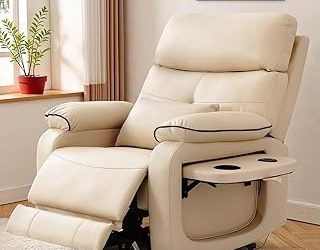
Adjustable backrest and armrests give you a proper recline range rather than the usual two-position hinge, and corduroy hides wear better than smooth fabrics. It’s the strongest choice if a guest bed is non-negotiable, and the 66-inch length keeps it viable in a small living room.
Frequently Asked Questions
Will a flat-pack sofa hold up long-term?
Yes, if the frame is wood or plywood rather than particleboard. The weak point is usually the hardware, not the structure — check and retighten bolts after the first month, and again every six months or so.
Can I fit a sectional in a studio apartment?
Often, but only if you float it away from the wall or use it as a room divider. A 73-inch L-shape works when the long side runs along your longest wall and the chaise faces into open floor rather than a walkway.
How do I stop a small sofa from sliding on hard floors?
Swap the stock plastic feet for rubber-tipped or felt-and-rubber glides — a five-minute job with a screwdriver. It also protects laminate and makes the sofa feel more planted when you sit down.
Is a futon comfortable enough for everyday use?
Modern corduroy and PU futons are fine for daily sitting but firmer than a traditional loveseat. If it’s your primary seat, plan on adding a seat topper or a couple of dense lumbar cushions.
Final Thoughts
For most small rooms the Welzona 51″ teddy loveseat is the smartest buy — all-wood frame, tool-free build, and washable covers you can actually maintain. If you need overnight guest capacity, the Pipishell 66″ corduroy futon offers the most usable recline positions for the space it occupies, and the 73.6″ convertible sectional with reversible ottoman is worth the extra footprint when you want a layout you can reconfigure as your room changes.