Key takeaways
- Frame construction: Look for solid wood or a metal-reinforced base rather than pure engineered board. If the listing dodges the question, check the weight capacity instead — anything rated under 600 lbs total for a three-seater is cutting corners somewhere structural.
- Assembly method: Tool-free interlocking designs genuinely work now, and they save you an hour of hex-key wrist pain. Bolted assemblies aren’t worse, but budget for a socket driver and a helper for the heavy panels.
- Seat depth and fill: Deep seats over 22 inches are wonderful for lounging and awkward for anyone who wants their feet flat on the floor. High-density foam holds its shape; loose polyfill flattens within a season.
- Fabric practicality: Chenille is soft and forgiving on pet hair but shows water marks. Ribbed polyester blends wipe clean more easily and hide seams well. Either way, test a hidden patch with a damp cloth before you go at a stain.
- Real-world footprint: Measure your doorways, stair turns, and the wall you’re planning against — then subtract three inches for breathing room. Reversible chaise designs are the smart hedge if you might rearrange or move.
What's inside
Flat-pack sofas have gotten genuinely good, which is a strange sentence to write if you remember the wobbly, particleboard-framed disasters of a decade ago. The catch is that quality now varies wildly within the same price bracket, and the listing photos won’t tell you which frame is kiln-dried hardwood and which is stapled pine. If you’ve ever assembled furniture on a living room floor at 9pm, you already know the difference between a design that respects your time and one that fights you at every bolt.
I’ve put together this roundup from a builder’s perspective: what the frame is actually made of, how the joints go together, whether the fabric survives a scrub test, and how the thing behaves once it’s carrying real weight. Below you’ll find current standout deals across three-seaters, reversible L-shapes, and full U-shaped sectionals, plus a buying checklist you can run through before you commit.
As an Amazon Associate we earn from qualifying purchases.


How to Choose a/an Sofa Deals (2026)
- Frame construction: Look for solid wood or a metal-reinforced base rather than pure engineered board. If the listing dodges the question, check the weight capacity instead — anything rated under 600 lbs total for a three-seater is cutting corners somewhere structural.
- Assembly method: Tool-free interlocking designs genuinely work now, and they save you an hour of hex-key wrist pain. Bolted assemblies aren’t worse, but budget for a socket driver and a helper for the heavy panels.
- Seat depth and fill: Deep seats over 22 inches are wonderful for lounging and awkward for anyone who wants their feet flat on the floor. High-density foam holds its shape; loose polyfill flattens within a season.
- Fabric practicality: Chenille is soft and forgiving on pet hair but shows water marks. Ribbed polyester blends wipe clean more easily and hide seams well. Either way, test a hidden patch with a damp cloth before you go at a stain.
- Real-world footprint: Measure your doorways, stair turns, and the wall you’re planning against — then subtract three inches for breathing room. Reversible chaise designs are the smart hedge if you might rearrange or move.
The Best Sofa Deals (2026)s Reviewed
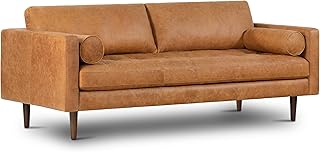
Korser 89″ Chenille 3-Seater Sofa
This is the one I’d point a first-apartment buyer toward: a straightforward mid-century silhouette with deep seats and enough width to actually stretch out, without the sprawl of a sectional. The chenille has a decent nap that hides everyday scuffing, and the tapered legs bolt on in minutes with the included hardware.
3-Seat Reversible Sectional with Convertible Ottoman
The tool-free assembly here is the headline feature and it holds up — panels slot and lock without a single screw, which makes it a genuine one-person job. The ribbed fabric gives it a more considered look than the price suggests, and the ottoman reverses to either side so you’re not locked into a room layout.
L-Shaped Sectional in Matte Black
Compact L-shapes are hard to get right, and this one nails the proportions for smaller rooms where a full sectional would swallow the floor. The matte black ribbed upholstery is the standout — it reads far more expensive than it is, though dark fabric will show lint, so keep a roller nearby.
HONBAY Convertible Sectional Sofa
HONBAY has built a reputation on modular pieces that stay tight after repeated reconfiguration, and this reversible L-shape is the reason why. The interlocking connectors don’t loosen over time the way cheap velcro or hook systems do, making it the pick if you genuinely plan to move the chaise around.
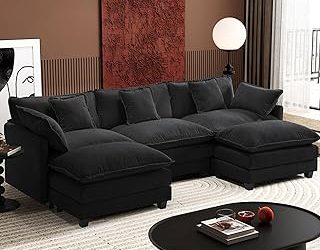
Furmax U-Shaped Chenille Sectional
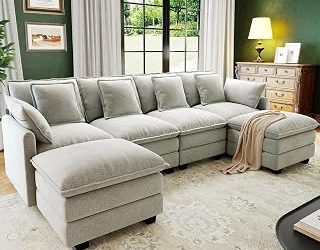
Four seats with a double chaise means this is a commitment, so measure twice — but for a family room it’s an enormous amount of usable seating for the money. The chenille-over-linen combination is warmer underfoot than synthetic alternatives, and the modular sections ship in manageable boxes.
Frequently Asked Questions
How long does assembly realistically take?
Tool-free models run 20 to 40 minutes solo. Bolted sectionals with a double chaise, like the Furmax or the VINGLI 110″, take closer to an hour with two people, mostly spent unboxing and positioning heavy panels.
Can I reverse the chaise later without damaging anything?
On properly designed reversible sectionals, yes — the ottoman or chaise is intentionally symmetrical and unattached, or connects with reusable brackets. Avoid forcing pieces that were bolted in a fixed orientation.
Will chenille hold up with pets?
Better than velvet, worse than tight-weave polyester. Chenille resists snagging from claws reasonably well, but hair works into the pile and needs a rubber brush rather than a lint roller to lift out properly.
Are these sofas heavy enough to stay put on hard floors?
Loaded sectionals stay planted, but empty ones slide on tile and laminate. Add adhesive felt pads or non-slip cups to the feet — a two-dollar fix that also protects the finish.
Final Thoughts
For most rooms, the Korser 89″ chenille sofa is the safest value buy — simple, comfortable, and hard to get wrong. If you want flexibility, the HONBAY convertible sectional has the most durable connector system of anything at its price, and the tool-free 3-seat reversible sectional is the one to grab if you’re assembling alone. Scale up to the VINGLI 110″ U-shaped only if you’ve measured the wall and the doorway.