Key takeaways
- Measure your rear clearance first: Standard power mechanisms swing the backrest into the space behind the sofa, often 8 to 14 inches. Wall-hugger designs pivot the seat forward instead, so they can sit within about 3 inches of drywall. Chalk the footprint on your floor before ordering, including the fully extended footrest.
- Look at the frame joinery, not the filling: Kiln-dried hardwood or welded steel with bolted corner blocks will outlast plywood held together with staples. If a listing shows the underside, check whether the reclining hardware mounts to a rail or hangs off a thin panel. Bolted rails are repairable; broken particleboard is not.
- Plan your power run: Every motorized sofa has a transformer that needs an outlet, and USB or USB-C ports draw from the same feed. Note which side the cable exits so you are not running a cord across a walkway. A short surge-protected extension tucked under the frame keeps things tidy and protects the electronics.
- Check whether the seats fire independently: On three-seaters, some models drive the two ends separately while the center stays fixed, and others move as one unit. Independent controls matter more than raw recline angle for shared use, and separate motors mean a single failure does not take the whole sofa out of service.
- Weigh assembly against access: Modular sofas that ship in sections carry easier and fit tight stairwells, and the same seams that let you get it inside let you reach a motor later. Fully assembled units save an hour of work but can be a nightmare in an apartment building.
What's inside
Anyone who has wrestled a flat-pack sofa through a doorway knows the real test happens before you ever sit down. Power recliners add another layer: motors, wiring harnesses, transformer bricks, and a backrest that has to lock into a steel frame without wobble. Buyers get stuck comparing seat counts and upholstery swatches when the questions that actually matter are how much clearance the mechanism needs behind it, whether the frame is bolted or clipped, and what happens in year three when a motor starts groaning.
This guide looks at electric reclining sofas the way a maker would size up any piece of hardware: frame construction, serviceability, wiring layout, and whether the assembly steps are sane for one or two people. I have flagged which models hug the wall, which need a foot of breathing room, and which ones give you access panels instead of stapled-shut fabric. Below are the picks worth your money in 2026.
As an Amazon Associate we earn from qualifying purchases.


How to Choose a/an Electric Recliner Sofa (2026)
- Measure your rear clearance first: Standard power mechanisms swing the backrest into the space behind the sofa, often 8 to 14 inches. Wall-hugger designs pivot the seat forward instead, so they can sit within about 3 inches of drywall. Chalk the footprint on your floor before ordering, including the fully extended footrest.
- Look at the frame joinery, not the filling: Kiln-dried hardwood or welded steel with bolted corner blocks will outlast plywood held together with staples. If a listing shows the underside, check whether the reclining hardware mounts to a rail or hangs off a thin panel. Bolted rails are repairable; broken particleboard is not.
- Plan your power run: Every motorized sofa has a transformer that needs an outlet, and USB or USB-C ports draw from the same feed. Note which side the cable exits so you are not running a cord across a walkway. A short surge-protected extension tucked under the frame keeps things tidy and protects the electronics.
- Check whether the seats fire independently: On three-seaters, some models drive the two ends separately while the center stays fixed, and others move as one unit. Independent controls matter more than raw recline angle for shared use, and separate motors mean a single failure does not take the whole sofa out of service.
- Weigh assembly against access: Modular sofas that ship in sections carry easier and fit tight stairwells, and the same seams that let you get it inside let you reach a motor later. Fully assembled units save an hour of work but can be a nightmare in an apartment building.
The Best Electric Recliner Sofa (2026)s Reviewed
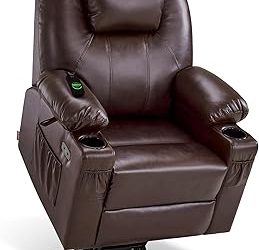
Faux Leather Power Recliner Sofa with USB Charging Port
The overstuffed armrests and backrest here do real structural work, hiding the mechanism bulk while keeping the seated posture upright rather than sinking. Breathable faux leather wipes clean in seconds, which makes this the sensible choice for households with kids, pets, or anyone who eats on the couch.
HAOMARKETS 85″ Power Reclining Sofa
At 85 inches wide this is the pick for a genuine living room rather than a bonus space, and the rivet detailing along the arms is stitched into the panel rather than glued on. Side pockets keep remotes off the floor, and the deep backrest holds its loft better than thinner cushions once the recline cycles a few hundred times.
Jocisland 78″ Power Reclining Sofa
The 160-degree recline gets you genuinely horizontal, and the dual wingback design gives your head somewhere to land instead of tipping sideways. Plush fabric upholstery breathes better than leather in warm rooms, and at 78 inches it threads into narrower spaces where an 85-inch frame would crowd the walkway.
RV Wall Hugger Power Recliner with Heat and Massage
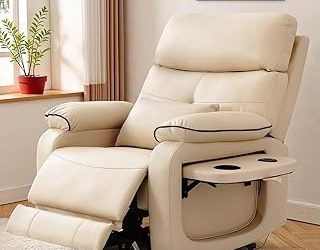
Built for tight quarters, this one reclines with only a few inches behind it, which solves the single biggest layout headache in campers, basements, and narrow bonus rooms. The heat and massage functions run off the same control cluster as the tilt, so there is one cable and one power draw to manage.
Power Recliner with Heat & Massage and Remote Control
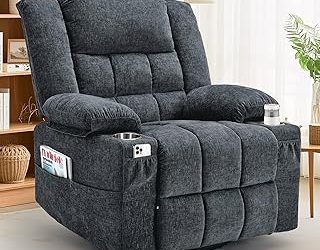
The remote is the standout: no reaching down the side of the seat for a hidden switch, which matters enormously for elderly users or anyone with limited shoulder mobility. Assembly is genuinely straightforward with sections that click and lock, and the soft black fabric hides wear far better than light upholstery.
Frequently Asked Questions
How much space do I need behind an electric recliner sofa?
Most conventional power recliners want 10 to 14 inches of clearance so the backrest can tip. Wall-hugger models like the RV-oriented pick drop that to roughly 3 inches by sliding the seat forward instead. Always confirm the number in the product specs rather than eyeballing it.
What happens if the power goes out while I am reclined?
Most units include a manual release or a battery backup pack that lets you return the seat to upright. If neither is listed, a small rechargeable backup battery is an inexpensive add-on and worth having before you need it.
Can one person assemble a power reclining sofa?
Sectional models that ship in two or three pieces are manageable solo if you can slide them on a moving blanket. Lifting a fully built three-seater over a threshold is a two-person job, and the motors add meaningful weight compared with a manual frame.
Do the USB ports work when the sofa is unplugged?
No. The charging ports and any heat or massage functions run off the same transformer as the motor, so the sofa needs to stay connected to a wall outlet to power anything.
Final Thoughts
For most living rooms, the HAOMARKETS 85″ power reclining sofa offers the best balance of frame substance and usable width, while the Jocisland 78″ model is the smarter fit when floor space is tight and you still want a near-flat 160-degree recline. If your clearance behind the sofa is measured in inches rather than feet, the RV wall hugger with heat and massage solves that problem outright and throws in the comfort extras.