Key takeaways
- Count the motors: A single motor moves back and footrest together, which forces your lumbar angle to follow your leg angle. Triple-motor chairs separate headrest, backrest, and footrest so you can recline the back while keeping legs lower, which is exactly what you want for reading or working on a laptop.
- Check where the lumbar pad actually sits: Sit down and find your belt line. The support should inflate roughly two to four inches above it. Some chairs place the bladder too high and end up pushing between your shoulder blades, which does nothing for lumbar lordosis.
- Match seat depth to your leg length: A deep 21-inch seat pan on a 5’4″ frame means your lower back slides forward off the lumbar zone no matter how much you inflate it. Big-and-tall buyers face the opposite issue with shallow pans.
- Look for real leather at the wear points: Genuine leather on the seat, arms, and headrest resists the abrasion that shreds bonded leather in two or three years. Faux leather is fine for low-traffic use or nurseries where spills matter more than abrasion.
- Verify weight rating against the frame, not the pitch: A 400-pound capacity claim should come with hardwood or steel-reinforced framing. Ask about the frame material; if the listing only mentions “engineered wood,” treat the rating as optimistic.
What's inside
Anyone who has ever pulled the fabric off an old recliner knows the dirty secret of most seating: the lumbar curve is faked with a wad of batting stapled over a flat plywood deck. It feels supportive for about six months, then the fiber compresses, the curve flattens, and your lower back is left bridging a gap it was never meant to span. That’s why the shift toward powered lumbar bladders matters so much. Instead of trusting foam to hold a shape forever, you get an inflatable or motor-driven pad you can dial in behind your L4-L5 region on demand, adjusting as your posture shifts through the evening.
This guide looks at six recliners built around genuine adjustable lumbar mechanisms, not decorative pillows. I’ve focused on what actually determines longevity and comfort: motor count and independence, frame capacity, upholstery grade, and whether the lumbar adjustment sits in a place your spine can use. Whether you want a zero-gravity leather chair for a media room, a swivel glider for a nursery, or a lift recliner with heat for someone with mobility limits, there’s a match below.
As an Amazon Associate we earn from qualifying purchases.


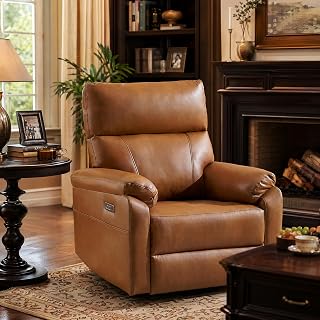


How to Choose a/an Recliner With Adjustable Lumbar Support (2026)
- Count the motors: A single motor moves back and footrest together, which forces your lumbar angle to follow your leg angle. Triple-motor chairs separate headrest, backrest, and footrest so you can recline the back while keeping legs lower, which is exactly what you want for reading or working on a laptop.
- Check where the lumbar pad actually sits: Sit down and find your belt line. The support should inflate roughly two to four inches above it. Some chairs place the bladder too high and end up pushing between your shoulder blades, which does nothing for lumbar lordosis.
- Match seat depth to your leg length: A deep 21-inch seat pan on a 5’4″ frame means your lower back slides forward off the lumbar zone no matter how much you inflate it. Big-and-tall buyers face the opposite issue with shallow pans.
- Look for real leather at the wear points: Genuine leather on the seat, arms, and headrest resists the abrasion that shreds bonded leather in two or three years. Faux leather is fine for low-traffic use or nurseries where spills matter more than abrasion.
- Verify weight rating against the frame, not the pitch: A 400-pound capacity claim should come with hardwood or steel-reinforced framing. Ask about the frame material; if the listing only mentions “engineered wood,” treat the rating as optimistic.
The Best Recliner With Adjustable Lumbar Support (2026)s Reviewed
AEDI Genuine Leather Power Zero Gravity Recliner
The triple-motor setup here is the real draw: independent headrest, lumbar, and extended footrest control means you can build a zero-gravity position that fits your proportions rather than the factory’s average. Genuine leather at the contact surfaces and dual USB ports make it a legitimate all-evening chair, and the extended footrest genuinely accommodates taller sitters instead of leaving calves unsupported.
Watson & Whitely Power Lumbar Recliner
Built for big-and-tall users, this one pairs a powered lumbar bladder with a powered headrest so both ends of your spine get independent tuning. The zero-gravity geometry unloads pressure from the lower back effectively, and the wider seat pan means larger sitters actually stay centered over the lumbar zone rather than sliding off it.
Power Recliner Swivel Rocker with Adjustable Lumbar
A smart pick for nurseries and bedrooms where a rocker matters more than a full media recline. The overstuffed armrests are high enough for feeding position, USB-C charging saves a nightstand trip, and the faux leather wipes clean, which is the correct material choice for a room where spills are guaranteed.
CHITA Genuine Leather Power Recliner, Swivel Rocker
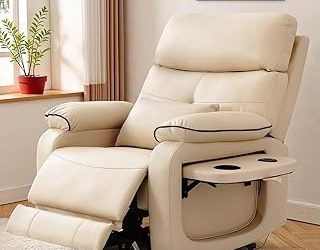
CHITA combines triple-motor adjustment with swivel and rock, which is unusual at this level of upholstery quality. The creamy grey leather holds up well to daily use, and having both headrest and lumbar on separate motors lets you fine-tune neck and low-back support independently rather than accepting one compromise angle.
MAHOMICO Power Lift Recliner with Massage and Lumbar Heating
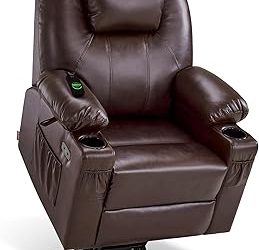
The lumbar heating element here is the standout feature; gentle warmth over the lower back genuinely helps with stiffness in a way vibration alone doesn’t. As a lift chair it handles the sit-to-stand transition smoothly, and the side pocket plus dual cup holders keep essentials within reach for anyone who spends long stretches seated.
Frequently Asked Questions
Is powered lumbar support better than a lumbar pillow?
Generally yes, because a powered bladder maintains its curve under load while a pillow compresses and shifts. That said, a firm pillow used with a well-shaped seat back can work fine; the advantage of powered support is that you can change the depth as your posture changes over hours.
How many motors do I actually need?
Two is the practical minimum if you want lumbar independence. Three motors give you separate headrest control, which matters if you read or watch a mounted screen, since a fixed headrest forces your neck into whatever angle the backrest dictates.
Do lift recliners compromise on lumbar support?
They used to, because the lift mechanism ate the space where a bladder would sit. Current designs like the EONIX 3-Motor and MAHOMICO models solve this with independent backrest control and dedicated lumbar zones, so you no longer have to choose between lift assistance and back support.
How do I keep leather from cracking around the lumbar area?
The lumbar zone flexes constantly, so it dries out faster than the rest of the chair. Condition genuine leather two or three times a year with a pH-neutral product, and keep the chair out of direct sun, which is what actually causes most cracking.
Final Thoughts
For most buyers, the AEDI Genuine Leather Zero Gravity Recliner offers the best balance of triple-motor independence and real leather durability, while the CHITA Swivel Rocker is the stronger choice if you want that same adjustability with rock-and-swivel motion. If mobility assistance is the priority, the EONIX 3-Motor Lift Recliner delivers independent backrest and footrest control alongside a genuinely credible 400-pound capacity.