Key takeaways
- Reclined depth, not just width: Width tells you half the story. Tape out the fully open depth on your floor first, then subtract from your wall-to-coffee-table distance. Wall huggers slide the seat forward instead of tipping back, so many need only 3 to 6 inches of rear clearance versus the 12 to 18 a conventional mechanism demands.
- Frame construction: Look for a welded steel base or kiln-dried hardwood rails rather than particleboard blocks. A robust metal base carries the recliner mechanism’s cycling load far better over years of use, and it usually means less flex in the seat deck where two people put the most stress.
- Power or manual pull: Manual levers cost less, never need an outlet, and have fewer parts to fail, but they require a firm arm motion. Power units give you infinite stopping points and often add USB ports for phones, which matters if your loveseat doubles as the only seating near an outlet.
- Modular delivery and assembly: Compact seating is worthless if it can’t clear a 30-inch doorway. Prioritize models that ship in two or three boxes with a bolt-together back, and confirm the largest single carton dimension before ordering. Most of these assemble with an included Allen key in under 30 minutes.
- Storage and console tradeoffs: A center console adds cup holders and a hidden bin, but it consumes 8 to 12 inches of seating width. In tight rooms, side pockets and armrest storage often deliver the same utility without stealing a seat.
What's inside
Anyone who has hauled a tape measure around a 300-square-foot living room knows the math rarely works out. Standard reclining loveseats want 78 inches of wall plus another foot behind them for the backrest to tilt, and that clearance is exactly what a small apartment, an RV slide-out, or a converted attic room does not have. Add a doorway that measures 30 inches and a stairwell with a switchback, and the shortlist collapses fast.
This guide takes a builder’s approach to the problem: measure the real footprint, check the frame and mechanism before the upholstery, and confirm the thing will actually fit through your door in pieces. Below are six compact reclining loveseats worth considering in 2026, ranging from wall-hugger power models with USB charging to manual units with console storage. Every pick sits at or under roughly 65 inches wide, and most ship modular so you assemble them in the room where they’ll live.
As an Amazon Associate we earn from qualifying purchases.


How to Choose a Reclining Loveseat For Small Spaces (2026)
- Reclined depth, not just width: Width tells you half the story. Tape out the fully open depth on your floor first, then subtract from your wall-to-coffee-table distance. Wall huggers slide the seat forward instead of tipping back, so many need only 3 to 6 inches of rear clearance versus the 12 to 18 a conventional mechanism demands.
- Frame construction: Look for a welded steel base or kiln-dried hardwood rails rather than particleboard blocks. A robust metal base carries the recliner mechanism’s cycling load far better over years of use, and it usually means less flex in the seat deck where two people put the most stress.
- Power or manual pull: Manual levers cost less, never need an outlet, and have fewer parts to fail, but they require a firm arm motion. Power units give you infinite stopping points and often add USB ports for phones, which matters if your loveseat doubles as the only seating near an outlet.
- Modular delivery and assembly: Compact seating is worthless if it can’t clear a 30-inch doorway. Prioritize models that ship in two or three boxes with a bolt-together back, and confirm the largest single carton dimension before ordering. Most of these assemble with an included Allen key in under 30 minutes.
- Storage and console tradeoffs: A center console adds cup holders and a hidden bin, but it consumes 8 to 12 inches of seating width. In tight rooms, side pockets and armrest storage often deliver the same utility without stealing a seat.
The Best Reclining Loveseat For Small Spaces (2026)s Reviewed
MCombo 64.6″ Wall Hugger Power Loveseat Recliner
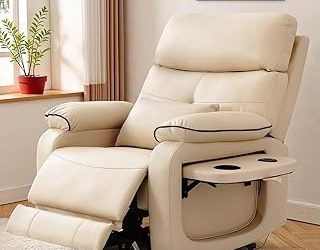
This is the pick when you want power convenience without pulling furniture off the wall, since the wall-hugger geometry keeps rear clearance minimal while the motor lets you park the backrest anywhere in its range. The built-in USB ports make it a practical anchor for a small living room or RV where outlets are scarce.
Fabric Manual Reclining Loveseat with Metal Base
The welded metal base is the story here — it gives the seat deck a solid, non-flexing feel that budget wood-block frames rarely match. Skip the motor, get a stronger chassis, and put the savings toward a rug that fits the room properly.
56″ Wall Hugger Loveseat Recliner with Cup Holders
At 56 inches, this is the narrowest genuinely comfortable two-seater on the list, which makes it the right answer for RV slide-outs and studio nooks where every inch is contested. Included lumbar pillows help since the shorter back means less built-in support.
GUEAPY 55″ Chenille Reclining Loveseat
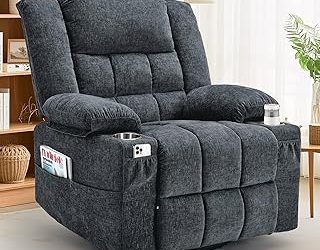
Chenille wears noticeably better than thin polyester in high-traffic rooms, and the wide armrests with side storage keep remotes and books off the floor in spaces with no room for end tables. Manual mechanism, 55-inch footprint, easy modular assembly.
Faux Leather Manual Loveseat Recliner with Center Console
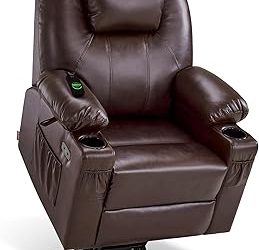
The console with hidden storage and cup holders earns its width if this doubles as your media seating, and wipe-clean faux leather is the sane choice with pets or kids. Just budget the extra inches the console consumes before you commit.
Frequently Asked Questions
How much wall clearance does a wall hugger recliner actually need?
Most require 3 to 6 inches, compared to 12 to 18 for a conventional recliner. Always verify the specific model’s listed clearance, since designs vary, and leave an extra inch for baseboard trim.
Will a reclining loveseat fit through a standard 30-inch door?
Yes, if it ships modular. These units typically arrive in two or three cartons with a detachable back that bolts on, so the widest piece is the seat base rather than the assembled sofa.
Is manual or power more reliable long term?
Manual mechanisms have fewer failure points and no electrical components, which generally means a longer trouble-free life. Power units are more convenient and gentler on your back and shoulders, and replacement motors are usually available.
Can these run on RV or off-grid power?
Manual models need no power at all. Power recliners draw modest wattage but need a standard AC outlet, so confirm your inverter can handle the load before installing one in a camper.
Final Thoughts
For most tight rooms, the MCombo 64.6″ wall hugger is the strongest all-around choice thanks to genuine power reclining with minimal rear clearance and onboard USB charging. If you’d rather spend on structure than motors, the metal-base manual loveseat delivers the most solid frame per dollar, and when inches are truly scarce the 56″ wall hugger fits where nothing else will.