Key takeaways
- Stay in the 1200–2000 PSI working range: Peak or “max” PSI is a marketing figure measured at the pump outlet with no flow. Cars want roughly 1200–1900 PSI at the nozzle with a 25° or 40° tip. A 2300–2500 max-PSI unit lands there comfortably once you factor in real-world pressure drop, so don’t shy away from higher-rated machines — just use the wide tips.
- Flow rate does the rinsing, not pressure: GPM moves grit off the panel. Anything around 1.7 GPM will sheet water properly. Sub-1.0 GPM cordless units work fine for wheels and quick touch-ups, but you’ll spend twice as long on a full-size vehicle.
- Foam cannon quality over foam cannon presence: An onboard detergent tank is convenient for driveways but produces thin, runny suds. A dedicated brass-fitting foam cannon with an adjustable mixing knob is what gives you the thick, clinging layer that lifts road film during dwell time.
- Hose and cord length determine whether you actually use it: 20 feet of hose is the practical minimum for a sedan; 25–33 feet lets you park the unit and walk. Check the power cord too — many are only 35 feet, which dictates where you can work.
- Stability and storage: Vertical-format washers tip when you tug the hose, which is genuinely annoying mid-wash. Anti-tipping designs, wide wheelbases, and integrated hose reels are small features that meaningfully change the experience.
What's inside
Pressure washing a car sits in an awkward middle ground. Too little pressure and you’re just rinsing dust around; too much and you’re stripping wax, forcing water past door seals, or lifting a clear coat that was already thin from a bad respray. Most people shopping for a washer end up with something built for stripping paint off a deck, then wonder why their hood looks hazy after a summer of weekend washes. The specs that matter for cars are not the ones printed largest on the box.
I’ve run a handful of these units in my own driveway, mostly on a 2011 pickup with tired paint and a beater sedan that gets road salt every winter. What follows is a practical breakdown of what actually matters — pressure ranges that are safe on automotive finishes, foam delivery that clings instead of sliding off, hose length that lets you circle a vehicle without dragging the unit behind you — plus honest notes on the machines worth your money in 2026.
As an Amazon Associate we earn from qualifying purchases.




🛒 Best Price Today on Amazon
Prime members get fast, free shipping on everything above, plus member-only deals. New members get a 30-day free trial — cancel anytime.
How to Choose a Pressure Washer For Cleaning Cars (2026)
- Stay in the 1200–2000 PSI working range: Peak or “max” PSI is a marketing figure measured at the pump outlet with no flow. Cars want roughly 1200–1900 PSI at the nozzle with a 25° or 40° tip. A 2300–2500 max-PSI unit lands there comfortably once you factor in real-world pressure drop, so don’t shy away from higher-rated machines — just use the wide tips.
- Flow rate does the rinsing, not pressure: GPM moves grit off the panel. Anything around 1.7 GPM will sheet water properly. Sub-1.0 GPM cordless units work fine for wheels and quick touch-ups, but you’ll spend twice as long on a full-size vehicle.
- Foam cannon quality over foam cannon presence: An onboard detergent tank is convenient for driveways but produces thin, runny suds. A dedicated brass-fitting foam cannon with an adjustable mixing knob is what gives you the thick, clinging layer that lifts road film during dwell time.
- Hose and cord length determine whether you actually use it: 20 feet of hose is the practical minimum for a sedan; 25–33 feet lets you park the unit and walk. Check the power cord too — many are only 35 feet, which dictates where you can work.
- Stability and storage: Vertical-format washers tip when you tug the hose, which is genuinely annoying mid-wash. Anti-tipping designs, wide wheelbases, and integrated hose reels are small features that meaningfully change the experience.
The Best Pressure Washer For Cleaning Cars (2026)s Reviewed
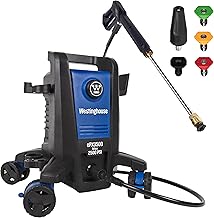
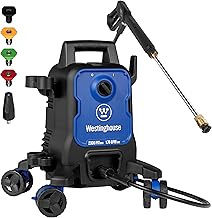
Westinghouse ePX3500
The strongest all-around pick for car care: 2500 max PSI and 1.76 GPM gives you enough flow to sheet-rinse a full-size vehicle quickly, while the five-nozzle set means you can drop to a 40° tip for paint and swap up for wheel wells. The anti-tipping base is not a gimmick — it stays planted when you pull hose slack.
Sun Joe SPX3000
A long-running favorite for good reason: it’s PWMA-rated at 2030 PSI, which is honest labeling, and the dual detergent tanks let you keep a wheel cleaner and a wash soap loaded simultaneously. Build quality is plastic-heavy, but the pump has a solid track record over multiple seasons.
Westinghouse ePX3100
Essentially the ePX3500 with 2300 max PSI instead of 2500 — same 1.76 GPM, same pro-style steel wand, same stable footprint. For cars specifically, the pressure difference is irrelevant, which makes this the smarter buy when it’s cheaper.
Cordless 1450 PSI Handheld Washer
Not a driveway replacement, but genuinely useful: no hose, no outlet, and a 6-in-1 nozzle that handles bug removal, wheel faces, and interior mats. Battery runtime is the limiting factor, so treat it as a supplement or an apartment-dweller’s solution rather than a primary washer.
5000 PSI 2.8 GPM Washer with Hose Reel
The 5000 PSI figure is peak, not working pressure, and this is more machine than a car needs — but the 33-foot reeled hose and 2.8 GPM flow make it excellent if you’re also cleaning fences, decks, and concrete. Use the 40° tip on paint and keep your distance.
Frequently Asked Questions
Will a pressure washer damage my car’s paint?
It can, if you use a narrow tip or work too close. Stick to 25° or 40° nozzles, keep the tip 12 inches or more from the panel, and never use a turbo or 0° tip on bodywork. Sound paint handles this fine; failing clear coat may not.
Do I need a foam cannon, or is the soap tank enough?
The tank works for general cleaning. For cars, a foam cannon is worth the small extra cost because the thick foam dwells long enough to soften road grime before you touch the surface with a mitt — which is where most swirl marks come from.
Gas or electric for washing cars?
Electric, without much debate. Gas units deliver more pressure and flow than automotive finishes want, run louder, and require maintenance you don’t need for a weekly wash.
Can I run one off a rain barrel or portable tank?
Most consumer electric washers need pressurized inlet water and will cavitate on a gravity feed. Check the manual for a stated siphon capability before trying it, or you’ll damage the pump.
Final Thoughts
For most people washing one or two vehicles a week, the Westinghouse ePX3500 is the right buy — good flow, honest performance, and it doesn’t fall over. The ePX3100 is the same machine at a lower pressure rating you won’t miss, making it the value pick, while the Sun Joe SPX3000 remains a dependable choice if dual detergent tanks fit how you work.