Key takeaways
- Powered vs. fixed lumbar: A powered lumbar pad inflates or articulates on its own motor, so you can dial in the curve as your posture shifts through the recline arc. Fixed contoured backs are cheaper and never break, but you get one shape. If you have a specific problem area, spend the money on adjustability.
- Frame material at the stress points: Kiln-dried hardwood at the arm and mechanism mounts is what keeps a recliner from developing that sideways wobble after two years. Engineered wood is fine for panels you never lean on, but ask where the solid lumber actually sits before you commit.
- Wall clearance and mechanism type: Standard recliners need eight to twelve inches behind them. Wall-hugger designs shift the seat forward instead, dropping that to three or four inches, which matters enormously in apartments and RVs.
- Upholstery honesty: Top-grain leather on contact surfaces with match-grade vinyl on the sides is a reasonable compromise. Full faux leather wears fastest at the seat edge where your thighs pivot, so check that seam construction and expect to condition it.
- Power infrastructure: USB-A is on its way out. Look for at least one USB-C port per seating position, and check whether the console is switched or always-live, since always-live draws phantom power around the clock.
What's inside
Sit on most reclining sofas for twenty minutes and you’ll notice the same problem: the backrest goes soft right where your lower spine needs pressure. Manufacturers pour foam into the seat cushion and headrest, then leave a hollow gap between the shoulder blades and the hips. If you’ve ever slid a throw pillow behind your back to make a recliner tolerable, you’ve already diagnosed it yourself. That gap is why people who own perfectly nice couches still end up stiff after a movie.
I’ve pulled apart enough frames and re-tied enough sinuous springs to know that lumbar support comes down to three things: where the pivot sits, whether the back cushion is contoured or flat, and whether the mechanism lets you adjust the curve independently. This guide covers six reclining sofas that handle that geometry well, from a power lumbar Flexsteel to budget faux-leather theater seating with genuinely usable storage. I’ve noted what to look for under the upholstery, what tends to fail first, and which models earn their price.
As an Amazon Associate we earn from qualifying purchases.



How to Choose a Reclining Sofa With Lumbar Support (2026)
- Powered vs. fixed lumbar: A powered lumbar pad inflates or articulates on its own motor, so you can dial in the curve as your posture shifts through the recline arc. Fixed contoured backs are cheaper and never break, but you get one shape. If you have a specific problem area, spend the money on adjustability.
- Frame material at the stress points: Kiln-dried hardwood at the arm and mechanism mounts is what keeps a recliner from developing that sideways wobble after two years. Engineered wood is fine for panels you never lean on, but ask where the solid lumber actually sits before you commit.
- Wall clearance and mechanism type: Standard recliners need eight to twelve inches behind them. Wall-hugger designs shift the seat forward instead, dropping that to three or four inches, which matters enormously in apartments and RVs.
- Upholstery honesty: Top-grain leather on contact surfaces with match-grade vinyl on the sides is a reasonable compromise. Full faux leather wears fastest at the seat edge where your thighs pivot, so check that seam construction and expect to condition it.
- Power infrastructure: USB-A is on its way out. Look for at least one USB-C port per seating position, and check whether the console is switched or always-live, since always-live draws phantom power around the clock.
The Best Reclining Sofa With Lumbar Support (2026)s Reviewed
Flexsteel Crew Black Leather Power Reclining Sofa
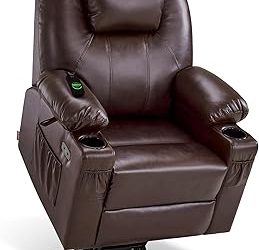
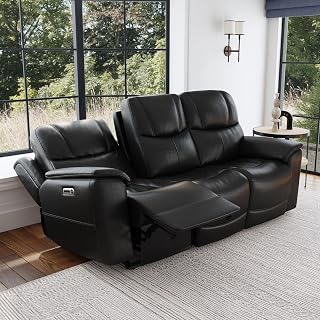
This is the one I’d buy with my own money, because Flexsteel’s blue steel spring seating and independently powered headrest and lumbar mean you’re adjusting the actual curve rather than compensating for it. The zero-gravity arc lifts your knees above your heart, which offloads the lumbar spine in a way no amount of foam achieves, and both USB-A and USB-C are built in.
Watson & Whitely Genuine Leather Wall Hugger Power Recliner
The wall-hugger mechanism is the headline here: three or four inches of clearance instead of a foot, with genuine leather on the contact surfaces and adjustable power headrests. Navy hides wear better than black over the long haul, and the Type-C charging is a small detail that dates the sofa well.
Signature Design by Ashley Boyington Power Recliner
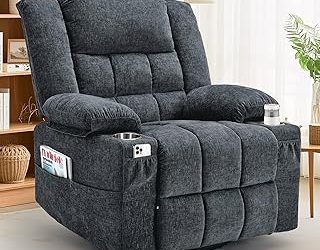
Ashley’s Boyington bundles air massage, heated seats, a drop-down table, and zero-gravity positioning into one 3-seat frame, which is unusual at this price. The heat is the underrated feature for lower-back stiffness, since warmth does more for tight erector muscles than any pad shape.
78.2″ PU Leather Reclining Loveseat With Flip Middle Backrest
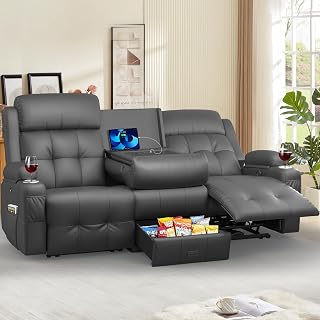
The flip-down middle backrest converts this from three seats to two plus a tray table with drawers underneath, making it the most flexible small-space option in the lineup. Lumbar contouring is fixed rather than powered, but the shape is well judged and the 78-inch footprint fits rooms where a full sofa won’t.
Power Reclining Sectional With LED Light and Storage Console
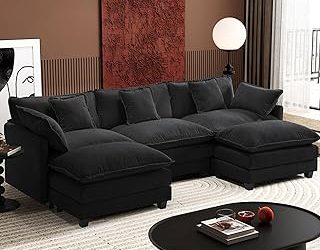
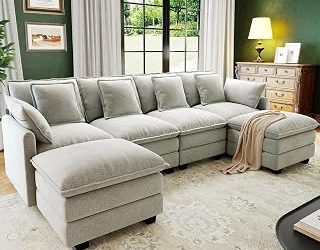
A corner sectional with two power recliners, cup holders, and a storage console that actually holds remotes and blankets rather than just looking like it might. The LED accent lighting is a taste call, but the faux leather is well-seamed and the L-configuration gives you a chaise-style stretch the straight sofas can’t.
Frequently Asked Questions
Does power lumbar support really beat a contoured cushion?
For most people, yes, because your ideal lumbar curve changes as the backrest angle changes. A fixed cushion is tuned for one recline position and works against you in the others. Powered lumbar lets you track that shift.
Can I add lumbar support to a reclining sofa I already own?
Partly. A firm memory-foam roll strapped to the backrest gets you most of the way, and it’s a fifteen-minute job with two D-rings and webbing. What you can’t retrofit is a pivot point in the wrong place.
How much clearance do I need behind a reclining sofa?
Eight to twelve inches for a standard mechanism, three to four for a wall hugger. Measure from the wall to the back of the frame with the sofa fully reclined, not upright, and include baseboard depth.
Is faux leather worth avoiding entirely?
No, but know the tradeoff. Quality PU holds up five to seven years on a sofa used nightly, and it cleans easily. Genuine leather develops a patina and lasts two to three times longer, which is why it costs what it does.
Final Thoughts
If your budget allows it, the Flexsteel Crew is the honest pick, since independent power headrest and lumbar plus steel spring seating is engineering you can feel rather than a spec sheet flourish. For tight rooms and RVs, the Watson & Whitely wall hugger solves the clearance problem without giving up genuine leather, and the Ashley Boyington makes the strongest case for heat and massage at a mid-range price. Any of the three will end the throw-pillow workaround for good.