Key takeaways
- Weight rating with headroom: Treat the listed capacity as a ceiling, not a target. If you weigh 300 pounds, a 400 lb chair gives you the margin that keeps the reclining mechanism out of its stress range during the drop-and-sit that every chair eventually gets.
- Measure the interior seat, not the outside: A 52″ overall footprint can hide a 22″ seat if the arms are fat. Tape your current favorite chair between the arm panels and add three to five inches for real elbow space.
- Foam density beats foam thickness: Thick low-density cushion compresses to nothing. High-density or overstuffed pocketed fill with a sinuous-spring or webbing deck underneath holds its shape far longer under heavy loading.
- Manual pull versus dual motor: A manual handle has fewer parts to fail and never needs an outlet. Power units, especially dual-motor lift models, separate the back and footrest so you can dial in a position without fighting the whole frame.
- Plan your clearance and assembly path: Check wall clearance behind the chair, door width for the boxed back, and whether the model splits into back-plus-base halves. Most oversized recliners arrive in two pieces that snap onto steel brackets, which is a genuine two-person lift.
What's inside
Anyone who has ever flipped a recliner onto its back to replace a snapped tension spring knows the truth: most chairs on the showroom floor are built for a 180-pound frame and a polite sitter. Put a 6’4″, 320-pound body into that same frame and the failure points show up fast. The seat box racks under load, the pull-cable stretches, the foam bottoms out into the deck boards within a season, and the footrest hinge starts to squeal on every cycle. It isn’t bad luck, it’s undersized hardware doing a job it was never specced for.
This guide comes from the same mindset as a shop project: look at the joinery, the gauge of the steel, the width between the arm posts, and the honest weight rating before you look at the upholstery color. Below are six oversized recliners built with heavier mechanisms, wider seat decks, and load ratings from 375 to 450 pounds, plus the specs and shortcuts that actually predict whether a chair survives daily use.
As an Amazon Associate we earn from qualifying purchases.


How to Choose a Recliner For A Big Man (2026)
- Weight rating with headroom: Treat the listed capacity as a ceiling, not a target. If you weigh 300 pounds, a 400 lb chair gives you the margin that keeps the reclining mechanism out of its stress range during the drop-and-sit that every chair eventually gets.
- Measure the interior seat, not the outside: A 52″ overall footprint can hide a 22″ seat if the arms are fat. Tape your current favorite chair between the arm panels and add three to five inches for real elbow space.
- Foam density beats foam thickness: Thick low-density cushion compresses to nothing. High-density or overstuffed pocketed fill with a sinuous-spring or webbing deck underneath holds its shape far longer under heavy loading.
- Manual pull versus dual motor: A manual handle has fewer parts to fail and never needs an outlet. Power units, especially dual-motor lift models, separate the back and footrest so you can dial in a position without fighting the whole frame.
- Plan your clearance and assembly path: Check wall clearance behind the chair, door width for the boxed back, and whether the model splits into back-plus-base halves. Most oversized recliners arrive in two pieces that snap onto steel brackets, which is a genuine two-person lift.
The Best Recliner For A Big Man (2026)s Reviewed
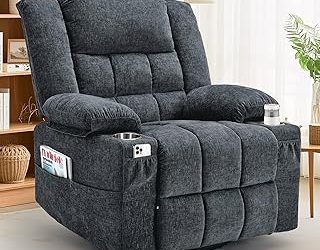
Manual Adjustable Oversized Recliner with Phone Holder (400 lbs)
The mechanical route, and the one I’d hand to someone in an RV or a nursery where outlets are scarce and reliability matters more than gadgetry. The 400 lb rating comes from a heavier steel frame rather than clever marketing, and the side pocket plus phone holder keeps the remote and cables off the floor where they get stepped on.
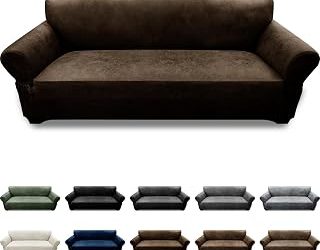
Euthymia Oversized Chenille Recliner (400 lbs, Dark Brown)
Chenille is the sleeper upgrade here: it hides wear patterns and resists the shiny bald spot that faux leather develops right where your shoulders land. The extra-wide seat deck and 400 lb capacity make it a proper single-sofa substitute, and the dark brown forgives the traffic a family room actually gets.
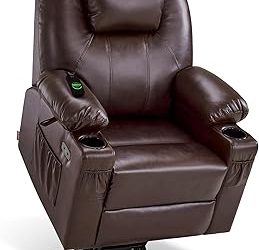
FUNECORP Big Man Power Lay Flat Lift Recliner (Dual Motor)
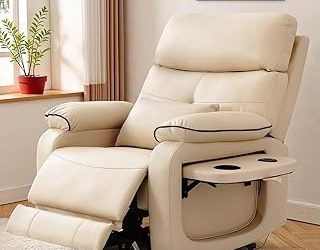
Dual motors let the back go fully flat while the footrest stays where you want it, which matters enormously for anyone with hip or knee issues who needs the lift function to stand up safely. Flip-arm storage, cup holders, heat, vibration, and USB-C charging make it the most feature-dense pick, and the 28″ seat width is generous by any measure.
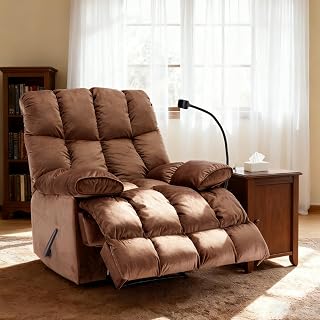
Oversized Power Zero Gravity Recliner (Grey)
Zero-gravity positioning raises your knees above your heart, which takes real pressure off the lumbar spine, and it’s a position a manual chair simply can’t reach. The overstuffed soft fabric build and built-in USB port make it the one I’d pick for long evening sessions rather than quick sit-downs.
450 lbs Oversized Power Recliner, 52″ Extra Wide
The highest rating in this group and the widest footprint, which puts it in genuine two-seat territory if you share it with a kid or a dog. Chenille upholstery, USB and Type-C ports, and two included pillows round it out, though you’ll want to measure your room before it arrives.
Frequently Asked Questions
Does a higher weight rating always mean a better chair?
Not on its own. Rating tells you what the frame and mechanism were tested to, but seat width, foam density, and hardware quality determine comfort and lifespan. A well-built 400 lb chair often outlasts a thinly-padded 450 lb one.
How much wall clearance do oversized recliners need?
Traditional models want six to twelve inches behind them. Wall-hugger and zero-gravity designs slide the seat forward as they recline and can often work with three to four inches, which is worth confirming in the listing before you commit to a layout.
Can I repair a power recliner myself?
Usually, yes. Motors, hand controls, and transformers are modular and plug in with standard connectors, so swapping one is a screwdriver job. Frame welds and scissor mechanisms are the parts you don’t want failing, which is why the load rating matters most.
Is chenille or faux leather better for heavy use?
Chenille breathes better, resists cracking, and disguises compression marks. Faux leather wipes clean faster but tends to peel at the seat edge and headrest under sustained heavy contact.
Final Thoughts
For most heavy-duty buyers the FUNECORP Big Man Power Lay Flat Lift Recliner is the strongest all-around pick thanks to its dual-motor control and lift assist, while the 450 lb 52″ Extra Wide Power Recliner wins on raw capacity and space. If you’d rather skip motors entirely, the Manual Adjustable Oversized Recliner keeps the parts count low and the reliability high.