Key takeaways
- Tape it out first: Before you order anything, run painter’s tape on the floor at the exact dimensions you’re considering. Live with it for a day. An 8×10 sounds enormous on paper and often looks modest once furniture lands on it.
- Front legs minimum: The sofa and both flanking chairs should have at least their front legs on the rug. If everything sits off the edge, the seating group stops reading as a group and the room feels disconnected.
- Leave a border, not a gap: Aim for roughly 12 to 18 inches of bare floor between the rug edge and the wall. Wall-to-wall looks like failed carpet; a tiny island in the middle looks accidental.
- Pile height vs. door swing: Check clearance under interior doors and low furniture before committing. Low-pile and thin flatweaves clear most swings; anything plush needs measuring at the threshold.
- Plan for a pad: Even rugs with grippy backing benefit from a separate pad. It adds cushion, stops edge curl, and keeps the rug from creeping toward the coffee table over a season of traffic.
What's inside
Measure twice, buy once. That old woodworking rule applies just as hard to rugs, and yet undersized rugs are probably the single most common furnishing mistake I see when I walk into a friend’s living room. A 5×7 floating in the middle of a 14-foot space reads like a bath mat that wandered off, and no amount of styling fixes it. The floor is the largest visual plane in the room, so the rug has to earn that real estate.
This guide covers the practical geometry of sizing a living room rug in 2026, then walks through six large-format options I’d actually put down myself, weighted toward 8×10 and 9×12 because those are the two sizes that solve most rooms. You’ll find washable low-pile options for households with dogs and toddlers, plus a couple of traditional woven picks if you want something with more visual weight underfoot.
As an Amazon Associate we earn from qualifying purchases.




How to Choose a Rug Size For Living Room (2026)
- Tape it out first: Before you order anything, run painter’s tape on the floor at the exact dimensions you’re considering. Live with it for a day. An 8×10 sounds enormous on paper and often looks modest once furniture lands on it.
- Front legs minimum: The sofa and both flanking chairs should have at least their front legs on the rug. If everything sits off the edge, the seating group stops reading as a group and the room feels disconnected.
- Leave a border, not a gap: Aim for roughly 12 to 18 inches of bare floor between the rug edge and the wall. Wall-to-wall looks like failed carpet; a tiny island in the middle looks accidental.
- Pile height vs. door swing: Check clearance under interior doors and low furniture before committing. Low-pile and thin flatweaves clear most swings; anything plush needs measuring at the threshold.
- Plan for a pad: Even rugs with grippy backing benefit from a separate pad. It adds cushion, stops edge curl, and keeps the rug from creeping toward the coffee table over a season of traffic.
The Best Rug Size For Living Room (2026)s Reviewed
8×10 Washable Blue Grey Modern Abstract Rug
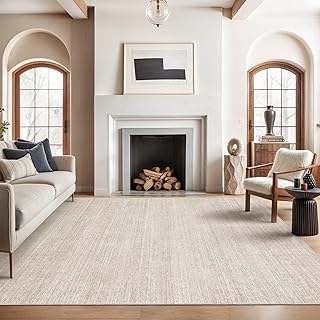
This is the size and format I recommend to most people furnishing a standard 12×15 living room: an 8×10 with non-slip backing, low pile, and genuine machine washability. The abstract blue-grey pattern hides crumbs and paw prints far better than a solid, and the foldable construction means you can actually get it into a washer without wrestling it.
9×12 Non-Slip Washable Beige Rug
Step up to 9×12 when your seating group spans more than about ten feet or you want all four sofa legs fully on the rug. This one is thin and lightweight for its footprint, which matters enormously when you’re hauling it out solo for cleaning or repositioning after a furniture rearrange.
SAFAVIEH Evoke 9×12 in Ivory & Taupe
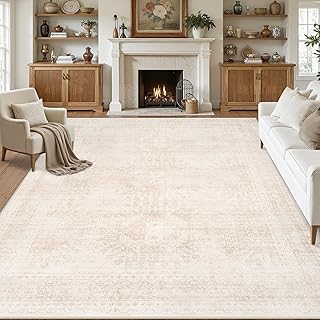
If you want a large rug that looks properly furnished rather than utilitarian, the Evoke’s distressed ivory-and-taupe pattern brings genuine depth without committing to a bold color. It’s non-shedding and straightforward to spot-clean, making it a sensible choice for open-plan spaces where the rug anchors the whole zone.
SAFAVIEH Lyndhurst 9×12 in Red & Black
The traditional oriental design here does real work in rooms with heavy wood furniture or dark trim, where washed-out neutrals tend to disappear. At 9×12 it fills a large formal living room properly, and the dense construction feels substantially more grounded underfoot than a thin washable flatweave.
8×10 Vintage Boho Beige Washable Rug
A softer, warmer take on the neutral 8×10, with a faded vintage motif that plays well with farmhouse and secondhand furniture. The low pile slides under a dining table or coffee table cleanly, and the beige base is forgiving of the everyday dust that shows instantly on darker rugs.
Frequently Asked Questions
Is an 8×10 big enough for my living room?
For rooms up to roughly 12 by 15 feet, yes, an 8×10 typically works well. Beyond that, move to 9×12 or you’ll end up with an awkward frame of exposed floor around the seating area.
Should the rug go under the coffee table only?
No. That’s the classic undersizing error. Extend the rug beyond the coffee table so it reaches at least the front legs of your seating, which visually ties the arrangement together.
Do washable rugs hold up to real use?
Modern TPE-backed washable rugs handle regular laundering well, though repeated hot washes will shorten their life. Cold water, gentle cycle, air dry flat.
Can I layer a smaller rug over carpet?
Absolutely, and a low-pile 8×10 over neutral wall-to-wall is one of the easiest ways to define a seating zone in a rental. Use a thin pad to prevent shifting.
Final Thoughts
For most living rooms, the washable 8×10 Blue Grey Abstract handles daily life with the least fuss, while the 9×12 Non-Slip Beige is the right call for larger open spaces. If you want a rug with more traditional presence and a longer service life, the SAFAVIEH Evoke in ivory and taupe is worth the step up.