Key takeaways
- Seat depth first: Measure from the back of your knee to your tailbone while seated, then subtract two inches. Anything deeper than 19–20 inches will leave a gap behind your lumbar spine no cushion can honestly fill.
- Floor-to-seat height: You want your heels flat with knees at roughly 90 degrees. Around 17–18 inches works for most petite frames; taller seats force you to perch and put pressure behind your thighs.
- Backrest and headrest reach: A shorter backrest keeps the headrest at your skull, not your neck. Power-adjustable headrests solve this outright by letting you tune the angle instead of accepting a fixed pitch.
- Footrest extension: Extra-long footrests matter less than a footrest that lands under your calves rather than your ankles. Check the extended length before assuming longer equals better.
- Motor count on lift chairs: Single motors move back and footrest together. Dual and triple motor setups let you separate them, which is how you get true lay-flat and zero-gravity positions without sliding forward in the seat.
What's inside
If you’re under about 5’4″, most recliners treat you like an afterthought. You sit down and the seat depth pushes your knees forward while your back never reaches the lumbar curve, your feet dangle four inches above the floor, and the headrest lands somewhere between your shoulder blades. I’ve shimmed enough chair bases with hardwood blocks and rebuilt enough seat cushions with high-density foam to know the truth: you can modify a too-big recliner, but you can’t fix its geometry. Seat height and seat depth are baked into the frame.
So this guide skips the “just add a pillow” advice and focuses on chairs engineered small from the frame out. I looked at seat depth, floor-to-seat height, backrest length, and how far the footrest extends before your heels run out of support. Power lift models get extra attention because the lift mechanism has to match your leg length to actually help you stand. Below are the picks that fit petite frames without compromise, plus the specs worth measuring before you commit.
As an Amazon Associate we earn from qualifying purchases.


How to Choose a/an Recliner For Short Person (2026)
- Seat depth first: Measure from the back of your knee to your tailbone while seated, then subtract two inches. Anything deeper than 19–20 inches will leave a gap behind your lumbar spine no cushion can honestly fill.
- Floor-to-seat height: You want your heels flat with knees at roughly 90 degrees. Around 17–18 inches works for most petite frames; taller seats force you to perch and put pressure behind your thighs.
- Backrest and headrest reach: A shorter backrest keeps the headrest at your skull, not your neck. Power-adjustable headrests solve this outright by letting you tune the angle instead of accepting a fixed pitch.
- Footrest extension: Extra-long footrests matter less than a footrest that lands under your calves rather than your ankles. Check the extended length before assuming longer equals better.
- Motor count on lift chairs: Single motors move back and footrest together. Dual and triple motor setups let you separate them, which is how you get true lay-flat and zero-gravity positions without sliding forward in the seat.
The Best Recliner For Short Person (2026)s Reviewed
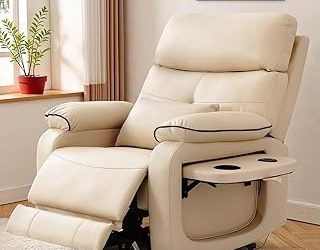
MCombo 7631 3-Motor Small Power Lift Recliner
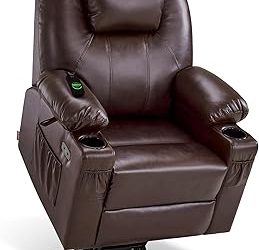
Three independent motors give you infinite positioning, a power headrest, and a genuine lay-flat setting, which means you can dial in support instead of accepting one preset recline curve. The petite-scaled frame, 4.7-inch extending footrest, USB ports, and dual cup holders make this the most complete small-frame lift chair here.
MCombo 7893 Dual Motor Petite Lift Recliner
The zero-gravity position on this one is the standout: it lifts your knees above your heart to unload the lower back, and on a petite frame that geometry actually lines up correctly. Breathable faux leather in cream white wipes clean easily, which is a practical win if you eat or drink in the chair.
MCombo 7661 Triple Motor Fabric Recliner (Medium)
If the small frames feel a touch tight but standard chairs swallow you, the medium 7661 splits the difference well. You still get triple-motor infinite positioning, an adjustable headrest, heat and massage, and side pockets, wrapped in a navy fabric that hides wear better than light upholstery.
Sweetcrispy Massage Recliner for Small Spaces
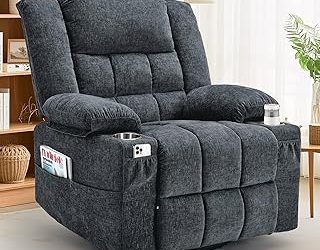
This is the pick for anyone who doesn’t need a lift mechanism and would rather spend the budget on comfort and footprint. The compact shell fits tight living rooms and apartment corners, and the built-in lumbar support hits the right spot on shorter backs where generic home theater seating misses entirely.
MCombo 7408 Small Lift Recliner with Heat and Massage
Purpose-built for petite users, the 7408 keeps things simple with a straightforward lift-and-recline action, extended footrest, and both USB and USB-C charging. FSC and OEKO-TEX certifications on the materials are a genuine mark of quality control you rarely see documented at this price tier.
Frequently Asked Questions
What seat height works best for someone 5’2″?
Aim for 17 to 18 inches from floor to the top of the compressed seat cushion. That keeps your feet planted, which improves circulation and makes standing up far easier than a seat that leaves you dropping down from the edge.
Can I shorten a recliner that’s too deep?
Partially. Adding a firm high-density foam bolster behind the lumbar area reduces effective depth by two or three inches without ruining the recline action. Beyond that you’re fighting the frame, and the headrest will still sit too low.
Do I need a lift recliner or just a power recliner?
Lift recliners tilt the whole chair forward to help you stand and are worth it for mobility or joint issues. If standing isn’t a problem, a power recliner gives you the same positioning for less money and a smaller rear clearance requirement.
How much wall clearance should I plan for?
Most of these need four to six inches behind the backrest, though lay-flat models want more. Measure your intended spot with painter’s tape on the floor before ordering so you’re not discovering the problem mid-assembly.
Final Thoughts
For most petite buyers, the MCombo 7631 is the chair to beat — three motors, a power headrest, and a frame actually scaled to shorter legs and torsos. If zero-gravity positioning and easy-clean upholstery matter more, the MCombo 7893 is the smarter buy, and anyone skipping the lift mechanism entirely should look hard at the Sweetcrispy for its compact footprint and honest lumbar support.