Key takeaways
- Independent lumbar motors: Look for sofas where lumbar adjusts separately from the backrest and headrest. Combined mechanisms move everything at once, which defeats the purpose of dialing in one specific curve.
- Frame and mechanism quality: Kiln-dried hardwood with steel reclining hardware outlasts particleboard and stamped brackets. If the manufacturer publishes cycle-test numbers or sells replacement mechanisms, that’s a good sign for long-term repairability.
- Upholstery specifics: “Leather match” means real hide on contact surfaces and vinyl elsewhere. Genuine leather throughout costs more but ages better under daily use. Read the material breakdown, not the headline.
- Wall clearance and footprint: Wall-hugger designs need only a few inches behind them; traditional mechanisms want a foot or more. Measure your actual space, including baseboard depth, before ordering.
- Power delivery and serviceability: USB-A plus USB-C ports are now standard on better models. Check whether transformers are accessible from underneath — swapping a failed power supply should be a screwdriver job, not a furniture teardown.
What's inside
Anyone who has spent a weekend building a workbench or refinishing a dresser knows the feeling: your lower back is the first thing to complain and the last thing to recover. The problem with most reclining sofas is that they treat the lumbar curve as an afterthought — a wad of foam stitched into a fixed position that either presses too hard or vanishes the moment you lean back. Power lumbar support solves this the way an adjustable jig solves a tricky cut: it moves to fit the workpiece instead of forcing the workpiece to fit the tool.
This guide looks at power reclining sofas with genuine adjustable lumbar mechanisms, not just contoured cushions marketed as support. I’ve focused on frame construction, motor count, upholstery honesty (real leather versus blended panels), and the practical details a hands-on buyer cares about — wall clearance, serviceable parts, and whether the power cord routing will fight your outlet placement. Below you’ll find current standouts, followed by a buying framework and answers to the questions that come up most often once the sofa is actually in the room.
As an Amazon Associate we earn from qualifying purchases.




How to Choose a Power Reclining Sofa With Lumbar Support (2026)
- Independent lumbar motors: Look for sofas where lumbar adjusts separately from the backrest and headrest. Combined mechanisms move everything at once, which defeats the purpose of dialing in one specific curve.
- Frame and mechanism quality: Kiln-dried hardwood with steel reclining hardware outlasts particleboard and stamped brackets. If the manufacturer publishes cycle-test numbers or sells replacement mechanisms, that’s a good sign for long-term repairability.
- Upholstery specifics: “Leather match” means real hide on contact surfaces and vinyl elsewhere. Genuine leather throughout costs more but ages better under daily use. Read the material breakdown, not the headline.
- Wall clearance and footprint: Wall-hugger designs need only a few inches behind them; traditional mechanisms want a foot or more. Measure your actual space, including baseboard depth, before ordering.
- Power delivery and serviceability: USB-A plus USB-C ports are now standard on better models. Check whether transformers are accessible from underneath — swapping a failed power supply should be a screwdriver job, not a furniture teardown.
The Best Power Reclining Sofa With Lumbar Support (2026)s Reviewed
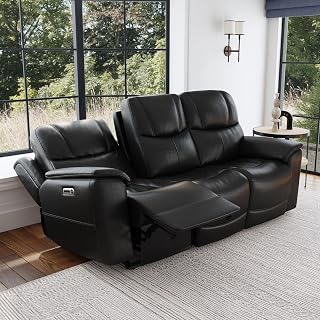
Flexsteel Crew Black Leather Power Reclining Sofa
Flexsteel’s blue steel spring base is the closest thing to over-engineering in this category, and the Crew pairs it with independent power headrest and lumbar plus true zero-gravity positioning. Top-grain leather on wear surfaces, USB-A and USB-C at each seat, and a mechanism you can actually get parts for years down the line.
Flexsteel Clive Power Reclining Sofa
A cleaner-lined alternative to the Crew, the Clive delivers the same power headrest and lumbar adjustment in a more restrained profile that suits smaller living rooms. Fewer bells and whistles, same underlying build integrity — a sensible pick if you’d rather pay for structure than features.
Watson & Whitely 3-Seat Power Reclining Sofa with Console
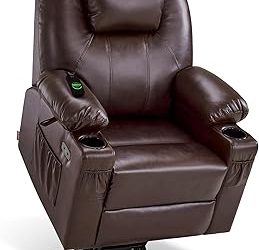
Genuine leather at a noticeably friendlier price, with adjustable headrest and lumbar, deep zero-gravity recline, and a center console that hides real storage rather than a token tray. The saddle brown finish develops character with use, which is exactly what you want from leather you plan to keep.
Ashley Boyington 3-Seat Power Reclining Sofa
Heated seats and air massage make this the therapy-focused option, and the drop-down table earns its keep for anyone who works or eats from the couch. Upholstery is a leather and faux-leather combination, so budget accordingly on longevity expectations — the comfort features are the real draw here.
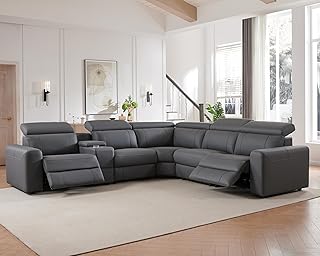
5-Seater Power Reclining Leather Sectional
For larger rooms, this sectional brings adjustable headrests, storage, USB charging, and cup holders across five seats without the price jump most modular systems demand. Confirm your corner measurements carefully; sectionals are far less forgiving of a half-inch error than a straight sofa.
Frequently Asked Questions
Is power lumbar support genuinely better than a built-in cushion?
Yes, for most people. A fixed cushion supports one spine shape in one position, while a power lumbar bladder or panel lets you increase support as you recline deeper — which is precisely when your lower back needs more, not less.
How much clearance do I need behind the sofa?
Wall-hugger mechanisms typically need three to six inches. Traditional reclining frames often need twelve or more. Check the spec sheet for the specific model and add an inch for cord routing so you’re not pinching the power supply against the baseboard.
What happens if a motor fails after the warranty ends?
Most power recliners use standardized linear actuators and transformers that are sold separately for reasonable money. Replacement is usually a matter of unplugging a connector and removing a few bolts — well within reach if you’re comfortable with basic tools.
Do heated and massage features actually help with back pain?
Heat helps with muscle tension and stiffness, and many users find it genuinely useful after physical work. Air massage is pleasant but modest in effect. Treat both as comfort bonuses rather than reasons to compromise on frame quality or lumbar adjustability.
Final Thoughts
If longevity matters most, the Flexsteel Crew is the one I’d build a room around — its steel base and serviceable mechanism justify the outlay. The Watson & Whitely with console hits the best balance of genuine leather, real lumbar adjustment, and sane pricing, while the Ashley Boyington makes sense for anyone who wants heat and massage in the mix. Measure twice, check the clearance spec, and pick the one whose materials you’d be happy to still be sitting on in ten years.