Key takeaways
- Match the pitch: Grab a level or a phone inclinometer and measure your slope in degrees before shopping. Sloped-specific downlights typically handle up to 30–35 degrees; gimbals usually tilt 90 degrees, and track heads go further. Buying blind is how you end up returning a box of trims.
- Kill the glare first: On a slope you sit in the direct line of the aperture far more often than on a flat ceiling. Look for a deep-set diode, a baffled or black reflector, and a spec sheet mentioning anti-glare optics. A cheap flat-lens puck will make the whole room feel harsh.
- Check depth and joist clearance: Rafter bays on a vaulted ceiling are often stuffed with insulation and there is rarely room above. Canless drivers that sit beside the hole are your friend, and IC rating is non-negotiable if insulation touches the fixture.
- Decide fixed versus aimable: Aimable heads let you correct beam direction after install, which is invaluable when you are working from a ladder and cannot see the finished effect. Fixed sloped trims give a cleaner ceiling line but demand accurate layout.
- Selectable CCT and real dimming: A 5-CCT switch on the housing means you can dial in warmth after seeing the light hit your actual wood or paint. Confirm dimmer compatibility too, since flicker is more obvious on a slope where the fixture stays in your peripheral vision.
What's inside
Anyone who has stood on a ladder under a cathedral or attic-conversion ceiling knows the frustration. A standard flush mount bolts on square to the surface, which means on a 6:12 pitch it hangs out at an angle like a crooked hat. Screw in a regular recessed can and the beam fires sideways, washing one wall in hot light while the room stays dim and the bare diode glares straight into your eyes from the couch. Sloped ceilings tilt everything, and lighting hardware built for flat drywall simply does not compensate.
The fix is gear engineered for the angle: canless downlights with a pre-tilted, deeply recessed reflector, gimbal trims that swivel and tilt inside their own housing, track kits with fully articulating heads, and semi-flush fixtures with a pivoting canopy. Below are six fixtures I have either installed or spec’d on pitched ceilings, plus the measurements and details worth checking before you cut a single hole.
As an Amazon Associate we earn from qualifying purchases.


How to Choose a Light For Slanted Ceiling (2026)
- Match the pitch: Grab a level or a phone inclinometer and measure your slope in degrees before shopping. Sloped-specific downlights typically handle up to 30–35 degrees; gimbals usually tilt 90 degrees, and track heads go further. Buying blind is how you end up returning a box of trims.
- Kill the glare first: On a slope you sit in the direct line of the aperture far more often than on a flat ceiling. Look for a deep-set diode, a baffled or black reflector, and a spec sheet mentioning anti-glare optics. A cheap flat-lens puck will make the whole room feel harsh.
- Check depth and joist clearance: Rafter bays on a vaulted ceiling are often stuffed with insulation and there is rarely room above. Canless drivers that sit beside the hole are your friend, and IC rating is non-negotiable if insulation touches the fixture.
- Decide fixed versus aimable: Aimable heads let you correct beam direction after install, which is invaluable when you are working from a ladder and cannot see the finished effect. Fixed sloped trims give a cleaner ceiling line but demand accurate layout.
- Selectable CCT and real dimming: A 5-CCT switch on the housing means you can dial in warmth after seeing the light hit your actual wood or paint. Confirm dimmer compatibility too, since flicker is more obvious on a slope where the fixture stays in your peripheral vision.
The Best Lights For Slanted Ceilings (2026), Reviewed
Maxxima 4″ Canless Sloped Anti-Glare LED Downlight
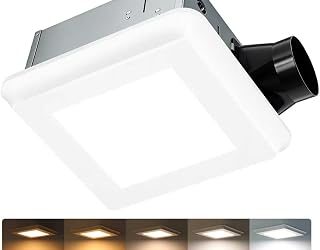
This is the purpose-built answer: the reflector is already angled and set deep, so the beam drops straight down instead of skidding across the ceiling. At 1000 lumens with 90 CRI and five selectable color temperatures, it is the trim I reach for on vaulted living rooms where I want a clean, uninterrupted ceiling plane.
Industrial Black Semi Flush Mount, 2-Light
A rare surface-mount that genuinely tolerates a pitch, thanks to a canopy that pivots so the fixture hangs plumb. The blackened cage and exposed-bulb farmhouse look suits a sloped kitchen ceiling or entry where recessed work would mean opening drywall.
Maxxima 5″ & 6″ Rotatable LED Retrofit Gimbal
Best pick for retrofits, since it threads into an existing 5″ or 6″ can and instantly gains rotation plus tilt. The black trim recesses the diode visually, and 1150 lumens from 11 watts means you can aim light at artwork or a stair run without a lighting redesign.
LED 2 Light Track Lighting Kit, Black
Track is the DIY shortcut on a slope: one box, one mounting line, and two heads you can aim anywhere afterward. Mount it running with the pitch, aim the heads down and across, and you get flexible task light without cutting into rafters. GU10 bulbs are sold separately, so budget for those.
Ensenior 4 Inch Gimbal LED Recessed Light, 4 Pack
The value play at four per box, with 90 degrees of tilt and full 360-degree swivel plus dimming down to 5 percent. IC and damp rated, which makes it usable in a sloped bathroom or a covered porch ceiling as well as bedrooms.
Frequently Asked Questions
Can I use a regular recessed light on a sloped ceiling?
Not well. A standard trim aims perpendicular to the ceiling, so on a pitch the beam angles sideways and the diode points at eye level. Use a sloped-specific housing or a gimbal trim instead.
How steep a slope can these handle?
Most sloped downlights are rated to roughly 30–35 degrees, gimbals to about 90 degrees of tilt, and track heads even more. Measure your pitch first and check the listing.
Do I need a junction box for canless downlights?
Canless models include an integrated junction box, so you land your cable there and push the driver into the bay. Always confirm your local code and kill the breaker before wiring.
What spacing should I use?
Roughly half your ceiling height between fixtures is a solid starting rule, measured along the slope. Snap a chalk line parallel to the ridge so your holes stay visually straight.
Final Thoughts
For new work on a vaulted ceiling, the Maxxima 4″ Canless Sloped Downlight delivers the cleanest, lowest-glare result. If you already have cans in place, the Maxxima Rotatable Retrofit Gimbal is a fifteen-minute upgrade, and the Ensenior 4-Pack Gimbal covers a whole room on a tighter budget.