Key takeaways
- Mounting angle: Most flush mounts assume a flat plane. On a pitched ceiling you either need a fixture with a gimbaled or adjustable canopy, a sloped-ceiling adapter (sold by pitch, usually up to 45 degrees), or a downrod that hangs the fixture plumb regardless of slope.
- Lumens, not watts: Height steals light. Plan roughly 20–30 lumens per square foot for living space, then add 25–50 percent if your ceiling peaks above 12 feet. A 3,000-lumen fixture that feels bright at 8 feet reads dim at 16.
- Serviceability: Integrated LED is the right call up high — no bulb changes for 25,000-plus hours — but confirm the driver is accessible or the fixture is replaceable as a unit. Avoid anything with a proprietary bulb you can’t source in five years.
- Aiming and layering: One fixture at the peak creates a hot spot and dark perimeter. Two or three adjustable spots, or a grid of recessed lights spaced roughly half your ceiling height apart, give you even coverage and let you wash a stone chimney or gallery wall.
- Dimming and control: Test compatibility with your existing dimmer before you close up the box. Remote-controlled or app-driven fixtures are worth the premium when the switch is across the room and the fixture is 15 feet up.
What's inside
Vaulted ceilings are the reason half the light fixtures in a hardware store are the wrong answer. That soaring plane above your living room reads as drama on a floor plan, but once you’re standing on the top step of an 8-foot ladder holding a fixture over your head, the practical problems stack up fast: the slope fights flat mounting plates, the height eats brightness before it reaches the couch, and a single center fixture leaves the corners of the room in shadow. Add in the fact that relamping anything up there is a genuine project, and suddenly “which light looks nice” becomes “which light will I never have to touch again.”
This guide is written from the ladder, not the showroom. Below you’ll find fixtures that actually solve vaulted-ceiling problems — sealed LED units with lifespans measured in decades, canless recessed cans that fit shallow rafter bays, and adjustable spots you can aim down a slope instead of straight into the drywall. I’ve flagged where you’ll need a sloped-ceiling adapter, where a remote saves you a trip up the ladder, and where a multi-fixture layout beats one big statement piece.
As an Amazon Associate we earn from qualifying purchases.


How to Choose a Light For Vaulted Ceiling (2026)
- Mounting angle: Most flush mounts assume a flat plane. On a pitched ceiling you either need a fixture with a gimbaled or adjustable canopy, a sloped-ceiling adapter (sold by pitch, usually up to 45 degrees), or a downrod that hangs the fixture plumb regardless of slope.
- Lumens, not watts: Height steals light. Plan roughly 20–30 lumens per square foot for living space, then add 25–50 percent if your ceiling peaks above 12 feet. A 3,000-lumen fixture that feels bright at 8 feet reads dim at 16.
- Serviceability: Integrated LED is the right call up high — no bulb changes for 25,000-plus hours — but confirm the driver is accessible or the fixture is replaceable as a unit. Avoid anything with a proprietary bulb you can’t source in five years.
- Aiming and layering: One fixture at the peak creates a hot spot and dark perimeter. Two or three adjustable spots, or a grid of recessed lights spaced roughly half your ceiling height apart, give you even coverage and let you wash a stone chimney or gallery wall.
- Dimming and control: Test compatibility with your existing dimmer before you close up the box. Remote-controlled or app-driven fixtures are worth the premium when the switch is across the room and the fixture is 15 feet up.
The Best Light For Vaulted Ceiling (2026)s Reviewed
Ensenior 6″ Canless Recessed Downlights, 12-Pack
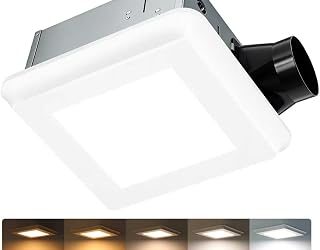
The workhorse solution: ultra-thin wafers with attached junction boxes that slip into a 6-inch hole without needing housing depth, which matters enormously in a vaulted ceiling where rafter bays are tight and insulation is packed. IC and damp rated with 5CCT selectable color and full 5–100 percent dimming, so you can dial the whole grid to 2700K for evening and never think about it again.
Multi-Directional 3-Light Adjustable Ceiling Spot
My first pick for a genuine slope, because each head pivots independently — you mount the plate to the pitched surface and aim the light where you need it instead of fighting the geometry. The matte black round base looks deliberate in industrial and transitional rooms, and three heads let you split duty between task lighting and an art wall.
12W High-CRI Dimmable Ceiling Spotlight
CRI≥98 is unusual at this price and it shows on wood tones, textiles, and anything you’ve finished by hand — colors read true rather than flattened. The 4.72-inch aluminum canopy heat-sinks well for a fixture you’ll rarely reach, and 10–100 percent dimming gives real low-end control for evening ambience.
12″ Slim Flush Mount, 3,200 Lumens, 4-Pack
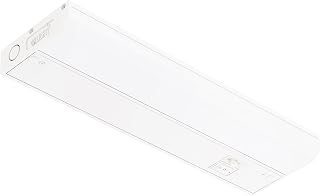
At 0.67 inches deep and 3,200 lumens each, these are the efficient way to light a long vaulted hallway or a great room’s flat side sections with a repeating array. Five color temperatures and dimming mean one purchase covers kitchen, closet, and bedroom without mixing tones.
Shine LUEST 39.4″ Dimmable LED Flush Mount
When you want a single anchor fixture, this 100W panel throws enough light to fill a large room and the included remote spares you the ladder for dimming and color changes. Best on the flatter section of a vault or paired with an adapter — check your pitch first.
Frequently Asked Questions
Do I need a sloped-ceiling adapter?
If your ceiling pitch exceeds about 15 degrees and the fixture has a rigid flat canopy, yes. Adapters are inexpensive, rated by degree range, and install between the electrical box and the fixture. Recessed wafers and gimbaled spots often skip the need entirely.
How many recessed lights should I install?
Space them roughly half your ceiling height apart and keep the outer row 2–3 feet from walls. In a room with a 14-foot peak, that often means six to nine 6-inch cans rather than the four you’d use at standard height.
Can I mix flush mounts and spots?
That’s usually the best result. Use recessed or flush mounts for ambient fill and adjustable spots — like the CANEOE curved acrylic fixture or a multi-head track — to accent architecture and reduce the cave effect on tall walls.
What color temperature works best?
2700K–3000K for living and sleeping spaces, 4000K for kitchens and workshops. Selectable-CCT fixtures let you decide after installation, which is the safer bet when everything is 15 feet overhead.
Final Thoughts
For most vaulted rooms I’d build the layout around the Ensenior canless 12-pack for even ambient coverage, add the Multi-Directional 3-Light adjustable spot where the slope is steepest and you need aimable light, and reserve the Shine LUEST 39.4-inch flush mount for a single dramatic anchor over a great room. Buy once, install carefully, and you shouldn’t be back up that ladder for years.