Key takeaways
- Measure seat depth, not overall depth: Listings often quote the outside dimension, which includes the back cushion and frame. Ask for the seat depth from the front edge to the base of the back cushion, and aim for 22 to 26 inches if you actually want to stretch out.
- Know your leather grade: Full-grain develops a patina and outlasts everything else. Top-grain is a solid middle ground. Faux leather (PU or PVC over a fabric backing) has come a long way and now handles claws and juice boxes better than real hide, but it won’t age the same way.
- Check the frame material: Kiln-dried hardwood with corner blocks is the benchmark. Engineered wood is acceptable if the joints are reinforced. Steer clear of anything that lists particleboard as the primary structure, because deep cushions put more leverage on the frame.
- Understand the fill tradeoff: Feather-down wrapped foam gives that sink-in feel but needs weekly fluffing. High-density foam holds its shape with zero maintenance and gives you firmer support. Neither is wrong, but they feel completely different after twenty minutes of sitting.
- Plan the delivery path before you order: Deep sofas are bulky. Measure doorframes, hallway turns, and stair landings. Modular sectionals and knock-down designs with bolt-together legs solve most access headaches that one-piece sofas create.
What's inside
Anyone who has spent a weekend flipping a sofa on its back to check the frame knows the frustration: “deep seat” gets stamped on listings where the actual cushion depth barely clears 20 inches. You sit down expecting to sink and instead perch on the front edge with your knees pinned. Real depth means 22 inches or more of usable seat, cushions thick enough to hold their loft, and a back angle that supports you instead of dumping you forward. Add leather to the equation and the variables multiply, since a full-grain hide behaves nothing like a bonded panel glued over foam.
This guide comes from the perspective of someone who reads assembly manuals before buying and pokes around under the skirt with a flashlight. I looked at frame construction, cushion fill, leather type, and how each of these sofas actually goes together in a room with a doorway and a staircase. Below are six deep-seat leather options worth your money in 2026, plus the specs that separate a sofa you’ll still like in five years from one you’ll be dragging to the curb.
As an Amazon Associate we earn from qualifying purchases.


How to Choose a Deep Seat Leather Sofa (2026)
- Measure seat depth, not overall depth: Listings often quote the outside dimension, which includes the back cushion and frame. Ask for the seat depth from the front edge to the base of the back cushion, and aim for 22 to 26 inches if you actually want to stretch out.
- Know your leather grade: Full-grain develops a patina and outlasts everything else. Top-grain is a solid middle ground. Faux leather (PU or PVC over a fabric backing) has come a long way and now handles claws and juice boxes better than real hide, but it won’t age the same way.
- Check the frame material: Kiln-dried hardwood with corner blocks is the benchmark. Engineered wood is acceptable if the joints are reinforced. Steer clear of anything that lists particleboard as the primary structure, because deep cushions put more leverage on the frame.
- Understand the fill tradeoff: Feather-down wrapped foam gives that sink-in feel but needs weekly fluffing. High-density foam holds its shape with zero maintenance and gives you firmer support. Neither is wrong, but they feel completely different after twenty minutes of sitting.
- Plan the delivery path before you order: Deep sofas are bulky. Measure doorframes, hallway turns, and stair landings. Modular sectionals and knock-down designs with bolt-together legs solve most access headaches that one-piece sofas create.
The Best Deep Seat Leather Sofa (2026)s Reviewed
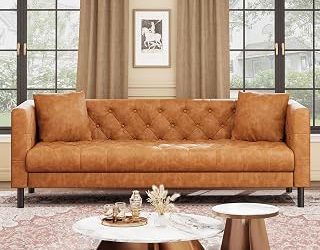
Garvee 81″ Mid Century Leather Sofa, Brown
Handmade button tufting on the backrest gives this one a tailored look that photographs well and holds up better than machine-stitched imitations. At 81 inches it fits most apartment living rooms without crowding, and assembly is limited to attaching legs, so a single person can manage it.
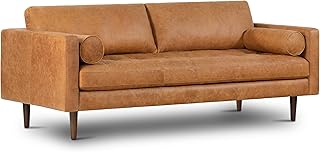
80″ Full-Grain Leather Chesterfield, Caramel
This is the one I’d pick if longevity matters more than budget. Full-grain hide over a feather-down fill means it softens and darkens with use rather than cracking, and the caramel tone shifts beautifully in natural light. Plan on fluffing the cushions regularly to keep the profile crisp.
111.81″ Brown 4-Seater Faux Leather Sofa
Nearly ten feet of seating with a wood frame and metal legs, which is a rare combination at this size and price. The generous seat depth makes it a genuine napping sofa, though measure your entry path carefully because this is the largest single-piece option here.
EASE MOOSE Oversized Modular Sectional, Brown
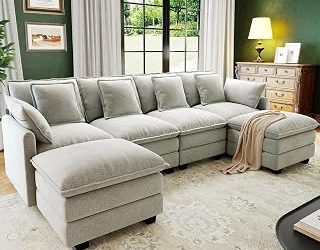
Scratch-resistant faux leather makes this the practical choice for households with pets or kids, and the modular design means you can reconfigure the L-shape or split it for easier moves. The seats run wide and deep, so this leans lounge rather than formal.
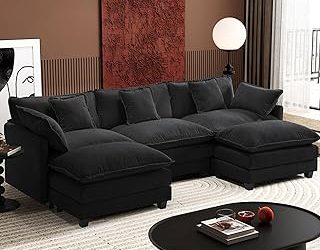
EASE MOOSE 100″ L-Shaped Sectional, Black
The removable, waterproof cover is the standout feature here, letting you wash away spills instead of scrubbing them in. Curved arms soften the black leather look, and the movable ottoman lets you flip the chaise to either side depending on your layout.
Frequently Asked Questions
How deep should a sofa seat be for lounging?
Between 24 and 26 inches of seat depth lets most adults sit fully back with legs extended. Below 22 inches you’ll find yourself perched forward, and above 28 inches shorter sitters may not reach the floor comfortably.
Is faux leather worth it on a deep seat sofa?
For high-traffic homes, yes. Modern PU faux leather resists scratches and cleans up with a damp cloth, which matters more on a sofa people actually sprawl across. It won’t develop patina, but it also won’t need conditioning twice a year.
Do deep cushions sag faster?
Not because of depth, but because of fill quality. High-density foam over sinuous springs or webbing holds up well. Loose down-only fill compresses fastest and needs regular rotation and fluffing to stay even.
How do I maintain a genuine leather sofa?
Wipe dust monthly with a dry microfiber cloth, blot spills immediately, and apply a pH-neutral leather conditioner every six to twelve months. Keep it out of direct sunlight and away from heating vents, which dry the hide and cause cracking.
Final Thoughts
If you want a sofa that improves with age and you’re willing to maintain it, the 80″ Full-Grain Leather Chesterfield in caramel is the clear investment pick. For families who need durability over patina, the EASE MOOSE Oversized Modular Sectional handles real life without complaint and moves in pieces. And if you’re furnishing an apartment on a tighter budget, the Garvee 81″ Mid Century Leather Sofa delivers genuine deep-seat comfort and tufted detailing at a price that won’t make you flinch.