Key takeaways
- Duty rating over headline weight: Type IA (300 lbs) and Type IAA (375 lbs) ratings account for you plus tools plus materials. A 330 lb “security load” sounds generous until you add a full paint can and a cordless drill, so build in margin rather than shopping to the number.
- Fiberglass for anything electrical: If there is a chance you will be near a live circuit, panel, or overhead line, fiberglass rails are non-negotiable. Aluminum is lighter and cheaper, but it conducts, and no ladder is worth that risk.
- Match the configuration to your actual jobs: A fixed stepladder is faster to deploy and more stable for repeated indoor work. Multi-position and telescoping designs earn their keep on stairs, uneven ground, and awkward roof access where a single-shape ladder simply cannot sit level.
- Leveling and footprint: Integrated leg levelers, stabilizer bars, and wide slip-resistant feet do more for real-world safety than an extra foot of reach. Check whether the levelers adjust without tools, because fiddling mid-setup is how people take shortcuts.
- Weight and storage reality: A 26 ft multi-position ladder is remarkably capable and also genuinely heavy. Be honest about whether you will carry it solo and where it will live, since a ladder that lives buried behind the lawnmower gets used less than one you can grab in ten seconds.
What's inside
Anyone who has spent a Saturday wrestling a wobbly ladder across a stairwell knows the frustration: the tool that should make a job safer ends up being the sketchiest part of the whole project. Most of us buy one ladder and expect it to handle everything from swapping a hallway bulb to clearing gutters two stories up, and that mismatch is where accidents happen. Add in confusing duty ratings, vague weight limits, and a market flooded with lookalike telescoping models, and it is genuinely hard to tell which brands have earned their reputation.
This guide cuts through that. I have pulled together the ladder brands that consistently hold up in real workshops and real garages, from heritage names like Louisville and Little Giant to newer multi-position specialists worth a look. Below you will find the picks, the specs that actually matter when you are standing on rung four, and honest notes on where each one fits in a home toolkit.
As an Amazon Associate we earn from qualifying purchases.



🛒 Best Price Today on Amazon
Prime members get fast, free shipping on everything above, plus member-only deals. New members get a 30-day free trial — cancel anytime.
How to Choose a/an Ladder Brands (2026)
- Duty rating over headline weight: Type IA (300 lbs) and Type IAA (375 lbs) ratings account for you plus tools plus materials. A 330 lb “security load” sounds generous until you add a full paint can and a cordless drill, so build in margin rather than shopping to the number.
- Fiberglass for anything electrical: If there is a chance you will be near a live circuit, panel, or overhead line, fiberglass rails are non-negotiable. Aluminum is lighter and cheaper, but it conducts, and no ladder is worth that risk.
- Match the configuration to your actual jobs: A fixed stepladder is faster to deploy and more stable for repeated indoor work. Multi-position and telescoping designs earn their keep on stairs, uneven ground, and awkward roof access where a single-shape ladder simply cannot sit level.
- Leveling and footprint: Integrated leg levelers, stabilizer bars, and wide slip-resistant feet do more for real-world safety than an extra foot of reach. Check whether the levelers adjust without tools, because fiddling mid-setup is how people take shortcuts.
- Weight and storage reality: A 26 ft multi-position ladder is remarkably capable and also genuinely heavy. Be honest about whether you will carry it solo and where it will live, since a ladder that lives buried behind the lawnmower gets used less than one you can grab in ten seconds.
The Best Ladder Brands (2026)s Reviewed
LANBITOU 14 FT A-Frame Multi-Position Ladder
This is the do-everything pick for homeowners who need one ladder to cover interior work, stair landings, and occasional roof access, with a 330 lb capacity and a genuinely compact folded footprint. The locking hinges take a firm hand to seat properly, so extend fully and confirm every catch clicks before you load it.
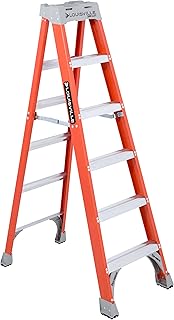
Louisville 6 ft Fiberglass Step Ladder (FS1506)
A no-drama, Type IA fiberglass stepladder that belongs in every garage where light fixtures and breaker panels are on the to-do list. It is heavier than an aluminum equivalent, but the payoff is a rock-solid platform and the electrical safety margin that makes it the default choice for indoor trade work.
Little Giant Velocity 26 ft with Leg Levelers
The Velocity is the closest thing to a professional-grade ladder system a serious DIYer can own, with integrated leg levelers that solve sloped driveways and soft lawns without shims or scrap wood. It is a substantial piece of aluminum to move around, so plan on treating setup as a two-minute task rather than a grab-and-go.
Little Giant MightyLite 8 ft Fiberglass Stepladder
The slim profile and 375 lb rating are the headline, but the Ground Cue feature, which gives an audible tap when a leg is off the ground, is the detail that changes how carefully you set up. Between the full standing platform and the tool top cap, this is the stepladder for anyone who spends long stretches at height.
17 ft Telescoping A-Frame with Stabilizer Bar & Wheels
The extra reach and built-in wheels make this a smart pick for exterior work where you need to reposition frequently along a wall or fence line. Deploy the stabilizer bar every time on extension duty, since the taller you go, the more that wider base matters.
Frequently Asked Questions
How tall a ladder do I actually need?
Your working reach is roughly your ladder height plus four feet, but for extension use the top should extend three feet past your contact point. For a typical single-story gutter at 12 to 14 ft, a 14 to 17 ft multi-position ladder is the sensible target.
Is aluminum or fiberglass better?
Fiberglass wins on safety near electricity and tends to feel more rigid under load; aluminum wins on weight and price. If you only buy one and electrical work is on the horizon, choose fiberglass.
Are telescoping multi-position ladders safe?
Yes, when they are rated Type IA and set up correctly. The failure point is almost always a hinge or rung lock that was not fully seated, so make a habit of visually confirming each lock before your first step.
How should I store a ladder?
Flat on wall hooks or hung horizontally in a garage, out of standing water and direct sun. Wipe down aluminum rails after wet work and inspect rung joints and feet at the start of each season.
Final Thoughts
If you want one ladder that adapts to whatever the house throws at you, the LANBITOU 14 FT multi-position model is the practical starting point, while the Little Giant Velocity 26 ft is the upgrade for anyone regularly working at real height on uneven ground. For indoor and electrical jobs where stability beats versatility, the Louisville FS1506 fiberglass stepladder remains the one I reach for without thinking.