Key takeaways
- Measure the panel, not the diagonal: An 86-inch TV runs about 75 inches wide. Aim for a console at least 78 to 86 inches so the base is visually and physically wider than the screen. Anything narrower reads as unstable even if the load rating says otherwise.
- Check VESA before anything else: Large screens often use 600x400mm or 800x600mm hole patterns. A mount rated for 400×400 simply won’t reach, and drilling new holes into a mounting arm is a bad idea. Find the spec sticker on the back of your TV first.
- Build in a weight buffer: Look for a rating that clears your panel by 30 percent or more. An 86-inch TV commonly lands between 110 and 140 pounds, so a 150-pound rating is workable while a 200-pound rating gives you real margin during tilt or swivel.
- Plan the cable run early: Behind-the-panel routing channels or a rear cutout keep an HDMI bundle from dangling. On rolling and floor mounts, look for clips along the column so the slack travels with the stand.
- Respect the assembly reality: Nearly all of these need two people for the lift. Have a moving blanket, a magnetic bit holder, and a level ready. Snug every bolt by hand before torquing anything down, and do a final pass after the TV is seated.
What's inside
An 86-inch panel is a different animal than a 65. It’s roughly 75 inches wide, often tips past 120 pounds, and the factory feet almost never line up with the furniture you already own. I’ve hauled a few of these into living rooms, and the pattern is the same every time: the TV arrives, the box gets cut open, and the stand that looked fine in the showroom suddenly overhangs by four inches on each side. Then there’s the wall question. Not every stud layout cooperates, and renters often can’t drill at all.
So this guide is built around what actually holds up in a real room. I’ve broken it into the three approaches that work at this size: table-top leg replacements that let you use a console you already like, freestanding floor mounts and rolling carts that skip the wall entirely, and long-format LED consoles wide enough that an 86-inch screen doesn’t look like it’s spilling over the edges. Weight ratings, VESA limits, swivel range, and the assembly quirks worth knowing before you commit are all covered below.
As an Amazon Associate we earn from qualifying purchases.


How to Choose a Tv Stand For 86 Inch Tv (2026)
- Measure the panel, not the diagonal: An 86-inch TV runs about 75 inches wide. Aim for a console at least 78 to 86 inches so the base is visually and physically wider than the screen. Anything narrower reads as unstable even if the load rating says otherwise.
- Check VESA before anything else: Large screens often use 600x400mm or 800x600mm hole patterns. A mount rated for 400×400 simply won’t reach, and drilling new holes into a mounting arm is a bad idea. Find the spec sticker on the back of your TV first.
- Build in a weight buffer: Look for a rating that clears your panel by 30 percent or more. An 86-inch TV commonly lands between 110 and 140 pounds, so a 150-pound rating is workable while a 200-pound rating gives you real margin during tilt or swivel.
- Plan the cable run early: Behind-the-panel routing channels or a rear cutout keep an HDMI bundle from dangling. On rolling and floor mounts, look for clips along the column so the slack travels with the stand.
- Respect the assembly reality: Nearly all of these need two people for the lift. Have a moving blanket, a magnetic bit holder, and a level ready. Snug every bolt by hand before torquing anything down, and do a final pass after the TV is seated.
The Best Tv Stand For 86 Inch Tv (2026)s Reviewed
Table Top TV Stand with Height Adjustable Legs (37–86″)
This is the fix when you love your existing credenza but hate the stock feet. The steel legs handle up to 150 pounds, accept VESA up to 800x600mm, and adjust in height so a soundbar can slide underneath without blocking the bottom bezel. Straightforward install, and the footprint is narrower than most factory feet.
Upgraded Rolling TV Stand with Shelf (32–86″)
The 200-pound rating and lockable casters make this my pick for anyone who reconfigures a room, runs a home gym, or needs the screen to travel. Three height settings between 53 and 56 inches plus +5° to -10° tilt let you dial in eye level, and the shelf holds a console or streaming box.
Universal Swivel TV Stand with Tempered Glass Base
A genuinely useful pick for open-plan spaces: 110 degrees of swivel means you can angle the screen toward the kitchen or sofa without moving furniture. Five height levels and a weighted tempered glass base keep it planted, though the 132-pound limit means you should verify your panel’s weight first.
FITUEYES Eiffel Series Large TV Floor Stand
Built for the big stuff, with a 187-pound capacity and a wide wood shelf that gives the whole assembly a furniture presence instead of an office-AV look. It’s the best answer for a rental or a wall where the studs refuse to cooperate, and it handles screens well past 86 inches.
86″ High Gloss LED TV Stand with Power Outlet
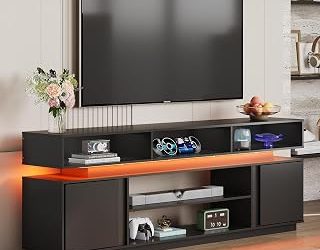
At a full 86 inches wide, this console finally gives an 86-inch panel a base that reads proportional. The integrated outlet cuts down on extension cords, the adjustable glass shelves fit taller AV gear, and the color-changing lighting is genuinely tunable rather than a single garish preset.
Frequently Asked Questions
How wide should a stand be for an 86-inch TV?
Minimum 78 inches, ideally 80 to 86. That keeps the base wider than the panel, which matters both for tip resistance and for how the setup looks from across the room.
Can I use my TV’s original feet on a console?
Sometimes, but the feet on 86-inch models often sit near the far edges, requiring a surface close to 70 inches deep in span. Replacement legs solve this by pulling the contact points inward.
Do I need to anchor a freestanding stand?
If you have kids or pets, yes. Use the included anti-tip strap or add one. Floor stands with wide feet are stable, but a strap costs a few dollars and eliminates the worst-case scenario.
How long does assembly take?
Plan on 30 to 60 minutes for leg kits and rolling stands, and closer to 90 minutes for a full-length LED console with drawers. Sort hardware into cups before you start and it goes faster.
Final Thoughts
For most rooms, the FITUEYES Eiffel Series floor stand is the safest all-around choice thanks to its 187-pound capacity and no-drilling install. If you want a traditional console that actually fits the screen, the 86-inch high gloss LED stand with built-in outlet is the better proportional match, and the St.Mandyu 86-inch LED unit covers the same footprint with drawer storage. Anyone keeping their current furniture should start with the height-adjustable table top leg kit.