Key takeaways
- Match the base before anything else: Fan light kits use either E12 candelabra (the skinny one) or E26 medium (standard household thread). Unscrew an old bulb and eyeball the threads, or measure the socket opening: roughly 1/2 inch is E12, about 1 inch is E26. Buying the wrong base is the single most common return.
- Respect the shade clearance: Fan shades are shallow. A15, B11, T6, and G16.5 shapes are compact by design and clear the glass; a full-size A19 often bottoms out or presses against the diffuser. If your bulb tip touches the shade, heat builds and lifespan drops.
- Pick color temperature by room, not habit: 2700K reads warm and lamp-like for bedrooms and living rooms. 4000K is a clean neutral that suits kitchens and offices. 5000K daylight is crisp and functional, great for garages, laundry rooms, and workshops, but it can feel clinical over a sofa.
- Only buy dimmable if you actually dim: A non-dimmable LED on a dimmer switch will flicker, buzz, or fail early. Conversely, dimmable bulbs cost more and offer nothing on a plain toggle switch. Check which switch controls your fan light and buy accordingly.
- Watch wattage caps and pull-chain load: Most fan kits cap at 40W or 60W incandescent equivalent. LEDs draw 5 to 9 actual watts, so you’re safe on heat, but stay under the equivalent rating anyway to keep the fixture within spec. CRI 85 or higher keeps skin tones and wood finishes looking right.
What's inside
Swapping bulbs in a ceiling fan looks like a two-minute job until you’re standing on a step stool holding a bulb that doesn’t fit the socket, or discovering the “dimmable” pack you bought hums like a mosquito every time you touch the wall dial. Fan light kits are their own little ecosystem: cramped glass shades, candelabra sockets that came out of nowhere, vibration from the motor, and manufacturer wattage caps printed on a sticker nobody reads. Get any one of those wrong and you’re back up the ladder.
I’ve cycled through a lot of bulbs in my own fans, including a 1990s builder-grade unit in the guest room that eats anything too heavy in the shade. This guide breaks down what actually matters for fan fixtures, base sizes, bulb shape, color temperature, and whether dimming is worth the extra spend, then walks through six packs that hold up in real fixtures. No filler, no specs you’ll never use.
As an Amazon Associate we earn from qualifying purchases.


How to Choose a Light Bulbs For Ceiling Fans (2026)
- Match the base before anything else: Fan light kits use either E12 candelabra (the skinny one) or E26 medium (standard household thread). Unscrew an old bulb and eyeball the threads, or measure the socket opening: roughly 1/2 inch is E12, about 1 inch is E26. Buying the wrong base is the single most common return.
- Respect the shade clearance: Fan shades are shallow. A15, B11, T6, and G16.5 shapes are compact by design and clear the glass; a full-size A19 often bottoms out or presses against the diffuser. If your bulb tip touches the shade, heat builds and lifespan drops.
- Pick color temperature by room, not habit: 2700K reads warm and lamp-like for bedrooms and living rooms. 4000K is a clean neutral that suits kitchens and offices. 5000K daylight is crisp and functional, great for garages, laundry rooms, and workshops, but it can feel clinical over a sofa.
- Only buy dimmable if you actually dim: A non-dimmable LED on a dimmer switch will flicker, buzz, or fail early. Conversely, dimmable bulbs cost more and offer nothing on a plain toggle switch. Check which switch controls your fan light and buy accordingly.
- Watch wattage caps and pull-chain load: Most fan kits cap at 40W or 60W incandescent equivalent. LEDs draw 5 to 9 actual watts, so you’re safe on heat, but stay under the equivalent rating anyway to keep the fixture within spec. CRI 85 or higher keeps skin tones and wood finishes looking right.
The Best Light Bulbs For Ceiling Fans (2026)s Reviewed
comzler E12 LED Candelabra Bulbs, 2700K
This is my default for any fan with candelabra sockets in a living space: the 2700K output has a genuine warm cast without going orange, and CRI 85+ keeps upholstery and paint colors honest. Non-dimmable, so confirm you’re on a standard switch before ordering the six-pack.
GvvooHome E12 Dimmable T6 Bulbs, 4000K
The slim T6/T25 tube shape is a lifesaver in tight fan shades where a globe won’t seat properly, and 90+ CRI is genuinely excellent at this price. True dimming performance is smooth on modern LED-compatible dimmers, though older leading-edge dimmers may still show slight flicker at the very bottom of the range.
ALAMPEVER G16.5 Dimmable E12 Globe Bulbs, 2700K
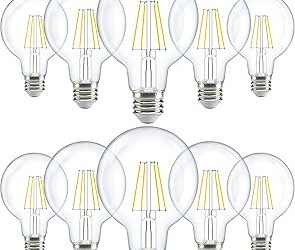
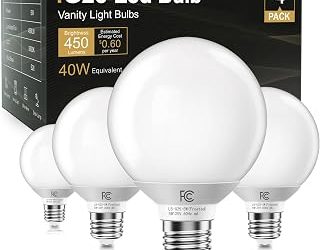
When your fan uses exposed sockets or clear glass shades, the little G16.5 globe simply looks better than a bare tube, and the 550-lumen soft white output is easy on the eyes. The 12-pack is the smart buy if you’re relamping a fan plus a bathroom vanity in one go.
Cotanic A15 E26 Ceiling Fan Bulbs, 4000K
A15 is the shape most people don’t know exists: standard E26 threads on a noticeably smaller bulb, which is exactly what cramped fan kits need. The 4000K neutral tone is a strong pick for kitchen and dining fans where you want clarity without the blue edge of daylight.
A15 LED E26 Ceiling Fan Bulbs, 5000K Daylight
Same compact A15 form factor, but tuned to 5000K for task-heavy spaces, my garage fan runs these and the difference when working on the bench is night and day. Non-dimmable and rated for appliance use, so it doubles as a fridge or utility bulb.
DAYBETTER BR30 LED Flood Bulbs, 5000K
Not a fan bulb, strictly speaking, but worth knowing about: if your fan sits in a room with recessed cans, matching the 5000K flood output keeps the whole ceiling consistent instead of mixing warm and cool light. The 12-pack makes whole-room relamping cheap.
Frequently Asked Questions
How do I tell if my fan uses E12 or E26 bulbs?
Pull one bulb and compare the screw base. E12 candelabra threads measure about 12mm across, roughly the width of a pencil. E26 medium threads measure 26mm, the same as a standard lamp bulb. If the fan is newer with a fully integrated light panel, there may be no replaceable bulb at all.
Why does my ceiling fan light flicker with new LEDs?
Usually a dimmer mismatch: non-dimmable LEDs on a dimmer circuit, or dimmable LEDs on an old incandescent-era dimmer that can’t handle the low load. Occasionally it’s a loose socket contact from fan vibration, tighten the bulb a quarter turn and check that the socket isn’t corroded.
Can I use higher-lumen LEDs than the fan’s wattage sticker allows?
Yes, within reason. The sticker limits heat, not brightness. A 6W LED producing 600 lumens runs far cooler than a 60W incandescent, so you can safely brighten a fan light. Just avoid stacking very high-output bulbs inside a fully enclosed shade with no ventilation.
Do LED bulbs survive ceiling fan vibration?
Better than incandescents did, since there’s no filament to shake loose. Solid-state LEDs handle motor vibration well, though a snug fit matters, a bulb backed slightly out of its socket will arc and fail. Retighten every bulb after you install a new fan.
Final Thoughts
For most fans in living rooms and bedrooms, the comzler E12 2700K set is the easy call, warm, accurate color and enough bulbs to do a whole fixture with spares. If your sockets take E26, the Cotanic A15 in 4000K nails the balance between compact shape and usable neutral light, and the GvvooHome dimmable T6 is the one to reach for when you need real dimming in a shallow shade. Check your base size, confirm your switch type, and any of these three will outlast the fan itself.