Key takeaways
- Base and shape: Nearly all chandeliers use an E12 candelabra base, but shape varies. B11 and CA10 are slim flame-tip styles that look right in exposed sockets, while B10 sits a touch shorter. Measure your existing bulb before ordering — a taller bulb can crowd a shade or hit a crystal arm.
- Color temperature: 2700K is the sweet spot for dining rooms and entryways. It reads warm and incandescent without going amber. Anything at 3000K and above starts feeling commercial in a decorative fixture.
- CRI matters more than you think: A 90+ CRI bulb makes wood grain, upholstery, and skin tones look correct. Cheap 80 CRI bulbs are where that dull, slightly flat look comes from, and no dimmer setting will fix it.
- Dimmer compatibility: If you’re keeping an older leading-edge dimmer, expect some flicker with budget LEDs. Look for bulbs that specifically list smooth dimming, and consider a modern LED-rated dimmer if you’re relamping the whole room anyway.
- Buy in bulk: Chandeliers eat six to twelve bulbs at a time, and mixing batches leads to visible color drift. A 12-pack from one production run keeps everything consistent, with spares for when one eventually goes.
What's inside
Swapping bulbs in a chandelier is one of those jobs that looks like a five-minute task and turns into an hour on a ladder with a rag in one hand and a socket that won’t cooperate. The frustrating part isn’t the climb, though — it’s getting back down and realizing the light is wrong. One bulb reads slightly green, another buzzes when you dim it, and the pretty filament glow you were picturing looks more like a hospital corridor. Most of that comes down to mismatched color temperature, weak CRI, or drivers that were never designed to play nicely with the dimmer already in your wall.
I’ve had bulbs out of a dozen boxes on my workbench over the past couple of years, comparing them side by side in the same fixture at the same dimmer setting. This guide covers what actually matters when you’re buying for a chandelier — base size, bulb shape, lumen output, dimming behavior, and color rendering — plus the specific multipacks I keep coming back to for real installs. Whether you’re relamping a dining room fixture, a pair of sconces, or a ceiling fan light kit, there’s a solid option here.
As an Amazon Associate we earn from qualifying purchases.




How to Choose a Chandelier Light Bulbs (2026)
- Base and shape: Nearly all chandeliers use an E12 candelabra base, but shape varies. B11 and CA10 are slim flame-tip styles that look right in exposed sockets, while B10 sits a touch shorter. Measure your existing bulb before ordering — a taller bulb can crowd a shade or hit a crystal arm.
- Color temperature: 2700K is the sweet spot for dining rooms and entryways. It reads warm and incandescent without going amber. Anything at 3000K and above starts feeling commercial in a decorative fixture.
- CRI matters more than you think: A 90+ CRI bulb makes wood grain, upholstery, and skin tones look correct. Cheap 80 CRI bulbs are where that dull, slightly flat look comes from, and no dimmer setting will fix it.
- Dimmer compatibility: If you’re keeping an older leading-edge dimmer, expect some flicker with budget LEDs. Look for bulbs that specifically list smooth dimming, and consider a modern LED-rated dimmer if you’re relamping the whole room anyway.
- Buy in bulk: Chandeliers eat six to twelve bulbs at a time, and mixing batches leads to visible color drift. A 12-pack from one production run keeps everything consistent, with spares for when one eventually goes.
The Best Chandelier Light Bulbs (2026)s Reviewed
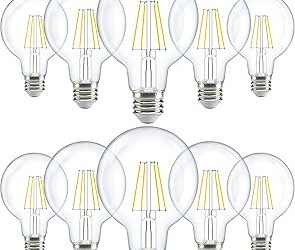
12-Pack Dimmable E12 LED Candelabra Bulbs, 4W B11 Vintage
This is the pack I reach for most often on general relamps — clear glass, visible filament, 450 lumens at 2700K, and a genuinely quiet dim curve down to low levels. At 4W each you’re pulling roughly 48W for a full twelve-arm fixture, which is a noticeable difference on a circuit shared with other lighting.
Hizashi 90+ CRI LED Candelabra Bulb, CA10 Flame Tip
If color accuracy is the priority, this is the one. The 90+ CRI rating shows up immediately in how warm woods and fabrics read, and the UL listing plus flame-tip CA10 profile makes it an easy fit for exposed-socket fixtures where the bulb is part of the design.
GvvooHome E12 Candelabra Bulbs, B10 90+ CRI
A slightly shorter B10 shape that clears tight shades and crystal frames where flame-tip bulbs bump into things. At 400 lumens it’s the gentlest of the group — ideal for a fixture with eight or more sockets where you want ambience rather than task light.
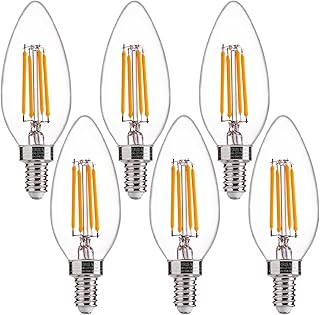
60W Equivalent LED Filament Candelabra Bulbs, 6 Pack
The brightest LED here, and the right call for chandeliers doing real work over a dining table or kitchen island. The clear filament construction keeps that traditional look while the 6-pack size suits smaller fixtures without leaving you with unused spares.
60W Candelabra Incandescent Bulbs, B10 Clear (12-Pack)
Sometimes you want actual incandescent — a warm dimming shift LEDs still can’t quite replicate, plus perfect compatibility with any dimmer ever made. Worth keeping on hand for an antique fixture or a vintage-wired setup where LED drivers cause trouble.
Frequently Asked Questions
Will LED candelabra bulbs work with my existing dimmer?
Usually, but not always. Older leading-edge dimmers were built for a resistive incandescent load and can cause flicker or a limited dimming range with LEDs. If you see problems, swapping in an LED-compatible dimmer is a straightforward hour of work and fixes it permanently.
How many lumens do I need for a chandelier?
Add up total output rather than judging per bulb. A dining room chandelier generally wants 2,000 to 4,000 lumens combined, so twelve 450-lumen bulbs lands right around 5,400 — plenty, and easy to dial back with a dimmer.
Can I mix LED and incandescent bulbs in one fixture?
Electrically it’s fine, but visually it rarely is. The two technologies dim at different rates and shift color differently, so you’ll end up with an uneven look. Commit to one type per fixture.
Do these fit ceiling fan light kits?
Most ceiling fan kits use the same E12 base, so yes. Just check the housing depth — some kits have shallow glass shades that a full flame-tip bulb will poke out of.
Final Thoughts
For most chandeliers, the 12-Pack Dimmable E12 LED Candelabra Bulbs give you the best balance of price, output, and dimming behavior across a full fixture. If you care about how your room actually looks under the light, spend a bit more on the Hizashi 90+ CRI flame-tip bulbs — the color rendering difference is real. And for brighter dining spaces, the 60W Equivalent LED Filament 6-pack delivers the punch without giving up the classic filament look.