Key takeaways
- Base and bulb shape: Most chandeliers take E12 candelabra bases, but shape changes the whole look. B10 and B11 are straight-sided torpedoes; CA10 flame tips mimic a flickering candle. Pull one existing bulb and match it before you order twelve of anything.
- Color temperature: 2700K is the safe, warm target for living spaces. Anything at 3000K and above starts feeling clinical under a decorative fixture. A 2500K incandescent runs even warmer and cozier if you want that old-house glow.
- Dimmer compatibility: LED filament bulbs dim beautifully on modern LED-rated dimmers and chatter unpleasantly on older magnetic ones. If your switch is more than a decade old, budget twenty dollars for a replacement dimmer alongside the bulbs.
- Lumens over wattage: A 4W LED at 450 lumens replaces a 40W incandescent; 600 lumens matches a 60W. Multiply by the number of arms to see your real output. Six arms at 450 lumens gives you 2,700 lumens, which is plenty for most dining rooms.
- CRI if color matters: Color rendering index above 90 makes wood tones, textiles, and food look correct. It’s the least advertised spec and the one you notice most once you’ve lived with it.
What's inside
Anyone who has stood on a ladder with a rag over one hand and a fistful of mismatched candelabra bulbs in the other knows the real problem with chandeliers: the fixture is gorgeous, and the bulbs are an afterthought. You buy a six-pack, discover two arms still look yellower than the rest, and end up with a light that reads more waiting-room than dining-room. Add dimmer switches that buzz, filaments that point the wrong direction, and base sizes that look identical until you’re up there twisting, and a fifteen-minute job turns into a weekend.
This guide is written from the ladder down. I’ve swapped bulbs in everything from a five-arm brass fixture over a farmhouse table to a fussy crystal piece in an entryway, and the differences between candelabra bulbs are bigger than the spec sheets suggest. Below you’ll find the picks worth buying in 2026, what actually matters when you’re choosing, and the details that keep you from making a second trip up the ladder.
As an Amazon Associate we earn from qualifying purchases.



How to Choose a Light Bulb For Chandelier (2026)
- Base and bulb shape: Most chandeliers take E12 candelabra bases, but shape changes the whole look. B10 and B11 are straight-sided torpedoes; CA10 flame tips mimic a flickering candle. Pull one existing bulb and match it before you order twelve of anything.
- Color temperature: 2700K is the safe, warm target for living spaces. Anything at 3000K and above starts feeling clinical under a decorative fixture. A 2500K incandescent runs even warmer and cozier if you want that old-house glow.
- Dimmer compatibility: LED filament bulbs dim beautifully on modern LED-rated dimmers and chatter unpleasantly on older magnetic ones. If your switch is more than a decade old, budget twenty dollars for a replacement dimmer alongside the bulbs.
- Lumens over wattage: A 4W LED at 450 lumens replaces a 40W incandescent; 600 lumens matches a 60W. Multiply by the number of arms to see your real output. Six arms at 450 lumens gives you 2,700 lumens, which is plenty for most dining rooms.
- CRI if color matters: Color rendering index above 90 makes wood tones, textiles, and food look correct. It’s the least advertised spec and the one you notice most once you’ve lived with it.
The Best Light Bulb For Chandelier (2026)s Reviewed
Hizashi 90+ CRI LED Candelabra Bulb, 12-Pack
The 90+ CRI is the reason to buy these: wood grain, brass finishes, and dinner all look noticeably richer than under a standard 80 CRI bulb. The flame-tip CA10 shape and UL listing round out a bulb that behaves well on decent dimmers and doesn’t flicker at low settings.
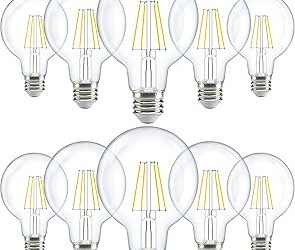
60W Equivalent LED Chandelier Bulbs, Clear B11 Filament, 6-Pack
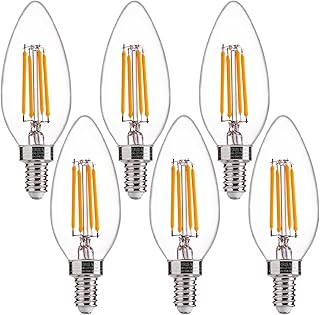
These are the pick when your fixture points bulbs upward or the shades are open and the filament is on display. The clear B11 glass and visible filament read as authentically vintage, and the 60W-equivalent output handles larger rooms where 40W-equivalent bulbs leave corners dim.
60W Candelabra Incandescent Bulbs, Clear B10, 12-Pack
Sometimes you want the real thing. These incandescents deliver full-spectrum 2700K light at 600 lumens with flawless dimming on any switch ever made, which makes them the fix for a chandelier that hums or strobes with LEDs. You’ll trade efficiency and lifespan for that reliability.
E12 Flame Tip LED Candle Bulbs, 4W 460 LM, 12-Pack
A sensible bulk buy for whole-house consistency, especially if you have multiple sconces and a chandelier to match. The flame tip suits traditional fixtures, and 460 lumens per bulb hits the sweet spot for bedrooms and hallways.
12-Pack Dimmable E12 LED Candelabra Bulbs, 4W B11
Straight-sided clear glass with a warm filament, sold in a quantity that actually covers a full fixture plus spares. These are the value play for ceiling fan light kits and multi-arm chandeliers where you want everything matched on the first pass.
Frequently Asked Questions
How do I know if my chandelier takes E12 bulbs?
Unscrew one bulb and measure the threaded base. E12 measures 12mm across, roughly the diameter of a dime. If it’s noticeably wider at around 26mm, you have a standard E26 base and need different bulbs entirely.
Why do my LED chandelier bulbs buzz or flicker?
Almost always a dimmer mismatch. Older dimmers were built for the heavy electrical load of incandescents and can’t regulate the small draw of LEDs smoothly. Swapping in an LED-compatible dimmer solves it in most cases.
Can I mix LED and incandescent bulbs in one fixture?
Electrically, yes. Visually, no. The color and brightness differences are obvious side by side, and mixing loads on a dimmer often causes flicker. Replace all arms at once.
Should the filament point up or down?
Match the fixture. Bulbs held upright in open sockets look best with a vertical filament; downward-facing sockets hide the filament anyway, so shape matters less than output.
Final Thoughts
If you want one recommendation, the Hizashi 90+ CRI 12-pack is the bulb I keep going back to, because high color rendering is the upgrade you actually see every evening. Step up to the clear B11 filament 60W-equivalent set when your fixture needs more output or puts the filament on full display, and keep a box of the 60W clear B10 incandescents on hand for the stubborn old dimmer circuit that refuses to play nicely with anything else.