Key takeaways
- Drawer slides: Ball-bearing runners are non-negotiable for anything holding sockets, hand tools, or power tool batteries. Friction slides bind under load and get worse with dust. Check the per-drawer weight rating, not just the cabinet total.
- Steel gauge and welds: Lower gauge numbers mean thicker steel. Anything in the 16- to 19-gauge range holds its shape; thinner panels dent from a dropped ratchet and let drawer frames rack out of square over time.
- Casters: Look for at least two locking swivel wheels, ideally four with brakes. Small hard plastic casters stall on extension cords and floor cracks — 3-inch or larger wheels with a real bearing roll over shop debris without a fight.
- Work surface: A detachable top tray gives you a portable tote for whatever job you’re on. A solid hardwood top turns the cabinet into a second bench for clamping, assembly, and light hammering without chewing up the finish.
- Security and power: A central lock bar that secures every drawer at once beats individual keyed drawers. Built-in ETL-listed power strips are a genuine convenience — you stop running cords across the floor to charge batteries.
What's inside
Anyone who has spent a Saturday hunting for a 10mm socket knows the real bottleneck in a home shop isn’t tools — it’s where they live. Loose wrenches migrate into buckets, sandpaper curls up under the bench, and the drill bit you need is always in the last drawer you check. A proper tool chest fixes that, but the shopping process is genuinely confusing: two cabinets can look nearly identical online while one rides on ball-bearing slides rated for real weight and the other flexes when you load a drawer with impact sockets.
This guide cuts through it. I’ve broken down what actually separates a chest that still rolls smoothly in year five from one that sags by month three — drawer slide type, steel gauge, caster quality, and whether the top surface can take a beating. Below you’ll find picks that span the range, from a grab-and-go portable box for the truck to a 72-inch workstation with a solid oak top. Whether you’re organizing a one-car garage or building out a dedicated shop wall, there’s a right-sized answer here.
As an Amazon Associate we earn from qualifying purchases.




🛒 Best Price Today on Amazon
Prime members get fast, free shipping on everything above, plus member-only deals. New members get a 30-day free trial — cancel anytime.
How to Choose a Who Makes The Best Tool Chest (2026)
- Drawer slides: Ball-bearing runners are non-negotiable for anything holding sockets, hand tools, or power tool batteries. Friction slides bind under load and get worse with dust. Check the per-drawer weight rating, not just the cabinet total.
- Steel gauge and welds: Lower gauge numbers mean thicker steel. Anything in the 16- to 19-gauge range holds its shape; thinner panels dent from a dropped ratchet and let drawer frames rack out of square over time.
- Casters: Look for at least two locking swivel wheels, ideally four with brakes. Small hard plastic casters stall on extension cords and floor cracks — 3-inch or larger wheels with a real bearing roll over shop debris without a fight.
- Work surface: A detachable top tray gives you a portable tote for whatever job you’re on. A solid hardwood top turns the cabinet into a second bench for clamping, assembly, and light hammering without chewing up the finish.
- Security and power: A central lock bar that secures every drawer at once beats individual keyed drawers. Built-in ETL-listed power strips are a genuine convenience — you stop running cords across the floor to charge batteries.
The Best Who Makes The Best Tool Chest (2026)s Reviewed
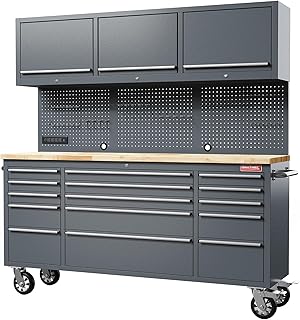
HAUTMEC 72″ Rolling Tool Chest (HT0428)
This is the full shop-wall solution: 15 lockable drawers, three upper cabinets, a pegboard with 51 hooks, and a solid oak top that can genuinely absorb clamping and assembly work. At 16-gauge steel it’s built for someone who’s done sharing bench space with clutter, though you’ll want to measure your wall twice before ordering.
WORKPRO 52″ Rolling Tool Chest
The sweet spot for most two-car garages — five drawers plus a shelved side cabinet for cordless tool cases, all under a wooden workbench top rated to 1,000 pounds. The integrated power strip earns its keep the first time you charge three batteries without stringing an extension cord.
Goplus 5-Drawer Rolling Tool Cabinet
A smart mid-tier pick with a detachable top toolbox, drawer liners, side tool rack, and a single lock bar that secures the whole stack. The universal locking casters make it easy to park next to a project car and then keep it from drifting mid-job.
8-Drawer Rolling Tool Chest (Black)
Ships assembled, which is a real time savings, and the eight shallow-to-deep drawers with tray dividers suit anyone sorting a lot of small hardware. The detachable top box and side hooks make it a solid fit for repair rooms and warehouse carts where tools move around constantly.
Craftsman 3-Drawer Portable Chest
The classic red steel box, and still one of the best answers for a compact bench or apartment workshop. Three drawers won’t hold a full mechanic’s set, but for hand tools and a few kits it’s compact, honest, and built to a familiar standard.
Frequently Asked Questions
How much weight capacity do I actually need?
Hand tools and sockets add up faster than people expect — a loaded drawer easily hits 40 to 60 pounds. For a general home shop, look for cabinets rated 600 pounds or more overall, and skip anything that doesn’t publish a per-drawer figure.
Is a wooden top worth the extra cost?
If you assemble, sand, or clamp anything, yes. Hardwood absorbs impact, won’t telegraph dents the way sheet steel does, and can be sanded and re-oiled after a few years of abuse instead of replaced.
Do I need a portable box if I already have a rolling chest?
Most people benefit from both. A 24-inch portable metal box with ball-bearing runners lets you carry the tools for one specific job to the far side of the garage or into the house without unloading half the cabinet.
Should I assemble a chest myself or buy pre-assembled?
Pre-assembled units arrive square and ready to load, which matters for drawer alignment. Flat-pack cabinets save on shipping but demand patience and a level floor — take your time squaring the frame before installing drawers.
Final Thoughts
For a serious build-out, the HAUTMEC 72″ chest gives you drawer count, pegboard storage, and a bench surface in one footprint. The WORKPRO 52″ is the better value for most home garages, balancing capacity with a usable workbench top, while the Craftsman 3-drawer portable chest remains the right call for tight spaces and small tool kits.