Key takeaways
- Dimmer compatibility: Check the manufacturer’s compatibility list before you buy the switch. Most of these bars want a forward-phase (leading edge) TRIAC dimmer rated for LED loads, and many need a minimum wattage on the circuit — one 8W bar on a 40W-minimum dimmer will flicker no matter how good the fixture is.
- Color rendering, not just color temperature: CRI above 90 with R9 above 90 is the spec that makes raw chicken look pink instead of gray. The R9 number covers deep reds and is where cheap bars fall apart, so treat it as a separate line item from the CCT range.
- Length coverage: Aim to light roughly two-thirds of each cabinet run. Mixing a 36-inch bar over the main prep zone with 12-inch bars over shorter cabinet sections gives more even coverage than forcing everything into one size.
- Junction box and linking method: Look for an integrated wiring compartment with strain relief and knockouts on multiple sides. Linkable bars that daisy-chain with short jumpers mean one home run instead of a splice at every fixture.
- Housing and lens: Extruded aluminum bodies sink heat far better than plastic, which directly affects how long the diodes hold their output. A frosted diffuser rather than a clear lens hides the individual LED dots on glossy stone counters.
What's inside
Anyone who has ever chopped vegetables in their own shadow knows the problem: overhead fixtures sit behind you, so your upper cabinets throw a dark band right across the countertop where the actual work happens. Puck lights and battery strips are the usual quick fix, but they leave you with hot spots, dead batteries, and a visible cord snaking down the backsplash. Hardwired, dimmable bars solve all three at once — clean lines, permanent power, and light you can dial down to a soft glow when the kitchen turns into an evening hangout.
The catch is that hardwired means committing. You are cutting into drywall, pulling romex or fishing a whip through a cabinet base, and tying into a dimmer switch that actually plays nicely with LED drivers. Get the wrong combination and you get flicker, buzz, or a bar that drops out at 40 percent. This guide walks through the fixtures worth wiring in, what specs matter once the covers are off, and the install details that separate a weekend win from a callback to an electrician.
As an Amazon Associate we earn from qualifying purchases.




How to Choose a Under Cabinet Lighting Hardwired Dimmable (2026)
- Dimmer compatibility: Check the manufacturer’s compatibility list before you buy the switch. Most of these bars want a forward-phase (leading edge) TRIAC dimmer rated for LED loads, and many need a minimum wattage on the circuit — one 8W bar on a 40W-minimum dimmer will flicker no matter how good the fixture is.
- Color rendering, not just color temperature: CRI above 90 with R9 above 90 is the spec that makes raw chicken look pink instead of gray. The R9 number covers deep reds and is where cheap bars fall apart, so treat it as a separate line item from the CCT range.
- Length coverage: Aim to light roughly two-thirds of each cabinet run. Mixing a 36-inch bar over the main prep zone with 12-inch bars over shorter cabinet sections gives more even coverage than forcing everything into one size.
- Junction box and linking method: Look for an integrated wiring compartment with strain relief and knockouts on multiple sides. Linkable bars that daisy-chain with short jumpers mean one home run instead of a splice at every fixture.
- Housing and lens: Extruded aluminum bodies sink heat far better than plastic, which directly affects how long the diodes hold their output. A frosted diffuser rather than a clear lens hides the individual LED dots on glossy stone counters.
The Best Under Cabinet Lighting Hardwired Dimmable (2026)s Reviewed
GETINLIGHT 12-Inch Hardwired 3-CCT Selectable
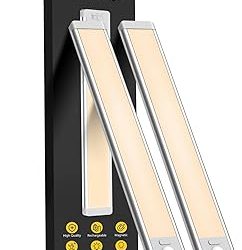
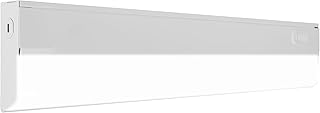
A straightforward hardwired-only bar with a switch for 3000K, 4000K, or 5000K, and the matte white housing disappears against most cabinet undersides. ETL listing plus a genuinely simple wiring compartment makes this the low-drama pick if you want one fixture type across the whole kitchen.
36-Inch Hardwired LED, 22W, CRI 92
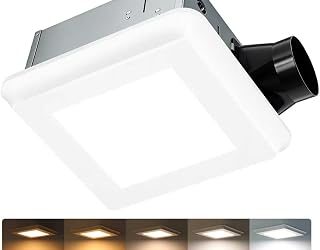
At 1426 lumens across three feet, this is the one to put over your primary prep run or sink counter where you need real working light. The CRI 92 and R9 above 90 combination is unusually strong at this size, and five color temperature steps let you match existing recessed cans without swapping fixtures.
TORCHSTAR 12-Inch 5CCT Aluminum, 4-Pack
The aluminum extrusion, linkable design, and dual hardwired-or-plug-in wiring make this the most flexible kit here — useful when one cabinet run has an outlet and another does not. Title 24 compliance matters if you are permitting work in California.
NICOR UCB Series 18-Inch Direct Wire
NICOR builds to a commercial spec and it shows in the driver quality; this 9W bar dims smoothly with far less chatter than budget alternatives. The 18-inch length fills the awkward gap between standard 12 and 24-inch runs.
12-Inch Hardwired 4-Pack, 10W, CRI 92
Ten watts and 666 lumens per foot is on the brighter end for a 12-inch bar, so plan on dimming it in smaller kitchens. Strong color accuracy and a full 2700K-5000K range make it a solid value buy for a four-cabinet install.
Frequently Asked Questions
Do I need an electrician to install these?
If you are tapping an existing switched circuit and you are comfortable with a voltage tester and wire nuts, this is an intermediate DIY job. Adding a new circuit at the panel or pulling permits is where you call a licensed electrician.
Why do my LED bars flicker at low dimmer settings?
Almost always a dimmer mismatch or a load below the dimmer’s minimum. Swap to an LED-rated dimmer from the fixture’s compatibility list, and if you are running only one or two small bars, choose a dimmer with a low minimum load.
How far back from the cabinet edge should they mount?
Mount toward the front, roughly one to two inches behind the face frame. Pushing the bar to the back wall throws glare into your eyes off a glossy backsplash and leaves the counter edge dim.
Can I mix bar lengths on one dimmer?
Yes, as long as the total wattage stays inside the dimmer’s rating and every fixture uses the same driver technology. Mixing brands on one circuit is where inconsistent dimming curves show up.
Final Thoughts
For most kitchens, the 36-inch CRI 92 bar over the main prep area paired with GETINLIGHT 12-inch units elsewhere delivers the best balance of output and color accuracy for the money. If you want maximum install flexibility across mixed cabinet runs, the linkable TORCHSTAR aluminum 4-pack is the one to buy.