Key takeaways
- Swivel base construction: Look for a steel plate ring with caged ball bearings rather than a plastic race. Flip the chair if you can and check whether the base bolts into a hardwood cross-member or straight into particleboard — the latter is the number one source of that dreaded wobble at month eight.
- Foam density over foam thickness: A 6-inch cushion at 1.2 lb/ft³ collapses faster than a 4-inch cushion at 1.8. Listings rarely state density, so read reviews from the 6-to-12-month window and look for the words “sinking” or “flattened.” Chenille and boucle covers hide compression better than tight-weave fabric, for what that’s worth.
- Manual versus power tradeoffs: Manual handles are field-repairable with a $15 cable and a screwdriver. Power units give you infinite recline positions and USB charging but introduce a motor, a transformer brick, and a control board — three parts you cannot fix yourself. Choose based on whether you’d rather pull a lever or troubleshoot electronics.
- True seat width, measured inside the arms: “Oversized” is a marketing word, not a dimension. A 24-inch interior seat width is genuinely roomy; a 19-inch seat behind bulky armrests is not, regardless of the overall footprint. Measure your favorite existing chair and use that number as your baseline.
- Wall clearance and rocker arc: Swivel rockers need clearance in every direction, not just behind. Budget 18 inches of open space around the chair, and confirm the recline travel — some models need 12 to 14 inches of rear clearance even with a swivel base underneath.
What's inside
Shopping for a swivel rocker recliner is one of those projects where the marketing copy and the actual build quality rarely match up. I’ve torn into enough of these chairs to know the pattern: the listing photo shows a plush, well-stuffed silhouette, and six months later the seat foam has pancaked, the swivel base has developed a click, and the recline handle needs two hands and a bad word. The failure points are almost always the same three things — the swivel ring bearing, the density of the seat foam, and whether the frame is actual kiln-dried hardwood or a stack of engineered board held together with staples and optimism.
This guide takes a builder’s view of the current crop. I looked at how the swivel plates are mounted, how the rocker arcs are damped, where the mechanisms are anchored, and which chairs give you room to add your own reinforcement if you’re the type to flip a chair over and put a wrench on it. Below you’ll find the standouts for 2026 across manual and power configurations, oversized frames for big-and-tall sitters, and one genuine leather option worth the step up.
As an Amazon Associate we earn from qualifying purchases.


How to Choose a Who Makes The Best Swivel Rocker Recliner (2026)
- Swivel base construction: Look for a steel plate ring with caged ball bearings rather than a plastic race. Flip the chair if you can and check whether the base bolts into a hardwood cross-member or straight into particleboard — the latter is the number one source of that dreaded wobble at month eight.
- Foam density over foam thickness: A 6-inch cushion at 1.2 lb/ft³ collapses faster than a 4-inch cushion at 1.8. Listings rarely state density, so read reviews from the 6-to-12-month window and look for the words “sinking” or “flattened.” Chenille and boucle covers hide compression better than tight-weave fabric, for what that’s worth.
- Manual versus power tradeoffs: Manual handles are field-repairable with a $15 cable and a screwdriver. Power units give you infinite recline positions and USB charging but introduce a motor, a transformer brick, and a control board — three parts you cannot fix yourself. Choose based on whether you’d rather pull a lever or troubleshoot electronics.
- True seat width, measured inside the arms: “Oversized” is a marketing word, not a dimension. A 24-inch interior seat width is genuinely roomy; a 19-inch seat behind bulky armrests is not, regardless of the overall footprint. Measure your favorite existing chair and use that number as your baseline.
- Wall clearance and rocker arc: Swivel rockers need clearance in every direction, not just behind. Budget 18 inches of open space around the chair, and confirm the recline travel — some models need 12 to 14 inches of rear clearance even with a swivel base underneath.
The Best Who Makes The Best Swivel Rocker Recliner (2026)s Reviewed
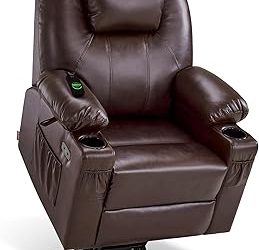
Korser 360° Swivel Rocker Recliner with Massage and Heating
The Korser packs a genuinely useful feature set into a compact footprint, with the heat element positioned in the lumbar area where it actually helps rather than in the seat pan where it just gets warm. The cup holder and side pockets are molded into the arm structure instead of glued on as afterthoughts, and the manual recline mechanism is straightforward enough that a stripped cable is a twenty-minute fix.
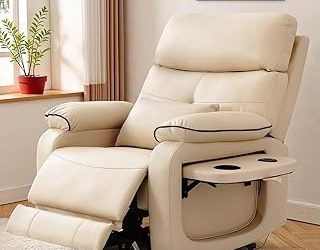
Oversized Swivel Rocker Recliner with Massage, Heat & Adjustable Headrest
This one earns its keep on the adjustable headrest, which is a rarer find on manual chairs than it should be and makes a real difference if you’re taller than 5’10”. The barrel-back silhouette and two removable pillows let you dial in lumbar support without buying aftermarket cushions, though the beige upholstery will want a fabric protector treatment on day one.
24″ Extra Wide Chenille Swivel Rocker Recliner
Twenty-four inches of interior seat width is the real headline here, and the chenille cover holds up well against the compression marks that make cheaper fabrics look tired. Overstuffed armrests and a dedicated lumbar bolster make this the pick for long reading or nursing sessions, and the white finish reads more cream than stark in most rooms.
COOSLEEP Oversized Manual Swivel Rocker for Big and Tall
COOSLEEP built this one around the frame rather than the features, which is exactly the right priority for heavier sitters — the extra-wide glider base and high back handle load without the flex you feel in lighter chairs. It’s a pure manual chair with no motors or gadgets, which means fewer things to fail and a lower price for the same amount of usable seat.
CHITA Genuine Leather Power Recliner, Cognac Brown
The triple-motor setup is the differentiator: independent control of the footrest, back, and headrest means you can find a position no two-motor chair will reach. Genuine leather over a proper hardwood frame, plus USB-A and Type-C ports built into the arm, make this the chair I’d buy if I planned to keep it a decade.
Frequently Asked Questions
Can a swivel rocker recliner sit on carpet without sinking?
Yes, but low-pile carpet is far better than plush. On thick carpet the base can rock unevenly and the swivel loses its smooth travel. A 1/4-inch plywood platform cut to the base footprint and tucked under the chair solves it invisibly and costs about ten dollars.
Why does my new swivel base click when it turns?
Almost always a mounting bolt that backed off during assembly or shipping. Flip the chair, hit every base bolt with the supplied hex key plus a quarter turn, and add a drop of blue threadlocker. If the click persists, the bearing race itself is likely plastic and dry — a spray of white lithium grease usually quiets it for good.
Are power recliners worth the extra cost over manual?
Power makes sense if you have mobility or grip limitations, or if you want a stopping point between fully upright and fully reclined. If you’re mechanically inclined and value long-term repairability, manual chairs will outlive their powered equivalents by a wide margin.
How much clearance do these chairs actually need from a wall?
Plan on 18 inches on all sides. The swivel means the chair’s widest point moves as you rotate, and full recline on most oversized models pushes the seat back another 8 to 12 inches. Tape the footprint out on your floor before you order.
Final Thoughts
If you want one chair that gets the fundamentals right, the 24″ Extra Wide Chenille swivel rocker is the best balance of real usable width, durable upholstery, and honest build quality at its price. Bigger and taller sitters should go straight to the COOSLEEP oversized manual for its frame strength and simplicity, and anyone willing to invest in a chair they’ll still be using in 2036 should look hard at the CHITA genuine leather power recliner — the triple-motor adjustability and hardwood frame put it in a different category entirely.