Key takeaways
- Smoke CADR of 233 supports repeated cleaning in typical bedrooms.
- Washable pre-filter reduces dust loading on downstream HEPA media.
- Auto and Eco modes reduce the need for daily adjustment.
An allergy air purifier is most useful when it delivers enough filtered air through a regularly occupied room to lower suspended pollen, fine dust and pet dander. Neither a HEPA label nor a dramatic whole-house coverage claim proves that the unit can control allergens on carpets, pillows or furniture. We compared five actual US-market models using smoke CADR, practical room sizing, filter configuration and upkeep, then separated what published data supports from claims of allergy relief.
Quick Verdict: Coway Airmega Mighty AP-1512HH is our Best Overall for a typical allergy-prone bedroom or study. Its published 233 CFM smoke CADR, 361-square-foot reference at 4.8 changes per hour and accessible filter system provide a practical baseline. This ranking uses published product information as of October 2026, not personal medical testing.
As an Amazon Associate we earn from qualifying purchases.
By DIY Ideas 4 Home Editorial Team
The Best Allergy Air Purifiers Reviewed
We selected these 5 specific retail models from current US manufacturer listings, technical specifications and published operating instructions as of October 2026. The assessment is editorial and based on documentation rather than claims of detailed research. The listed prices describe the observed configuration and may change at checkout. Where makers advertise a large coverage figure, the matching air-change rate or running-speed condition is stated instead of silently treating all claims as equivalent.
| Product | Best For | Key Spec | Listed Price (October 2026) | Watch Out For |
|---|---|---|---|---|
| Coway Airmega Mighty AP-1512HH | Best Overall | 233 smoke CADR; 361 sq ft at 4.8 ACH | $239.99 | The 12.3-pound wide cabinet needs more floor area than cylinders. |
| Levoit Core 400S-P | Best for App-Based Scheduling | 231 CFM CADR; 358 sq ft at 4.8 ACH | $189.99 | Air-quality sensors do not directly measure specific allergy triggers. |
| Blueair Blue Pure 211i Max | Best for Bigger Allergy Zones | 435 smoke CADR; 674 sq ft at 4.8 ACH | $349.99 | The 14.4-inch footprint requires clear breathing room around furniture. |
| Medify MA-40 | Best for Straightforward HEPA Controls | 239 smoke CADR; 373 sq ft AHAM | $249.99 | Lowest specified 40.5 dBA sound may distract light sleepers. |
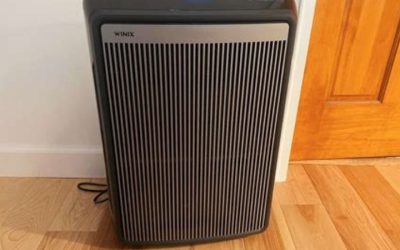
| Winix 5510 | Best for Pollen and Carbon Layers | 253 smoke; 247 pollen CADR; 392 sq ft | $199.99 | The upright 22.17-inch body may crowd narrow rooms. |
Coway Airmega Mighty AP-1512HH: Best Overall
Best For: Buyers who prioritize balanced everyday performance and can accept its main trade-off.
A dependable air-cleaning routine is easier with a purifier that has enough performance for a real room and little reason to fiddle with controls. The Mighty stands out for its combination of particulate CADR, washable pre-filter, air-quality sensing and an Eco mode. The primary recommendation is not based on the longevity of a reputation or an anecdotal improvement in symptoms; it rests on the manufacturer-documented airflow scale and a relatively simple maintenance plan.
Coway’s Mighty AP-1512HH product page gives 233 CFM smoke CADR, 246 CFM dust CADR and 240 CFM pollen CADR, with a rated 361-square-foot area at 4.8 changes per hour. The brand listed $239.99 in October 2026. Its deodorization layer is commonly rated by Coway for about six months and the main HEPA filter for about one year, so the recurring media cost matters even if the appliance runs reliably for years.
The 16.8-by-18.3-by-9.6-inch cabinet weighs 12.3 pounds. Coway describes 24 to 53 dB operation depending on speed, making low mode convenient while reminding buyers that reduced speed also reduces the amount of air filtered. The Mighty has a bipolar feature; consult its controls if you want to avoid optional electronic cleaning functions. It will not replace dust-mite bedding covers or damp-dusting where household allergens are already settled.
Pros:
- Smoke CADR of 233 supports repeated cleaning in typical bedrooms.
- Washable pre-filter reduces dust loading on downstream HEPA media.
- Auto and Eco modes reduce the need for daily adjustment.
Cons:
- The 12.3-pound wide cabinet needs more floor area than cylinders.
- A deodorization layer creates a second replacement schedule to track.
Who Should Buy It: Buy the Mighty for an occupied room around its realistic coverage; move to Blueair 211i Max when the air volume is substantially larger.
Levoit Core 400S-P: Best for App-Based Scheduling
Best For: Buyers who prioritize app-based scheduling and can accept its main trade-off.
People who regularly forget to turn a purifier on may benefit more from a reliable schedule than from paying for the largest fan. The Core 400S-P combines a respectable smoke-scale CADR with app settings, particle monitoring and an automatic mode. Its value lies in using that system to keep filtration running before pollen exposure increases, not in believing a dashboard measures allergens specifically. A PM2.5 sensor does not count dust mites or diagnose an allergy.
Levoit’s Core 400S-P product page lists 231 CFM CADR and an ideal 358-square-foot room at 4.8 ACH; the larger 1,718-square-foot claim describes only one air change per hour. Levoit listed the device at $189.99 in October 2026 and its basic replacement filter at $49.99. Those figures make it a fairly transparent entry point into connected air purification, with replacement filters still part of the actual purchase decision.
Its 10.8-inch-square base and 20.5-inch height are compact for the airflow, with an 11-pound listed machine weight. The manufacturer publishes 22 to 52 dB across settings. During pollen season, a habit of leaving the unit on a sufficiently effective fan speed may matter more than watching the indicator glow green. Place the 360-degree intake clear of curtains and supply air paths, and verify the installed cartridge is the one intended for the listed Core model.
Pros:
- 231 CFM rated air delivery is competitive at the $189.99 price.
- VeSync schedules make regular filtration less dependent on memory.
- A 10.8-inch-square base simplifies placement in busy homes.
Cons:
- Air-quality sensors do not directly measure specific allergy triggers.
- A low-noise mode delivers less filtered air than maximum fan speed.
Who Should Buy It: Choose Core 400S-P if scheduling matters more than cabinet style; choose Coway Mighty AP-1512HH for a conventional control and filter arrangement.
Blueair Blue Pure 211i Max: Best for Bigger Allergy Zones
Best For: Buyers who prioritize bigger allergy zones and can accept its main trade-off.
Larger family rooms and connected living-dining areas are where undersized purifiers fall behind. The 211i Max offers much higher rated particle delivery than the small-room units in this comparison; the increase is meaningful only when it is operating at the relevant speed. Its washable outer pre-filter helps capture visible lint while specialized particle-and-carbon cartridges address the smaller material suspended in the breathing zone.
Blueair reports 435 CFM smoke CADR, 452 CFM dust CADR and 450 CFM pollen CADR, with an AHAM-style recommended room area of 674 square feet at 4.8 ACH. Its official listing showed $349.99 in October 2026. The standard particle-and-carbon filter was advertised at $69.99, with more expensive AllergenBlock variants available. Compare the price of the exact replacement style, rather than assuming one filter type is included in every retailer bundle.
The cylinder stands 22.7 inches tall with a 14.4-inch width and depth and weighs 16.2 pounds. Blueair publishes 23 to 53 dB across fan settings and a top-facing outlet. High air delivery can be an advantage when windows briefly open during cleaning, although the purifier cannot prevent fresh pollen from entering. If the area has several closed doorways, treat it as more than one room rather than relying on the maximum one-hour advertisement.
Pros:
- 435 CFM smoke CADR leaves substantial headroom for large rooms.
- Washable fabric pre-filter handles visible lint before main media.
- Optional AllergenBlock cartridge provides another manufacturer-listed filter choice.
Cons:
- The 14.4-inch footprint requires clear breathing room around furniture.
- Filter upgrades can make ongoing ownership more expensive.
Who Should Buy It: Choose 211i Max for a large occupied family room; pick Coway Airmega Mighty for a normal bedroom where the extra capacity would be unused.
Medify MA-40: Best for Straightforward HEPA Controls
Best For: Buyers who prioritize straightforward hepa controls and can accept its main trade-off.
Not everyone wants an app or automatic lights when managing seasonal pollen. The MA-40 appeals to buyers who prefer choosing a fan speed directly and monitoring filter service themselves. The unusual weakness for an allergy-sensitive sleeping space is its comparatively high published lowest-speed noise. A physically robust HEPA-style box can be a sound choice in a study, but placement beside a pillow deserves more care than the label Sleep Mode suggests.
Medify lists 239 CFM smoke CADR, 231 CFM dust CADR and 240 CFM pollen CADR, with 373 square feet at 4.8 air changes per hour. Its US product page offered the MA-40 for $249.99 in October 2026. The $59.99 replacement filter and specified 3,000-hour service life can imply more frequent media expenses than annually rated competitors; use actual running hours rather than assuming a calendar year.
This machine’s housing stands 22 inches high and occupies approximately 9.9 by 10.9 inches of floor space, with a published 17.5-pound weight on the current listing. Its roughly 40.5 dBA lowest reported noise exceeds the low-speed figures for the Coway and Levoit options. Filter care should follow the MA-40 owner’s guide, and choosing optional electronic features deserves checking the specific purchased configuration rather than guessing from a feature table for another variant.
Pros:
- Published 239 CFM smoke CADR covers many small living areas.
- Direct fan controls work without a household Wi-Fi connection.
- Separate $59.99 replacement listing helps plan maintenance spending.
Cons:
- Lowest specified 40.5 dBA sound may distract light sleepers.
- Media service can arrive well before one calendar year.
Who Should Buy It: Choose MA-40 for a daytime study or sitting room; use Levoit Core 400S-P if night noise and schedules matter more.
Winix 5510: Best for Pollen and Carbon Layers
Best For: Buyers who prioritize pollen and carbon layers and can accept its main trade-off.
If pollen arrives with cooking smells and busy family traffic, the Winix 5510 presents a balanced design rather than a specialized allergy remedy. It has enough clean-air output to compete with Coway and Levoit in typical medium rooms, plus a substantial carbon layer. The trade-off is a taller cabinet and feature set involving PlasmaWave. An allergy buyer should prioritize particle CADR first, not assume an odor feature improves capture of pollen fragments.
Winix’s 5510 listing provides 253 CFM smoke, 252 CFM dust and 247 CFM pollen CADR, with an AHAM size of 392 square feet. The listed October 2026 manufacturer price was $199.99. HEPA and AOC carbon components each have an approximately 12-month stated service reference, although the true interval depends on dust loading and operating hours. The maker also describes a 23.5 dB minimum for the lowest fan setting.
It measures 13.59 by 8.27 by 22.17 inches and weighs 13.3 pounds. The relatively narrow depth can make it a better fit next to a bookcase than the wider Coway. Winix’s air-quality display indicates particles rather than the individual proteins associated with an allergic reaction. The 5510 is a tool for reducing airborne exposures alongside frequent washing, appropriate HVAC filtration and source management, not a product that treats asthma or hay fever.
Pros:
- 253 CFM smoke CADR slightly exceeds the smaller Coway choice.
- Carbon-pellet layer targets some odors as well as particles.
- AHAM room reference is stated for 392 square feet.
Cons:
- The upright 22.17-inch body may crowd narrow rooms.
- PlasmaWave is a feature some buyers will want to review.
Who Should Buy It: Buy 5510 for balanced pollen filtration and carbon capacity; choose Blueair 211i Max for substantially higher airflow in open spaces.
How to Choose an Allergy Air Purifier
Pick a device for the work it must do in your home, rather than comparing a single advertised maximum. Read the manufacturer manual for clearance, service and electrical safety and confirm the specification for the precise US model. The following criteria are intended to prevent a common buying mistake: a product can look impressive in a comparison table but fail the particular room or workspace in which it will operate.
Match CADR to the room where symptoms occur
The EPA recommendation is to choose enough particle CADR for the space in which the unit runs. For example, its sizing table gives 130 CFM for 200 square feet, 195 CFM for 300 and 260 CFM for 400, assuming an eight-foot ceiling. These are estimates rather than health thresholds. Run-time, open doors and humidity can change effectiveness, and an air purifier rated for one change per hour is not the equivalent of the same floor area at almost five changes.
Understand what a particle filter cannot treat
Pollen, airborne dander and floating dust fragments are reasonable particle-filtration targets. Dust-mite residue deep in a pillow, allergens stuck to carpets and mold growing because of moisture require direct cleaning and source control. A purifier does not diagnose an allergy or replace prescribed medicines. If reactions remain troublesome, consult a qualified clinician while checking whether building ventilation, bedding care and moisture are also contributing.
Compare low-speed sound with meaningful airflow
Sleep can be disrupted by a loud fan, but choosing a model whose quiet mode barely moves air can undermine the purchase. Coway reports a minimum 24 dB range for its Mighty, Levoit 22 dB for Core 400S-P and Medify about 40.5 dBA for MA-40. These figures are maker measurements, not directly comparable tests in the same bedroom. Look for enough CADR headroom that a comfortable setting still circulates useful air.
Check certificates and recurring filter expense
AHAM Verifide provides a useful independent performance directory for participating models, while a model-specific product page may state CADR directly. Do not use a marketing HEPA label as the sole criterion. Compare replacement parts, carbon additions and filter intervals before buying. Winix 5510 and Coway Mighty describe approximately annual HEPA service, whereas the MA-40 quotes hours; dusty homes may shorten any estimate. Avoid unverified claims that electrostatic features cure respiratory illness.
Frequently Asked Questions
A few practical questions usually emerge after the model comparison. These answers clarify limits and common buying mistakes without treating advertising statements as independent performance tests.
Can an air purifier cure seasonal allergies?
No. Filtration may reduce airborne exposure when properly sized and used, but it is not a medical treatment. Speak with a healthcare professional about persistent or severe symptoms.
Do I need HEPA if I already use a furnace filter?
A portable purifier can add filtration in a frequently occupied room while the central system is off. The EPA suggests a MERV 13 HVAC filter, or the highest rating the system can handle, when feasible.
Should I run a purifier with windows open?
You can, but incoming outdoor particles may offset cleaning. During high-pollen days, manage ventilation thoughtfully and use adequate filtration while keeping moisture and indoor air needs in view.
Is an air-quality display a pollen detector?
Usually no. Most consumer displays report a proxy such as particulate concentration, not the identity of allergenic proteins. Use CADR and a routine cleaning plan to judge suitability.
Final Thoughts
Choose one occupied room to address first and compare its floor area with the EPA’s CADR sizing table. The Coway Airmega Mighty AP-1512HH is our Best Overall for an average room, not because it promises symptom relief but because its 233 CFM particle delivery and manageable filter program are concrete. Larger rooms justify the Blueair 211i Max; neither eliminates the need to wash bedding, control dampness and seek medical help if allergies remain severe.