Key takeaways
- 172 CFM net supply at 0.4 inches water gauge
- 84 percent sensible recovery at 32 degrees Fahrenheit
- Efficient 23 watt low-speed EC motor draw
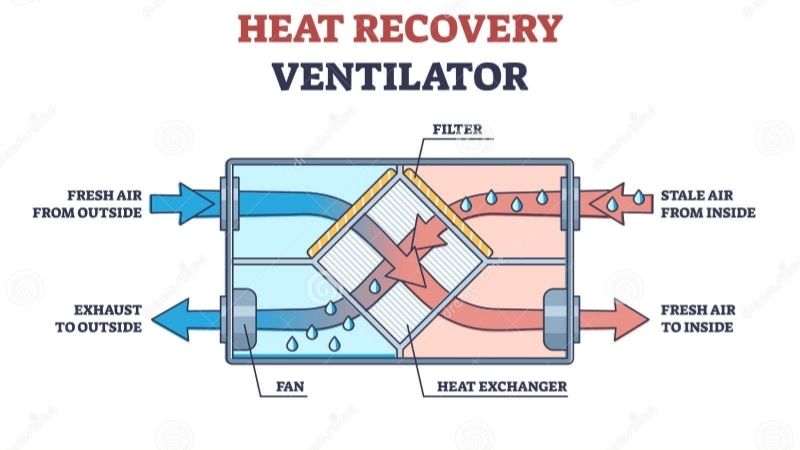
A heat recovery ventilator swaps stale indoor air for filtered outdoor air while a core reclaims most of the heat from the air being thrown out, so the honest way to compare models is by net supply airflow at a matched duct pressure, not by the big number on the box.
Quick Verdict: For most mid-size homes, the Fantech HERO 150H-EC is the pick because it delivers 172 CFM of net supply air at 0.4 inches water gauge and holds 84 percent sensible recovery at 32 degrees Fahrenheit. If your design calls for less air on 5 inch ducts, the Broan AI Series B110H65RT is the better fit. This is an editorial pick based on published specifications as of October 2026, not in-house testing. Have an installer confirm your duct static pressure before you buy.
As an Amazon Associate we earn from qualifying purchases.
By DIY Ideas 4 Home Editorial Team
The Best Heat Recovery Ventilators Reviewed
We selected these six residential HRVs based on published specifications and manufacturer documentation rather than in-house testing, as of October 2026, reading each airflow curve at the same 0.4 inch water gauge so the figures line up. Equipment prices here run from published Broan list figures near $974 to retailer snapshots around $1,399, and the right unit is sized by the fresh air your house needs at its real duct pressure.
| Product | Best For | Key Spec | Listed Price (as of October 2026) | Watch Out For |
|---|---|---|---|---|
| Fantech HERO 150H-EC | Mid-size homes on 6 in ducts | 172 CFM net at 0.4 in. w.g. | $1,399.00 | Controller sold separately |
| Broan AI Series B110H65RT | Smaller designs, auto balancing | 100 CFM net at 0.4 in. w.g. | $974.00 | 110 nameplate is not 100 net |
| Broan AI Series B160H65RT | Mid-size 6 in duct systems | 150 CFM net at 0.4 in. w.g. | $1,079.00 | Needs 6 in ducts, not 5 in |
| Fantech HERO 120H | Counterflow HRV on 5 in ducts | 112 CFM net at 0.4 in. w.g. | $1,149.00 | 12 in front service clearance |
| VENTS-US FRIGATE HRV 120 | Low-profile cabinet, manual balance | 132 CFM net at 0.4 in. w.g. | $996.00 | Defrost stops the supply fan |
| Lifebreath 155 MAX | Bundled controller, cold recovery | 138 CFM net at 0.4 in. w.g. | $1,270.00 | 71 lb unit, freight shipment |
Fantech HERO 150H-EC: Best Overall Heat Recovery Ventilator
Best For: A mid-size home on 6 inch ducts that wants the highest published airflow and efficient EC-motor operation.
What lifts this model above the rest of the field is the combination the others split up: it carries the top net airflow here and still posts the best cold-weather recovery, so a builder who would otherwise trade airflow for efficiency does not have to choose.
Fantech’s product page gives 172 CFM net supply at 0.4 inches water gauge on the manufacturer airflow curve, with 84 percent sensible recovery at 32 degrees Fahrenheit and 70 CFM, drawing 23 watts on low and 110 watts on high, and HVACQuick lists it at $1,399.00 as of October 2026. Each figure is a laboratory rating, not delivered airflow in a specific house.
The cabinet weighs 51 pounds including the core, measures 27-7/8 inches by 13-3/8 inches by 24-7/8 inches on the manufacturer drawing, and ships with a 3 foot cord. It needs 14 inches of front service clearance, uses 6 inch top ports, and its ECO-Touch balancing controller is sold separately; the ENERGY STAR claim on the sheet applies in Canada only.
Pros:
- 172 CFM net supply at 0.4 inches water gauge
- 84 percent sensible recovery at 32 degrees Fahrenheit
- Efficient 23 watt low-speed EC motor draw
Cons:
- Highest listed equipment price of the six
- ECO-Touch balancing control is not included
Who Should Buy It: Buy this for a mid-size home that wants peak published airflow; for a smaller load on 5 inch ducts, the Broan AI Series B110H65RT suits better.
Broan AI Series B110H65RT: Best For Smaller Designs
Best For: A compact ventilation design that values automatic airflow balancing over maximum output.
Its draw is self-balancing electronics at a lower airflow band, so it fits a smaller house or an apartment where the HERO would be oversized, trading top-end CFM for simpler commissioning and a published list price.
Broan’s spec sheet confirms 100 CFM net supply at 0.4 inches water gauge, rising to 112 CFM at 0.2, with an LCD letting you select 35 to 110 CFM, and the US price sheet effective July 1, 2026 lists it at $974.00. The 110 on the nameplate is not the 100 net figure at 0.4, a distinction worth holding onto.
The assembled unit weighs about 35 pounds, measures 21.58 inches high by 21.07 inches wide by 16.14 inches long, carries a 6 foot cord and needs 8 inches of front clearance. It uses 5 inch top ports, runs recirculation defrost, and its US listing marks ENERGY STAR as not certified.
Pros:
- 100 CFM net with selectable 35 to 110 CFM
- Automatic airflow balancing and LCD readout
- Compact 35 pound cabinet on 5 inch ports
Cons:
- Lowest net airflow at the shared 0.4 pressure
- US listing shows ENERGY STAR not certified
Who Should Buy It: Buy this for a small design that needs easy balancing; for more air on 6 inch ducts, step up to the Broan AI Series B160H65RT.
Broan AI Series B160H65RT: Best For 6 Inch Duct Systems
Best For: A mid-size home on 6 inch ducts that wants Broan’s automatic commissioning at a higher airflow.
This is the larger partner to the B110, built for the bigger duct and the higher setpoint, so it suits a plan that outgrows the smaller Broan while keeping the same self-balancing controls and warranty family.
Broan’s product page confirms 150 CFM net supply at 0.4 inches water gauge and 159 CFM at 0.2, with user-selectable operation from 35 to 160 CFM, and the US list sheet dated July 1, 2026 shows $1,079.00. The 160 selectable ceiling is not the 150 measured at 0.4, so the two should never be swapped.
This model shares the roughly 35 pound cabinet of the smaller Broan, standing 21.58 inches high with a 21.07 inch width and a 16.14 inch depth, plus a 6 foot cord and 8 inches of front access. It requires 6 inch top ports instead of 5 inch, and its recirculation defrost triggers at 23 degrees Fahrenheit and below.
Pros:
- 150 CFM net supply at 0.4 inches water gauge
- Selectable 35 to 160 CFM with auto balancing
- 6 inch top ports and 35 pound cabinet
Cons:
- Requires 6 inch ducts instead of 5 inch
- Recovery at 32 degrees matches the smaller model
Who Should Buy It: Buy this for a 6 inch duct system needing more air; if your ducts are 5 inch, the Broan AI Series B110H65RT is the correct port size.
Fantech HERO 120H: Best For 5 Inch Counterflow Ducts
Best For: A home on 5 inch ducts that wants strong cold-weather recovery in a counterflow core.
It slots between the Broan B110 and the flagship HERO, so it suits a buyer who wants Fantech efficiency on smaller ducts without stepping up to the 6 inch 150H-EC, accepting a bit less airflow for the narrower collars.
Fantech’s product page lists 112 CFM net supply at 0.4 inches water gauge and 119 CFM at 0.3, with 81 percent sensible recovery at 32 degrees Fahrenheit and 70 CFM, a 165 watt rating, and HVACQuick prices it at $1,149.00 as of October 2026. The sheet limits its ENERGY STAR qualification to Canada.
The cabinet weighs 41 pounds with the core, measures 23-1/4 inches by 11-1/2 inches by 24-1/4 inches on the drawing, carries a 3 foot cord, and asks for 12 inches of front service clearance. It uses 5 inch round metal duct collars and, like the flagship, needs the separate ECO-Touch control to balance.
Pros:
- 112 CFM net at 0.4 inches water gauge
- 81 percent sensible recovery at 32 degrees Fahrenheit
- 5 inch metal collars suit smaller duct runs
Cons:
- Needs 12 inches of front service clearance
- ENERGY STAR qualification applies in Canada only
Who Should Buy It: Buy this for a 5 inch counterflow system; if you want the highest airflow on 6 inch ducts, the Fantech HERO 150H-EC is the stronger choice.
VENTS-US FRIGATE HRV 120: Best For a Low-Profile Cabinet
Best For: A tight mechanical space that needs a shallow cabinet and accepts manual fan balancing.
Its calling card is height: at well under ten inches tall it slides into a ceiling or wall cavity the taller Broan and Fantech boxes cannot, so it is the pick when clearance, not peak recovery, drives the design.
VENTS-US lists 132 CFM net supply at 0.4 inches water gauge and 142 CFM at 0.1 in its spec sheet, alongside a 158 watt maximum and 60 percent sensible recovery at 32 degrees Fahrenheit and 64 CFM, and HVACDirect prices it at $996.00 as of October 2026. The retailer headline 142 CFM uses the lower 0.1 pressure, not 0.4.
The cabinet stands 9-5/8 inches tall in a low-profile shape and uses 5 inch nominal duct openings; the cited sheet publishes that height but not a unit weight. Its frost protection switches the supply fan off rather than recirculating, which briefly interrupts fresh air during defrost.
Pros:
- 132 CFM net supply at 0.4 inches water gauge
- Shallow 9-5/8 inch cabinet height for tight spaces
- 120 volt, 158 watt maximum electrical rating
Cons:
- Defrost temporarily stops the supply fan
- 60 percent recovery trails both Broan units
Who Should Buy It: Buy this where cabinet height rules the install; if continuous airflow through defrost matters more, the Fantech HERO 120H uses recirculation instead.
Lifebreath 155 MAX: Best For Bundled Controls
Best For: A buyer who wants a digital wall controller in the box and documented cold-weather recovery.
It ships with its controller rather than charging extra for one, so it suits an owner who wants a complete package out of the crate and solid recovery numbers, accepting a heavy cabinet and a freight delivery.
Lifebreath’s spec sheet, revision 0726, lists 138 CFM net supply at 0.4 inches water gauge and 148 CFM at 0.3, with 75 percent sensible recovery at 32 degrees Fahrenheit and 64 CFM and a measured 72 watts at 64 CFM, and HVACQuick prices the Part 93-155MAX at $1,270.00 as of October 2026. The 2019 in the model name is a certification year, not a build date.
The unit weighs 71 pounds, measures 18.681 inches high by 33.63 inches wide by 14.75 inches deep on the 0726 sheet, uses 6 inch collars and asks for 25 inches of front service clearance. Its DXPL03 digital wall controller is included, but the heavy cabinet ships freight.
Pros:
- 138 CFM net supply at 0.4 inches water gauge
- 75 percent sensible recovery at 32 degrees Fahrenheit
- Digital wall controller included in the box
Cons:
- Heavy 71 pound cabinet ships by freight
- Needs a large 25 inch front service clearance
Who Should Buy It: Buy this for an included controller and documented recovery; if cabinet weight and clearance are tight, the Broan AI Series B160H65RT is far lighter.
How to Choose a Heat Recovery Ventilator
An HRV is sized and commissioned, not just purchased, so weigh these four factors with your installer before committing.
Size by Net Airflow at the Same Static Pressure
Match the ventilation your house needs to the model’s net supply CFM at a common 0.4 inches water gauge, because a nameplate 110 or 160 is not the measured 100 or 150 at that pressure. Reading every unit at the same point is the only fair comparison, and the installer should confirm your actual duct static pressure first.
Compare Recovery Efficiency With Its Conditions
Sensible recovery efficiency only means something with its temperature and airflow attached, such as 84 percent at 32 degrees Fahrenheit and 70 CFM. A figure at one test point does not predict room temperatures at another, and sensible recovery is not the share of your whole home energy bill that gets saved.
Confirm Duct Collars, Footprint and Service Access
Check whether the unit uses 5 inch or 6 inch collars, whether its cabinet and front clearance fit the mechanical space, and where condensate will drain. A 71 pound Lifebreath on 6 inch collars is a different install from a 35 pound Broan, and 25 inches of service clearance is not always available.
Budget for Controls, Balancing and Labor
Equipment price is only part of the job: some units need a separately sold controller, all need professional balancing of both airstreams, and a naturally vented furnace or water heater calls for a backdraft assessment. The US EPA warns that exhaust-driven negative pressure can draw combustion gases, including carbon monoxide, into living spaces, so have a qualified installer size, wire and commission the unit and evaluate worst-case depressurization before start-up.
Frequently Asked Questions
These are the questions homeowners raise most often when shortlisting an HRV.
Is an HRV the same as an ERV?
No. An HRV chiefly transfers sensible heat between the two airstreams, while an ERV also moves some water vapor. They suit different climates and humidity goals, so confirm which your design calls for rather than treating the two as interchangeable.
Does a higher CFM rating mean it fits any house?
No. A high nominal CFM without enough duct pressure capacity or proper balancing is misleading, which is why these units are compared at 0.4 inches water gauge. Sizing comes from your home’s required outdoor air and measured static pressure, not the largest headline number.
Can an HRV replace a furnace or an air purifier?
No. An HRV exchanges air and recovers heat; it does not generate heating or cooling capacity and is not a room air purifier. Energy recovery can reduce the ventilation load on your heating and cooling system, but it does not create free heat.
Why does cold-weather defrost matter?
Because it changes fresh-air delivery. Some units recirculate indoor air briefly during defrost, while the standard FRIGATE HRV 120 switches its supply fan off, so the installer should evaluate real cycle timing rather than promising an uninterrupted CFM figure in deep cold.
Final Thoughts
Weighed at the same duct pressure, the Fantech HERO 150H-EC stays the strongest all-round pick on both airflow and cold-weather recovery, though a small design is better matched to the Broan B110H65RT and a shallow mechanical space to the low-profile FRIGATE HRV 120; before ordering any of them, have an installer verify your required airflow, duct static pressure and combustion-safety picture, and confirm the current price on the listing.