Key takeaways
- Tooth count matches the task: 24 to 40 teeth for ripping solid stock along the grain, 50 to 60 for general-purpose work and crosscuts, 80 for melamine, veneered plywood, and trim where chip-out ruins the piece. If you only buy one, a 40-tooth blade is the honest compromise.
- Arbor size and plate flatness: Virtually every 10-inch consumer table saw takes a 5/8-inch arbor, so that part is easy. What matters more is whether the steel plate is laser-cut and tensioned, because a warped plate wobbles no matter how sharp the teeth are.
- Kerf width versus saw power: Thin-kerf blades around .098 inch remove less material and let underpowered contractor saws cut without stalling. Full-kerf blades near .125 inch resist deflection better but demand a solid 1.75 HP or more to stay happy in thick stock.
- Carbide grade and grind: Look for micro-grain carbide tips that are thick enough to survive multiple sharpenings. ATB (alternate top bevel) grinds slice cleanly across grain; flat-top or FTG teeth clear waste faster when ripping.
- Anti-vibration and coating details: Laser-cut expansion slots and a non-stick coating reduce heat buildup, and heat is what causes burn marks and pitch buildup. A coated blade also cleans up faster with a citrus degreaser.
The blade that came bolted to your table saw was chosen to keep the sticker price down, not to give you glue-ready edges. Most stock blades run 24 to 40 teeth of mediocre carbide on a plate that flexes under load, which is why your rip cuts wander, your plywood splinters along the veneer, and your crosscuts show burn marks you have to sand out later. Swapping in a purpose-built blade is the cheapest meaningful upgrade you can make to a saw you already own, and it takes about ninety seconds with an arbor wrench.
The catch is that “better blade” means different things depending on what leaves your shop. A 24-tooth ripper tears through 2x framing lumber but will chew birch ply to ribbons. An 80-tooth finish blade leaves edges you can practically skip sanding, then bogs down and burns if you push it through thick hardwood. This guide breaks down tooth counts, plate quality, and kerf width for 10-inch blades, then walks through six options worth putting on your saw in 2026, including multi-packs that cover more than one job.
Our top picks


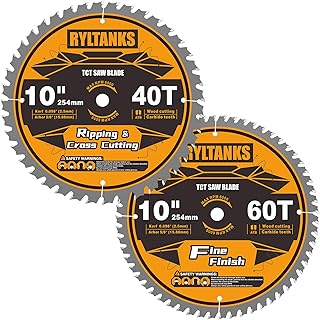
As an Amazon Associate we earn from qualifying purchases at no extra cost to you. Ratings are shown as listed on Amazon.
🛒 Best Price Today on Amazon
Prime members get fast, free shipping on everything above, plus member-only deals. New members get a 30-day free trial — cancel anytime.
How to Choose a 10 Inch Blade For Table Saw (2026)
- Tooth count matches the task: 24 to 40 teeth for ripping solid stock along the grain, 50 to 60 for general-purpose work and crosscuts, 80 for melamine, veneered plywood, and trim where chip-out ruins the piece. If you only buy one, a 40-tooth blade is the honest compromise.
- Arbor size and plate flatness: Virtually every 10-inch consumer table saw takes a 5/8-inch arbor, so that part is easy. What matters more is whether the steel plate is laser-cut and tensioned, because a warped plate wobbles no matter how sharp the teeth are.
- Kerf width versus saw power: Thin-kerf blades around .098 inch remove less material and let underpowered contractor saws cut without stalling. Full-kerf blades near .125 inch resist deflection better but demand a solid 1.75 HP or more to stay happy in thick stock.
- Carbide grade and grind: Look for micro-grain carbide tips that are thick enough to survive multiple sharpenings. ATB (alternate top bevel) grinds slice cleanly across grain; flat-top or FTG teeth clear waste faster when ripping.
- Anti-vibration and coating details: Laser-cut expansion slots and a non-stick coating reduce heat buildup, and heat is what causes burn marks and pitch buildup. A coated blade also cleans up faster with a citrus degreaser.
The Best 10 Inch Blade For Table Saw (2026)s Reviewed
DEWALT 40-Tooth Fine Finish (DWA11040)
This is the blade I recommend when someone wants one that handles ripping, crosscutting, and sheet goods without swapping. The tough carbide teeth and computer-balanced plate keep cuts consistent through hardwood, and the thin kerf means even a 15-amp jobsite saw won’t labor through 4/4 maple.
FOXBC 80-Tooth Ultra Finish
Eighty teeth on a 5/8-inch arbor makes this the blade to reach for on prefinished plywood, laminate shelving, and face frames where any tear-out shows in the finished piece. Feed slowly and let the blade do the work, or the tight gullets will pack with dust and start burning.
WEN BL1080 80-Tooth Ultra-Fine
WEN’s ultra-fine finish blade delivers glue-ready edges at a price that makes it easy to justify keeping a dedicated finish blade on the shelf. It moves between table saw and miter saw without complaint, which is handy for trim work in a small shop.
WEN BL1060 60-Tooth Fine-Finish
Sixty teeth hits the sweet spot for cabinet work where you’re cutting both solid stock and ply on the same project. Cuts come off clean enough for a quick pass with 220-grit, and it clears chips well enough to avoid the bogging you get from an 80-tooth blade in thicker material.
32T/60T/80T 3-Pack Set
For anyone building out a first blade collection, this three-pack covers framing lumber, general woodworking, and delicate veneer for roughly what one premium blade costs. Quality is a step below the name brands, but having the right tooth count on the arbor beats forcing the wrong blade through a cut.
Frequently Asked Questions
How many teeth do I actually need for plywood?
Sixty is workable; 80 is better. High tooth counts take smaller bites per tooth, which keeps the thin face veneer from lifting. A zero-clearance insert helps as much as the blade does.
Can I use a thin-kerf blade with my stock riving knife?
Usually not. Riving knives and splitters are sized to the factory blade’s kerf, so a thinner blade can leave the knife too wide, causing binding. Many saws sell a thin-kerf splitter as an accessory.
Is it worth sharpening carbide blades?
Yes, on quality blades with thick carbide tips, a professional sharpening runs a fraction of replacement cost and can be done several times. Budget blades with thin tips are generally cheaper to replace.
Why does my new blade still burn the wood?
Nine times out of ten it’s alignment, not the blade. Check that your fence is parallel to the blade and that the blade is square to the table, then clean off any pitch buildup with degreaser.
Final Thoughts
If you want one blade that quietly improves every cut, the DEWALT DWA11040 is the pick, with enough teeth for clean crosscuts and a thin kerf that respects modest motors. Pair it with the WEN BL1080 for sheet goods and trim, and you’ve covered nearly everything a home shop throws at a table saw. Builders starting from scratch should look hard at the 32T/60T/80T three-pack, which gets three specialized blades on the shelf for the price of one premium option.