Key takeaways
- For a garage, workshop, or vehicle trunk: Choose a steel can with a sound lid gasket and a locking tab or latch that can accept a padlock. Steel tolerates knocks well and usually stacks securely, but inspect painted surfaces for chips that could rust.
- For frequent carrying or damp storage: A polymer can is lighter and cannot rust. Look for a firm lid, a continuous gasket, and reinforced handle and hinge areas; plastic can crack under impact or become less reliable if left in intense heat or sunlight.
- For small parts, tools, or emergency supplies: A compact can is easier to lift and organize than a large one. Pick the smallest size that fits the contents, since a full steel can can become awkward quickly.
- For long-term storage: Prioritize the seal and storage conditions over the material alone. Neither type should be assumed waterproof or suitable for submersion unless its manufacturer explicitly says so.
The best ammo cans for most storage needs are gasket-sealed steel cans when you want a rigid, stackable container with strong corrosion resistance after proper care; choose a polymer can instead if low weight, rust immunity, or easier handling matters more than the dent resistance of steel.
Our top picks

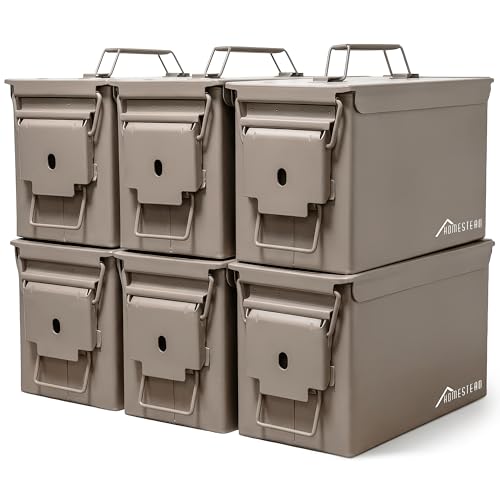
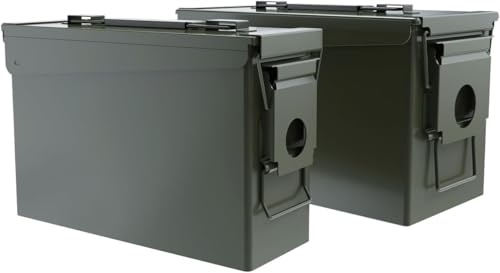

As an Amazon Associate we earn from qualifying purchases at no extra cost to you. Ratings are shown as listed on Amazon.
Best ammo cans by situation
- For a garage, workshop, or vehicle trunk: Choose a steel can with a sound lid gasket and a locking tab or latch that can accept a padlock. Steel tolerates knocks well and usually stacks securely, but inspect painted surfaces for chips that could rust.
- For frequent carrying or damp storage: A polymer can is lighter and cannot rust. Look for a firm lid, a continuous gasket, and reinforced handle and hinge areas; plastic can crack under impact or become less reliable if left in intense heat or sunlight.
- For small parts, tools, or emergency supplies: A compact can is easier to lift and organize than a large one. Pick the smallest size that fits the contents, since a full steel can can become awkward quickly.
- For long-term storage: Prioritize the seal and storage conditions over the material alone. Neither type should be assumed waterproof or suitable for submersion unless its manufacturer explicitly says so.
Steel vs. polymer: the practical trade-offs
| Decision factor | Steel ammo can | Polymer ammo can |
|---|---|---|
| Capacity and interior space | Common surplus-style boxes are compact; usable space depends on the can’s shape and lid intrusion. | Models vary widely, and molded walls may reduce usable interior space. Check inside dimensions, not just the advertised capacity. |
| Seal quality | Many designs use a replaceable or fitted lid gasket compressed by a lever latch. | May use a perimeter gasket and multiple closures; inspect the full sealing path and latch pressure. |
| Stackability | Flat lids and formed edges often make stacking stable, provided cans are not dented. | Some have interlocking lids or molded feet; others flex under a heavy load. Confirm the maker’s stacking guidance. |
| Carry handle | A folding metal handle is durable but can feel sharp or uncomfortable when the can is heavy. | A molded or padded handle can be more comfortable, though its attachment points are potential stress areas. |
| Moisture and corrosion | Steel itself can rust when its coating is damaged or moisture is trapped inside; dry and inspect it periodically. | Does not rust, but water can still enter through a poor seal, and prolonged UV exposure or impact can degrade some plastics. |
| Impact and wear | Resists crushing well but can dent; dents near the rim may prevent a proper seal. | Will not dent like steel, but can crack, especially around hinges, corners, or latch mounts. |
Check dimensions and loaded weight before buying
“Capacity” is not a reliable measure of whether a can will fit your shelf or hold the items you have in mind. Compare exterior dimensions for storage fit and interior dimensions for usable space. A rim, hinge, or sloped wall can take away room, while long tools may not fit even when the stated volume seems generous.
| Approximate exterior size | Typical use | Planning note |
|---|---|---|
| 11 × 6 × 7 in | Small hardware, first-aid supplies, or compact accessories | Allow about 1 in of clearance on each side for easy shelf removal. |
| 12 × 6 × 8 in | General-purpose garage or vehicle storage | Measure the opening, not just the shelf depth; handles and latches can add width. |
| 18 × 7 × 14 in | Bulkier equipment or multiple organized items | Check that the loaded can is still manageable to lift and that the shelf is rated for its weight. |
These are planning examples, not universal product dimensions. Models differ, so verify the specific manufacturer’s measurements. Also estimate loaded weight: a 12-pound empty can filled with 30 pounds of supplies weighs 42 pounds before adding anything else. That may be fine on a low shelf but awkward to lift from above shoulder height. For a heavy load, use a smaller can, divide items between containers, or store it near floor level.
How to judge the seal, latch, and stack design
A gasket only helps if the lid closes evenly. Look for a continuous gasket without gaps, hardened spots, or tears, and check that the latch pulls the lid down firmly across the rim. On a used steel can, dents around the lip, loose hinge pins, missing gasket sections, and rust beneath the seal are reasons to pass. On polymer models, examine the hinge and latch mounts for thin or stressed areas.
Stacking stability depends on the lid and base working together. A broad, flat top is useful, but a smooth surface can still let cans slide. Interlocking features help only when the can below is level and the load stays within the manufacturer’s stated limit. Keep the heaviest can at the bottom and avoid stacking containers so high that the top one must be lifted overhead.
Keeping contents dry and the can in good condition
A gasketed can is useful protection against splashes, dust, and ordinary humidity, but the word “sealed” does not automatically mean waterproof. If contents must stay dry, keep the can off concrete, store it under cover, and use a desiccant pack where appropriate. Avoid putting damp items inside; trapped moisture can condense as temperatures change.
- For steel: Dry the interior after exposure to moisture, touch up coating damage with a suitable protective finish, and check the rim and underside for rust.
- For polymer: Keep the can away from prolonged direct sun and extreme heat unless it is rated for those conditions. Replace it if a crack reaches the sealing surface or a latch attachment.
- For either material: Do not force a loaded lid closed over items that obstruct the gasket, and do not rely on a padlock to make a poor seal watertight.
Which type should you choose?
Choose steel if you value rigidity, compact stacking, and resistance to everyday knocks, and you can keep the coating intact. Choose polymer if you carry the can often, want to avoid rust entirely, or need a lighter container for damp surroundings. In either case, the best ammo cans are the ones whose usable dimensions, loaded weight, gasket, and closure match the job—not simply the largest or most rugged-looking option.