Key takeaways
- Measure from the floor, not the stool: Leave 10 to 12 inches between seat top and counter underside. Standard 36-inch counters want 24 to 26-inch seats; 42-inch bars want 29 to 30 inches. Check your overhang depth too — a deep waterfall edge steals knee clearance no stool height can fix.
- Read the leg construction, not just the finish: Tubular steel in 1.2mm wall or heavier resists racking; thin-wall tube telegraphs every shift. On wood legs, look for through-bolts into steel inserts rather than screws driven straight into end grain, which strip within a season.
- Judge the backrest by where it lands: A low back around 6 to 8 inches above the seat supports the pelvis and slides under a counter lip. Taller backs feel like dining chairs but limit tuck-in. Both work — mismatched to your counter, neither does.
- Swivel means a bearing plate you’ll want to inspect: A quality 360° mechanism uses a caged ball race between two stamped plates. Spin it by hand before final assembly; grit or a gritty feel now becomes a squeak later. A dab of white lithium grease is five minutes well spent.
- Plan your floor protection during assembly: Factory plastic glides wear through fast on tile and scratch hardwood. Swap in self-adhesive felt pads or hammer-in nylon glides while the stool is still upside down on your bench. Also note the stated weight capacity — 250 pounds is common, and heavier ratings usually signal better bracing.
What's inside
Bar stools look like a simple purchase right up until you’re standing in your kitchen with a tape measure, realizing your counter overhang eats three inches of knee room and the “26-inch” stool you bookmarked has a backrest that hits exactly where your lumbar spine doesn’t want it. Add the reality that most stools arrive flat-packed with a folded Allen key and a torque spec of “good luck,” and the gap between a stool that lasts a decade and one that develops a wobble by spring comes down to details the listing photos never show: leg gauge, joint design, whether the seat frame is plywood or particleboard, and how the back is anchored to the base.
This guide comes from the perspective of someone who takes the hardware bag seriously. I’ve flagged which stools reward a quick re-torque after assembly, which ones use hardware worth upgrading, and how backrest geometry actually affects whether people linger at your island or drift to the couch. Below you’ll find picks spanning counter height and bar height, swivel and fixed, plus sets of four for anyone furnishing a long run of countertop.
As an Amazon Associate we earn from qualifying purchases.


🛒 Best Price Today on Amazon
Prime members get fast, free shipping on everything above, plus member-only deals. New members get a 30-day free trial — cancel anytime.
How to Choose Bar Stools With Backs (2026)
- Measure from the floor, not the stool: Leave 10 to 12 inches between seat top and counter underside. Standard 36-inch counters want 24 to 26-inch seats; 42-inch bars want 29 to 30 inches. Check your overhang depth too — a deep waterfall edge steals knee clearance no stool height can fix.
- Read the leg construction, not just the finish: Tubular steel in 1.2mm wall or heavier resists racking; thin-wall tube telegraphs every shift. On wood legs, look for through-bolts into steel inserts rather than screws driven straight into end grain, which strip within a season.
- Judge the backrest by where it lands: A low back around 6 to 8 inches above the seat supports the pelvis and slides under a counter lip. Taller backs feel like dining chairs but limit tuck-in. Both work — mismatched to your counter, neither does.
- Swivel means a bearing plate you’ll want to inspect: A quality 360° mechanism uses a caged ball race between two stamped plates. Spin it by hand before final assembly; grit or a gritty feel now becomes a squeak later. A dab of white lithium grease is five minutes well spent.
- Plan your floor protection during assembly: Factory plastic glides wear through fast on tile and scratch hardwood. Swap in self-adhesive felt pads or hammer-in nylon glides while the stool is still upside down on your bench. Also note the stated weight capacity — 250 pounds is common, and heavier ratings usually signal better bracing.
The Best Bar Stools With Backs (2026) Reviewed
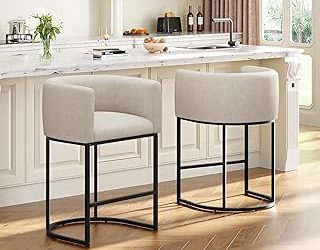
Counter Height Swivel Upholstered Barstools, Set of 2 (26″)
The linen-blend upholstery over a padded 26-inch seat makes these the comfort pick for long conversations at a standard-height island, and the 360° swivel plate turns smoothly out of the box. Assembly is straightforward, though I’d re-torque the leg bolts after a week of use once the fabric and foam settle.
Ashley Valebeck Swivel Bar Stool with Back (30″)
Real wood and engineered wood construction gives this one a heft the all-metal competition can’t match, and the rustic farmhouse detailing reads as intentional rather than trend-chasing. At 30 inches with a 250-pound rating, it’s the natural fit for a true bar-height counter where you want a single statement stool rather than a matched pair.
PrimeZone 30″ Upholstered Bar Height Stools, Set of 2
Rubberwood legs in walnut paired with beige upholstery hit a clean mid-century note, and rubberwood is genuinely good material — dense, stable, and forgiving if you ever want to refinish. The tapered leg splay looks delicate but braces well; just keep the cross supports snug.
FIRAVOE PU Leather Counter Stools, Set of 4 (26″)
Thickened metal legs and a low-back PU seat make this the practical choice for kitchens with kids or heavy traffic, since PU wipes clean in one pass. Four stools at counter height is a lot of assembly, so set up an assembly line and do all the leg frames before moving to seats.
IDEALHOUSE 26″ Counter Height Barstools, Set of 4
The thick cushion and leather-look upholstery deliver more padding than most sets in this bracket, which matters if your island doubles as the dinner table. Black hides scuffs well, and the backrest height clears typical counter lips for easy tuck-in.
Frequently Asked Questions
What stool height do I need for a 36-inch counter?
A 24 to 26-inch seat height. Measure your actual counter — installed heights drift with thick stone slabs or custom cabinetry — and subtract 10 to 12 inches for comfortable thigh clearance.
Are swivel stools worth the extra mechanism?
In open kitchens, yes: swiveling beats scraping a stool back every time someone stands. The tradeoff is one more wear point, so favor stools with a metal bearing plate over a plastic bushing.
How do I stop a stool from wobbling?
Nine times out of ten it’s under-torqued hardware, not a defect. Flip the stool, snug every fastener in a crisscross pattern, and add threadlocker on metal-to-metal bolts. Uneven glides are the other common culprit.
Can I reupholster a fabric bar stool seat?
Usually, yes. Most seats unbolt as a plywood pan with foam and fabric stapled underneath — a staple remover, new foam, and half a yard of upholstery fabric gets you a fresh look for under $30.
Final Thoughts
For a standard 36-inch island where comfort matters most, the 26-inch swivel upholstered set of two is the easiest recommendation, with the PrimeZone walnut and beige pair as the style-forward option for bar-height counters. Furnishing a longer run on a budget? The IDEALHOUSE set of four delivers the most cushion per dollar, and the FIRAVOE PU set is the one to choose if your kitchen sees spills.