Key takeaways
- Confirm your base size first: Pull one existing bulb and measure the threaded metal collar. Roughly half an inch across means E12 candelabra, which is what nearly every chandelier uses. An inch across is E26, the standard lamp size, and no adapter-free swap exists between the two.
- Match the bulb shape to your shades: B11 and B10 are slim bullet shapes, CA10 is the bent flame tip. If your fixture has small clip-on shades or tight glass cups, a torpedo shape clears them; a flame tip often does not.
- Pick your white and stick with it: 2700K is the classic soft white most people expect from a chandelier. 2500K leans amber and reads more candlelit. Mixing the two in one fixture is the fastest way to make a nice chandelier look broken.
- Test the dimmer before you commit to a full set: Older triac dimmers were built for incandescent loads and can make LEDs flicker or buzz at low output. Buy one bulb, run it through the full dial, then order the multipack.
- Buy more than you need: A six-arm fixture eats six bulbs, and a single dead one is visible from across the room. Twelve-packs cost barely more per bulb and save you a second ladder trip in eighteen months.
What's inside
I rewired a 1970s brass chandelier last spring, and the hardest part wasn’t the wiring at all. It was standing in the fixture aisle staring at a wall of tiny candle-shaped bulbs, trying to figure out which base fit my sockets, which ones wouldn’t hum on my old dimmer, and why two bulbs both labeled “warm white” looked nothing alike once I got them home. Chandelier bulbs punish guesswork. Get the shape wrong and the tip pokes past the shade. Get the color temperature wrong and your dining room reads like a dental office.
This guide sorts out the details that actually matter when you’re up on a ladder with a socket in your hand: base sizing, bulb shape codes, filament style, dimmer compatibility, and how many spares you should buy in one shot. Every pick below is an E12 candelabra bulb, the size that fits the overwhelming majority of residential chandeliers, and I’ve flagged where each one earns its place.
As an Amazon Associate we earn from qualifying purchases.


🛒 Best Price Today on Amazon
Prime members get fast, free shipping on everything above, plus member-only deals. New members get a 30-day free trial — cancel anytime.
How to Choose a Bulb For Chandelier (2026)
- Confirm your base size first: Pull one existing bulb and measure the threaded metal collar. Roughly half an inch across means E12 candelabra, which is what nearly every chandelier uses. An inch across is E26, the standard lamp size, and no adapter-free swap exists between the two.
- Match the bulb shape to your shades: B11 and B10 are slim bullet shapes, CA10 is the bent flame tip. If your fixture has small clip-on shades or tight glass cups, a torpedo shape clears them; a flame tip often does not.
- Pick your white and stick with it: 2700K is the classic soft white most people expect from a chandelier. 2500K leans amber and reads more candlelit. Mixing the two in one fixture is the fastest way to make a nice chandelier look broken.
- Test the dimmer before you commit to a full set: Older triac dimmers were built for incandescent loads and can make LEDs flicker or buzz at low output. Buy one bulb, run it through the full dial, then order the multipack.
- Buy more than you need: A six-arm fixture eats six bulbs, and a single dead one is visible from across the room. Twelve-packs cost barely more per bulb and save you a second ladder trip in eighteen months.
The Best Bulb For Chandelier (2026)s Reviewed
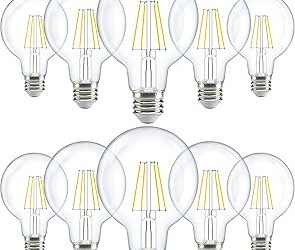
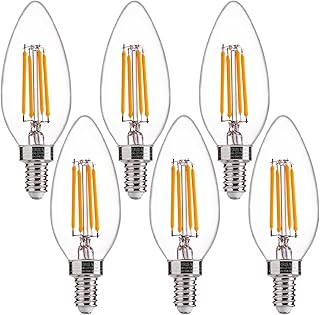
60W Equivalent Clear B11 LED Filament Candelabra, 6 Pack
This is the pick when your chandelier has exposed bulbs and you want the filament to be part of the look. The 60W-equivalent output handles a dining room without secondary lighting, and the clear B11 glass throws that warm sparkle across cut glass or crystal that frosted bulbs simply can’t reproduce.
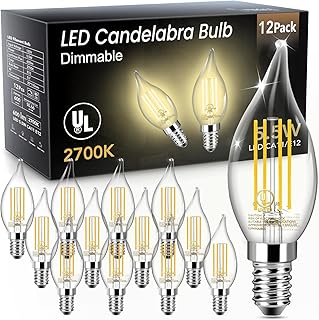
E12 4W 460 Lumen Flame Tip Candle Bulbs, 12-Pack
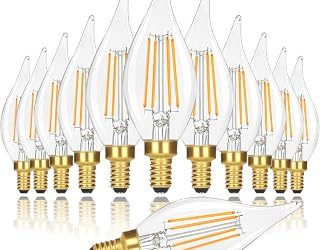
The flame-tip silhouette suits traditional and farmhouse fixtures where a blunt torpedo looks too modern. At 460 lumens each these are genuinely soft rather than bright, which works well in entryways, stairwells, and any chandelier you leave on for hours at a time.
COLWATT 12-Pack CA10 Clear Candelabra, 2500K
At 2500K these run noticeably warmer than the standard 2700K crowd, closer to real candle flame, and the difference is obvious the moment you install them. The 380-lumen output is modest by design, so pair them with a multi-arm fixture rather than expecting one or two to light a room.
12-Pack Dimmable B11 Vintage LED Filament Chandelier Bulbs
The best all-around value here: twelve bulbs, 450 lumens each, clear glass filament styling, and reliable dimming behavior across common wall dimmers. If you’re outfitting a chandelier plus a couple of ceiling fans in one go, this is the box to grab.
E12 4W B10 Edison Filament Bulbs, 5 Pack
The B10 shape is the slimmest of the bunch, which matters when your shades or glass cups leave almost no clearance. A five-pack is the right call for a smaller fixture where you don’t want seven spares sitting in a drawer for years.
Frequently Asked Questions
Can I put LED bulbs in an old chandelier?
Almost always yes, and it usually reduces heat on aging wiring and sockets. The one thing to verify is the dimmer: switches made for incandescent loads sometimes need a compatible LED dimmer to eliminate flicker.
What’s the difference between B11, B10, and CA10?
B11 and B10 are straight torpedo shapes, with B10 being slightly narrower. CA10 is the curved flame tip. All three commonly use the E12 base, so the choice comes down to clearance and appearance.
Should every bulb in my chandelier be identical?
Yes. Different brands, wattages, or color temperatures in one fixture create visible inconsistency, especially with clear glass where the filament itself is on display.
Are incandescent candelabra bulbs still worth buying?
Some people prefer their dimming curve and warmth, and options like the MEQIQTEK 60W incandescent 12-pack still serve fixtures with finicky dimmers. Just expect shorter life and more heat than an LED equivalent.
Final Thoughts
For most chandeliers, the 12-pack of dimmable B11 vintage filament bulbs is the practical choice: enough output, enough spares, and reliable dimming. If your fixture puts its bulbs on display, step up to the 60W-equivalent clear B11 filament set for maximum sparkle, and choose the COLWATT 2500K CA10 bulbs when you want that deeper candlelit amber instead.