Key takeaways
- Motor count: A single motor moves the back and footrest together on one linkage, so you can’t recline without lifting your legs. Dual motor units drive them separately, letting you dial in an infinite-position posture where your torso opens up but your knees stay below your hips, the position most physical therapists point to for disc decompression.
- Lumbar support that’s structural: A loose throw pillow strapped to the backrest slides out of place within a week. Look for a built-in lumbar segment, an inflatable bladder, or a dual-cushion design molded into the frame so the support stays where your spine needs it.
- Seat depth and width: Measure from the back of your knee to your tailbone and subtract about two inches. Too deep and the front edge presses your calves, tilting your pelvis backward. Wider 26-inch seats give larger bodies room to shift without fighting the arms, which matters over long sits.
- Frame and weight rating: Check for a steel or hardwood frame with a stated capacity well above your body weight. A frame rated near your actual weight will develop flex and squeaks, and a wobbly base makes you brace with your core, defeating the point.
- Heat and vibration placement: Heating elements should sit over the lumbar region, not the seat pan. Vibration massage helps loosen paraspinal muscle tension but won’t fix mechanical alignment problems, so treat it as a bonus rather than the main event.
What's inside
Anyone who has spent a weekend hunched over a workbench knows the feeling: that dull ache low in the spine that shows up around hour three and doesn’t leave when you do. The problem is that most recliners are built to look good in a showroom, not to hold a lumbar curve for two hours. Sit in a cheap one and you’ll feel the frame flatten your lower back into a C-shape, which is exactly the posture your discs least appreciate. Add a footrest that stops at your calves and you’ve got a chair that shifts load onto your hamstrings instead of supporting your pelvis.
This guide takes a maker’s approach to the problem: look at the mechanism, not the upholstery. We’ll break down what actually matters in a back-pain recliner, single motor versus dual motor, real lumbar support versus a decorative pillow, seat depth, weight ratings, and whether heat and massage do anything measurable. Then we walk through the strongest options available this year, from budget-friendly manual rockers to genuine leather lift chairs with independent footrest control.
As an Amazon Associate we earn from qualifying purchases.




🛒 Best Price Today on Amazon
Prime members get fast, free shipping on everything above, plus member-only deals. New members get a 30-day free trial — cancel anytime.
How to Choose a/an Chair For Back Pain Recliner (2026)
- Motor count: A single motor moves the back and footrest together on one linkage, so you can’t recline without lifting your legs. Dual motor units drive them separately, letting you dial in an infinite-position posture where your torso opens up but your knees stay below your hips, the position most physical therapists point to for disc decompression.
- Lumbar support that’s structural: A loose throw pillow strapped to the backrest slides out of place within a week. Look for a built-in lumbar segment, an inflatable bladder, or a dual-cushion design molded into the frame so the support stays where your spine needs it.
- Seat depth and width: Measure from the back of your knee to your tailbone and subtract about two inches. Too deep and the front edge presses your calves, tilting your pelvis backward. Wider 26-inch seats give larger bodies room to shift without fighting the arms, which matters over long sits.
- Frame and weight rating: Check for a steel or hardwood frame with a stated capacity well above your body weight. A frame rated near your actual weight will develop flex and squeaks, and a wobbly base makes you brace with your core, defeating the point.
- Heat and vibration placement: Heating elements should sit over the lumbar region, not the seat pan. Vibration massage helps loosen paraspinal muscle tension but won’t fix mechanical alignment problems, so treat it as a bonus rather than the main event.
The Best Chair For Back Pain Recliner (2026)s Reviewed
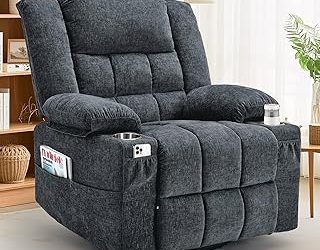
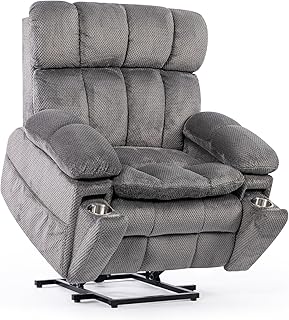
MAHOMICO Power Lift Recliner with Lumbar Heating
This one gets the fundamentals right: targeted lumbar heat paired with vibration massage, plus a lift mechanism smooth enough that you’re not fighting momentum on the way up. The side pocket, twin cup holders, and USB port make it a genuine all-day station rather than something you visit briefly.
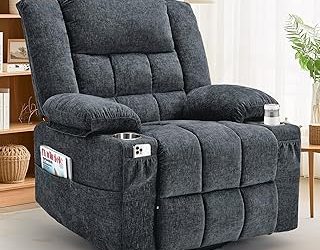
Sweetcrispy Massage Recliner with Lumbar Support
Built for rooms where footprint matters, this fabric recliner delivers proper lumbar contouring without the bulk of a full lift chair. It’s the pick if you want home-theater comfort in an apartment or a converted spare room, and the price leaves budget for a decent footstool.
Dual Motor 26″ Extra Wide Lift Recliner
The standout here is the combination of a genuinely wide seat, independent dual-motor control, and a lay-flat zero-gravity position that unloads the lumbar spine better than any single-motor design can manage. Flip-arm storage and Type-C charging round out a chair that feels engineered rather than assembled.
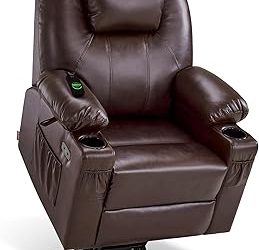
Dual Motor Leather Lift Recliner, Brown
Infinite-position adjustment means you can stop anywhere between upright and flat, which is exactly what chronic back pain calls for since the ideal angle shifts through the day. Real leather wipes clean, and the wireless charging pad is a small touch that keeps you from twisting toward a side table.
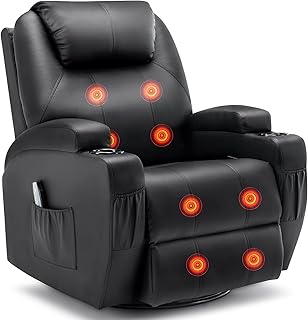
Korser Rocking Recliner with Massage and Heat
A 360-degree swivel base plus rocking motion makes this the most versatile manual option on the list, useful in a nursery or a den where you’re reaching in different directions. No motors means nothing electrical to fail, though you’ll do the reclining work yourself.
Frequently Asked Questions
Does reclining actually help back pain?
Yes, within reason. Research consistently shows that a backrest angle around 120 to 135 degrees reduces disc pressure compared to sitting bolt upright, provided your lumbar curve is supported. Without that support, reclining just shifts where the strain lands.
Is a lift chair worth the extra cost?
If standing up triggers your pain, absolutely. A lift mechanism removes the loaded flexion moment that hurts most people getting out of a low seat. If you can stand comfortably, put that money toward a better frame instead.
Can I add lumbar support to a recliner I already own?
Sometimes. A firm foam roll secured with webbing straps across the backrest works if the chair’s existing curve isn’t actively fighting you. If the backrest is deeply concave, no aftermarket cushion will fully correct it.
How long should I sit in a recliner at a stretch?
Change position every 30 to 45 minutes regardless of how good the chair is. Static loading is the underlying issue, and even a well-designed recliner becomes a problem if you never move.
Final Thoughts
If you want the most capable back-pain setup available, the Dual Motor 26″ Extra Wide lift recliner earns the top spot on the strength of its independent footrest control and lay-flat range. The EDILLY genuine leather lift chair is the pick for durability and its double lumbar cushion, while the Sweetcrispy recliner proves you don’t need a motor or a large room to get proper lumbar support at a sensible price.