Key takeaways
- Hidden storage: a lower shelf, drawer or lift-top compartment keeps remotes, blankets and games out of sight.
- Nesting design: pull out a second surface only when you need it.
- Lightweight frame: easier to move for vacuuming or when guests arrive.
- Rounded or softened edges: safer in tight rooms with children or pets.
- Stackable or folding design: useful in studios where the table has to disappear.
For a small living room, the best coffee table is usually a round or oval table with a slim profile and visible legs, a nesting set if you need flexible surfaces, or a lift-top with storage if the room has to double as a workspace. The goal is to keep walkways clear and the room looking open, so size, shape and visual weight matter more than extra features.
In compact rooms, every inch counts. A table that is slightly too large can force awkward paths around the sofa, while a table that is too small leaves nowhere for drinks. Use the sizing notes below and test the footprint with tape before buying.
Our top picks



As an Amazon Associate we earn from qualifying purchases at no extra cost to you.
Small-Room Coffee Tables at a Glance
| Type | Best for | Key points | Limits |
|---|---|---|---|
| Round pedestal or slim-leg table | Tight walkways | No corners, compact footprint | Less surface for items |
| Nesting tables (Safavieh and Nathan James style) | Flexible use, occasional guests | Tables slide together to save space | Small individual surfaces |
| Glass and slim metal table | Bright, narrow rooms | Visually light, open frame | Fingerprints, less storage |
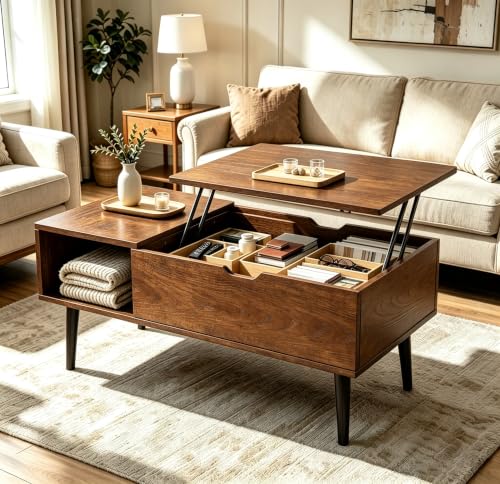
| Lift-top with storage | Studios, work-from-home sofas | Storage hides clutter, top lifts for work | Heavier visual mass |
| Storage ottoman | Small families | Soft top, hidden storage, extra seat | Needs a tray for drinks |
| Small rectangular wood table | Narrow rooms with a long sofa | Slim width, clean lines | Corners can bump legs |
Dimensions, materials and capacities vary by model, so rely on the maker’s listing.
Sizing for a Small Room
Footprint and Walkways
Leave about a foot and a half between the table and the sofa for sitting and standing, and keep walkways around the table clear. If the room is narrow, a table less than about two-thirds the sofa length and a modest depth keeps traffic moving. Mark the outline with painter’s tape for a day and walk around it before ordering.
Height
Choose a table at or slightly below seat height. Lower profiles help the room feel more open, because they keep sightlines clear across the space. Very low tables can be hard for older adults to reach.
Visual Weight
Tables with visible legs, open frames, glass tops and light colors take up less visual space than solid blocks. Dark, chunky tables can feel heavy in compact rooms. A rug that extends under the front legs of the sofa and table helps anchor the layout.
Shape
Round and oval tables remove corners that catch shins in tight paths. Rectangles work when the room is long and narrow. Square tables suit small sectionals and chairs.
Features That Help in Small Spaces
- Hidden storage: a lower shelf, drawer or lift-top compartment keeps remotes, blankets and games out of sight.
- Nesting design: pull out a second surface only when you need it.
- Lightweight frame: easier to move for vacuuming or when guests arrive.
- Rounded or softened edges: safer in tight rooms with children or pets.
- Stackable or folding design: useful in studios where the table has to disappear.
Materials
Light wood tones, painted finishes and metal frames read lighter in small rooms. Glass keeps the view open, but tempered glass needs care around children, and fingerprints show easily. Engineered wood and laminate are practical and budget-friendly, and they resist small scratches when quality is good. Solid wood is durable but heavier, which matters when you move the table often. Use coasters on all surfaces.
Budget, Mid-Range and Premium Tiers
Budget tables are mostly laminate, MDF and thin metal, and they suit renters or temporary setups. The compromise is wobble and finish durability. Mid-range tables use stronger frames, better finishes and veneers, and they usually combine storage with a slim profile. Premium tables use solid wood, stone or higher-grade metals and can be transitional pieces that move with you from home to home.
Pick This If You Are a Particular Kind of Buyer
| Pick this | If you |
|---|---|
| Round slim-leg table | have tight walkways or small children |
| Nesting tables | want to expand the surface only when guests visit |
| Glass and metal table | want the room to feel bigger |
| Lift-top with storage | work or eat on the sofa in a studio |
| Storage ottoman | want soft edges and a spare seat |
| Narrow rectangular table | have a long, narrow room |
Care
Wipe surfaces with a soft damp cloth and dry them. Use coasters and avoid placing hot items directly on the table unless the maker says it is heat-resistant. Tighten legs and bolts occasionally and keep glass tops free of chips. If a glass top cracks, stop using it and replace it per the maker’s guidance.
Layout Tricks That Make a Small Room Work
Float the table slightly off the sofa and keep the legs visible so light passes beneath. Use a rug large enough for the front legs of the seating to sit on it, which ties the table and sofa into one zone. Keep the tabletop uncluttered: a tray, one plant or book stack and a coaster set is plenty. Mirrors opposite a window and slim-profile shelving along walls also add the feeling of space.
Multi-Purpose Setups
In a studio, the coffee table often serves as a desk, a dining spot and a footrest. A lift-top handles all three, while nesting tables let you separate surfaces for work and drinks. If the room needs open floor for exercise or play, choose a lightweight table or one on casters, and lock the wheels when in use. Casters can scratch hard floors, so look for soft wheels or add protective pads.
Pets and Children
In a compact room, a table with rounded edges and sturdy construction is safer for running children and active pets. Avoid glass and fragile decor on low shelves. Keep cords away from the legs and choose a table that does not tip if a child leans on it. Follow the maker’s weight and use guidance.
Choosing Color and Finish
Light woods, white or pale painted finishes and clear glass reflect light and reduce visual bulk. Dark finishes can work when the legs are slim and the top is small. Matching the table color to the rug or sofa legs helps it recede, and a contrasting accent can make it stand out as a feature. Keep finishes matte if you dislike seeing fingerprints, and choose a top with a slight lip if you often set down drinks.
Finally, think about how the table will look from the doorway. In a small room, you see it first, so a clean shape with open space around it usually looks calmer than a cluster of small items spread across a large surface.
Choosing by Household
Single renters often do well with a nesting set or a lightweight round table that moves easily. Couples who watch television together may prefer a lift-top for shared snacks and laptops. Families with toddlers usually benefit from an upholstered ottoman or a rounded wood table. Remote workers in a studio should look for a model with storage so that work items can be tucked away at the end of the day. Whatever the household, measure your clear floor space, keep paths open, and treat the table as one piece of a flexible layout rather than a fixed centerpiece.
Alternatives
- Two small side tables: easy to move and good for narrow rooms.
- A pouf or ottoman with a tray: soft and flexible.
- Wall-mounted or fold-down shelf: frees up floor space entirely.
- No table, just side tables by seating: opens the floor for play or exercise.
Frequently Asked Questions
What shape of coffee table is best for a small living room?
Round or oval tables usually work best, because the lack of corners eases traffic. A narrow rectangle can also fit well in a long, thin room. Test the footprint with tape.
How big should a coffee table be in a small room?
Aim for about two-thirds the length of the sofa or less, with around a foot and a half of space between table and sofa. Leave clear paths around the table. Smaller rooms often do better with a slimmer depth.
Are glass coffee tables good for small rooms?
They help the room feel open because you can see through them. They show smudges, though, and tempered glass needs care with children. Choose rounded edges if the space is tight.
Do nesting tables work as a coffee table?
Yes. They give a main surface plus extra tables when you need them. Individual surfaces are small, so they suit light use more than heavy daily use.
Should I get a coffee table with storage?
If clutter is an issue, yes. A hidden compartment or shelf hides remotes and blankets. Make sure the table’s visual bulk still suits the room.
What if I have no room for a coffee table at all?
Use side tables beside seating, a tray on an ottoman, or a wall-mounted shelf. These options give surfaces for drinks while keeping the floor open.
More from Amazon
Programs that pair well with the guide above. Offers and eligibility are set by Amazon and may change.
A free business account with business pricing and bulk-buying tools for work, shop or home office.
Create a business accountFree shipping on eligible items, Prime Video and more. Eligible new members can start with a free trial.
Start a Prime free trialAudiobooks and podcasts to listen to on the go. Eligible new members can start with a free trial.
Try Audible freeAd-free music streaming. Eligible new subscribers can start with a free trial.
Try Music Unlimited freeAs an Amazon Associate we earn from qualifying purchases.