Key takeaways
- 5–15 J (4–11 ft-lbs): Tile, thin-set, plaster, chipping mortar, light scaling
- 15–30 J (11–22 ft-lbs): Interior concrete slabs up to about 4 inches, brick walls, block
- 30–60 J (22–44 ft-lbs): Reinforced slabs 4–8 inches, footings, small foundations
- 60+ J (44+ ft-lbs): Thick pavement, heavily reinforced concrete, large-scale demo
The best demolition hammers for most tough removal jobs deliver between 20 and 45 ft-lbs of impact energy, run 900–1,900 blows per minute, and weigh enough to let gravity do the work — typically 20 to 70 lbs depending on whether you’re breaking a bathroom floor or a driveway.
Choosing the right one is less about buying the biggest tool and more about matching impact energy and weight to the material you’re breaking. A 12 lb SDS-Max hammer will demolish a tile floor efficiently; trying the same job with a 65 lb pavement breaker is exhausting overkill, and the reverse is dangerous frustration.
Our top picks


As an Amazon Associate we earn from qualifying purchases at no extra cost to you. Ratings are shown as listed on Amazon.
The Five Specs That Actually Matter
Impact Energy (Joules or ft-lbs)
This is the single most important number. Impact energy determines what the tool can break, not how fast it breaks it:
- 5–15 J (4–11 ft-lbs): Tile, thin-set, plaster, chipping mortar, light scaling
- 15–30 J (11–22 ft-lbs): Interior concrete slabs up to about 4 inches, brick walls, block
- 30–60 J (22–44 ft-lbs): Reinforced slabs 4–8 inches, footings, small foundations
- 60+ J (44+ ft-lbs): Thick pavement, heavily reinforced concrete, large-scale demo
Blows Per Minute (BPM)
BPM controls removal speed once the tool can crack the material. Higher BPM chips faster through brittle material like tile and mortar; lower BPM with high energy punches through dense concrete. Most quality breakers run 900–1,900 BPM. A hammer with 40 J at 950 BPM often removes slab faster than a 25 J tool at 1,900 BPM — energy beats frequency on thick material.
Tool Weight — and the Job’s Posture
Weight isn’t just fatigue; it’s physics. Vertical breakers (60–70 lb class) work the floor — you steer, gravity supplies the force. Mid-weight hammers (15–25 lbs) are for floors, walls, and overhead work where you must hold the tool against the surface. Match weight to orientation:
| Job type | Tool class | Typical weight | Impact energy |
|---|---|---|---|
| Tile, thin-set, mortar | Light demo hammer | 12–20 lbs | 8–18 J |
| Bathroom/basement slab (<4″) | Mid-size breaker | 20–40 lbs | 20–40 J |
| Driveway, footing, foundation | Pavement breaker | 60–70 lbs | 55–75 J |
| Walls and overhead | Light demo hammer only | Under 20 lbs | 10–20 J |
Bit Systems
Two systems dominate, and they’re not interchangeable:
- SDS-Max: 18mm shank. Tool-free bit changes, wide accessory range (points, chisels, tile scrapers, clay spades). Standard on light and mid-size hammers.
- 1-1/8″ hex: The pavement-breaker standard on 60–70 lb machines. Heavier steel, better for sustained point work. Some breakers use a hex collar with an auxiliary handle.
Check accessory availability before buying. A tile scraper bit and a wide bent chisel will save more time than extra impact energy on flooring jobs.
Vibration Control
Full-day demo without vibration damping means numb hands and long-term risk. Look for two features: a counterbalance mechanism in the tool body and a decoupled/spring-damped rear handle. Published vibration figures under roughly 8 m/s² are comfortable for extended sessions; figures above 12–15 m/s² add up fast. Corded tools with active vibration reduction (Hilti’s AVR, Makita’s AVT, Bosch’s Vibration Control) genuinely reduce felt vibration — this is one feature worth paying for.
Picks by Situation
Tile and flooring removal: Makita HM0870C or similar 12 lb SDS-Max
At around 11 lbs and roughly 8–10 J with up to ~2,650 BPM, this class chips tile and thin-set quickly without the fatigue of a heavier tool. Add a 3-inch tile scraper bit and a floor becomes a weekend job, not a week.
Interior slab and wall demo: Bosch 11335K “Jack” or Makita HM1214C
The 35 lb class is the DIY sweet spot for basement floors, shower pans, and block walls. The Bosch 11335K delivers around 35 ft-lbs at ~1,300 BPM with a 1-1/8″ hex shank — enough to fracture a 4-inch slab in passes. In-line designs like the Makita HM1214C offer better balance for wall work.
Driveways, footings, and heavy slab: 60–70 lb breakers
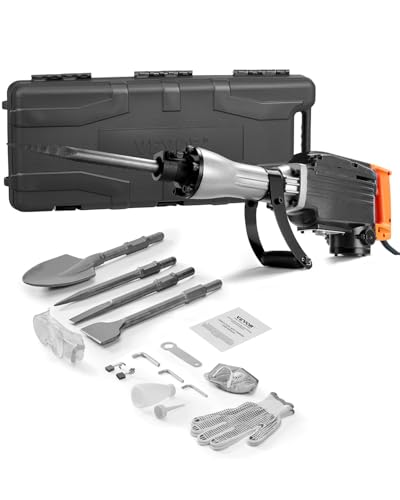
The Makita HM1812 (~72 lbs, ~64 J) and DEWALT D25980 (~68 lbs, ~52 J) are the standard answer for thick, reinforced concrete. Hilti’s TE 3000-AVR sits in this class too and is worth its premium if vibration exposure matters — it performs comparably to pneumatic breakers without a compressor. Expect to pay $800–$1,500 new for this class; renting at $60–$100/day often makes more sense for a one-off driveway.
Budget consideration
Off-brand 60 lb breakers run $250–$450 and do break concrete — impact energy specs are often honest — but vibration damping and switch/seal durability are where they cut corners. Fine for a single project; a false economy for regular use.
Decision Matrix
| Your situation | Recommended class | Why |
|---|---|---|
| One bathroom floor to redo | Rent a 35 lb breaker or buy 12 lb SDS-Max (~$300–$500) | Covers tile plus the mortar bed; purchase pays off if more flooring jobs loom |
| Garage slab, whole-house demo | Buy a 35–40 lb breaker ($500–$900) | Multi-day work where rental fees exceed purchase price |
| Thick driveway, one time | Rent a 65–70 lb breaker | High purchase cost, rare repeat need |
| Older arms / back issues | Prioritize AVT/AVR vibration models; let tool weight work vertically | Vibration and lifting, not the breaking itself, cause the strain |
| Tight crawlspace or wall-only work | Light SDS-Max hammer only | You physically hold the tool; anything over ~20 lbs fails in an hour |
Ownership Realities Listings Don’t Mention
- Bits are a real cost. A quality point, flat chisel, and tile scraper adds $60–$150. Budget breakers sometimes ship with soft steel bits that mushroom quickly — plan on replacing them.
- Corded beats cordless here. Cordless demo hammers exist in the light SDS-Max class, but sustained breaking drains batteries fast. For slab work, a 12-gauge extension cord is the cheaper answer.
- Weight during transport. A 70 lb breaker in a rolling case still has to go up stairs and into a truck bed. Check case weight (often +15–20 lbs) if you’ll move it alone.
- What wears first: carbon brushes (inspect around 50–100 hours), the bit retainer/spring, and cord strain relief. Brushes are a $10–$20 DIY fix on most models.
- Dust management. Breaking concrete indoors without a shrouded vac setup means silica dust everywhere. Some mid-size hammers accept dust extraction attachments — worth it for basement jobs.
FAQ
Is impact energy or BPM more important?
Energy decides whether the material fractures at all; BPM decides how fast you progress afterward. For anything thicker than 4 inches of concrete, prioritize joules.
Can a rotary hammer do demolition work?
An SDS-Max rotary hammer in chisel-only mode handles light tile and mortar, but its piston is optimized for drilling, not sustained breaking. For more than a few square feet of slab, a dedicated demo hammer is faster and built to take it.
When should I rent instead of buy?
If the job is under two days and the tool costs more than about 5 days of rental fees, rent. Breakers in the 60–70 lb class ($800+) almost always rent better for one-off projects.