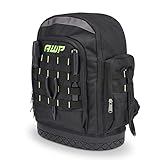
Key takeaways
- Inspect the stitching where handles meet the bag; reinforced box stitching or rivets are preferable to a single straight seam.
- Look for a base that extends up the sides by at least 1–2 inches, protecting fabric from wet floors and abrasion.
- Run the zipper fully open and closed. It should not catch on lining fabric or require the sides to be pulled together.
- Check whether pocket bottoms are reinforced. Sharp pliers, bits, and screwdrivers usually wear through these areas first.
- Confirm that the handle is comfortable with the intended load, not merely strong enough to lift an empty bag.
- Measure your storage shelf, vehicle compartment, and doorway before selecting a 20-inch-or-larger case.
The best tool bags for most everyday users are soft-sided fabric bags with a reinforced, waterproof hard bottom, removable dividers, and both a padded shoulder strap and a rigid top handle; choose a fully rigid case when impact protection matters more than flexible storage.
Our top picks


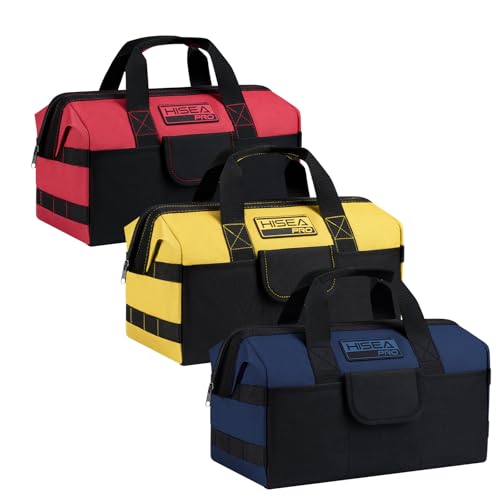
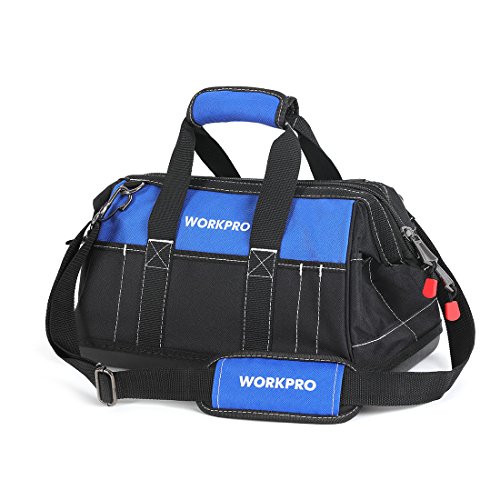
As an Amazon Associate we earn from qualifying purchases at no extra cost to you. Ratings are shown as listed on Amazon.
Quick picks by working situation
| Your situation | Best choice | Why it fits | What to avoid |
|---|---|---|---|
| Small apartment or vehicle trunk | 12–16 in. soft tool bag | Usually holds a hand-tool kit without wasting floor or shelf space | Large open totes with no internal organization |
| Electrician, maintenance worker, or installer | 18–20 in. structured bag with vertical pockets | Keeps meters, drivers, pliers, and consumables visible and upright | Deep single-compartment bags |
| Power-tool kit | Reinforced 18–24 in. bag with a 25–35 lb usable load | Provides room for a drill, impact driver, chargers, batteries, and accessories | Lightweight fabric bags with collapsing sides |
| Rain, dust, or outdoor work | Coated fabric or molded waterproof case | Protects tools from splashes and damp ground | Uncoated canvas with an absorbent interior |
| Back pain or long walks between jobs | Smaller divided bag with a padded shoulder strap | Limits the load and keeps weight close to your body | Oversized bags loaded with every tool you own |
Fabric versus hard-bottom construction
Fabric tool bags are the better all-purpose option when you need efficient storage, easy access, and a bag that can squeeze into a car or narrow cupboard. Common materials include polyester, ballistic nylon, and canvas. Polyester is generally economical and lightweight; tightly woven nylon usually resists abrasion better; canvas feels substantial but can absorb water and add weight.
A soft bag also makes better use of irregular space. Its sides can flex around a drill, extension cord, or oddly shaped accessory. External pockets let you see frequently used tools without emptying the main compartment. The trade-off is that fabric can sag, the zipper can be stressed by overfilling, and sharp tools may eventually wear through pocket bottoms.
Hard cases offer stronger protection against crushing, impact, and moisture. They are useful for precision instruments, outdoor transport, or a power-tool kit riding in a busy truck. However, molded cases waste some space around their rigid walls, are harder to carry up stairs, and often have a fixed layout designed for one tool set. A hard case is also less convenient when your kit changes frequently.
| Construction | Typical strengths | Typical weaknesses | Best use |
|---|---|---|---|
| Unstructured fabric tote | Low cost, light weight, fast access | Tools pile up; weak protection for delicate equipment | Occasional household repairs |
| Structured fabric with hard base | Flexible capacity, stable on the floor, good pocket access | Base seams and zippers can wear under overload | Daily hand tools and mixed kits |
| Molded hard case | Impact resistance, stackability, weather protection | Bulky, heavier, less adaptable interior | Power tools, meters, and transport in exposed conditions |
| Hybrid soft case with rigid panels | More protection than fabric with easier access than a case | Usually costs more and may have fewer usable liters than expected | Professional mixed equipment |
How much usable capacity do you actually need?
Advertised dimensions are not the same as usable capacity. A 16-inch bag may measure 16 inches across its top but have only 13–14 inches of clear interior length after curved ends, padding, and pockets. Measure the longest tool diagonally and leave clearance for the zipper to close without rubbing against it.
| Bag size | Approximate clear interior | Practical load | Suitable contents |
|---|---|---|---|
| 12–14 in. | 10–12 in. long, 5–7 in. wide | 8–15 lb | Screwdrivers, pliers, tape, small wrench set, fasteners |
| 16–18 in. | 13–16 in. long, 7–9 in. wide | 15–25 lb | Hand tools plus a drill, batteries, and charger |
| 20–24 in. | 17–22 in. long, 9–12 in. wide | 25–40 lb | Several power tools, accessories, and a larger hand-tool selection |
These are useful planning ranges rather than universal limits. Always follow the maker’s stated load rating. For routine carrying, staying below that maximum by roughly 20 percent reduces strain on handles, stitching, and zippers. A bag that technically holds 35 pounds may become uncomfortable and unstable well before reaching that weight.
Choose the layout before the fabric
Open main compartment
One large compartment is fast for bulky items such as a drill, oscillating tool, or extension cord. It is less effective for small hand tools because everything settles at the bottom. Choose this layout when your kit changes often or includes several large items.
Vertical exterior pockets
Rows of pockets are useful for screwdrivers, pliers, utility knives, bits, and inspection tools. Look for pockets deep enough to support the tool without hiding its handle. A pocket about 5–7 inches deep works for many standard hand tools; shallow pockets are better for tape measures, pencils, and small parts.
Dividers and removable inserts
Adjustable dividers are valuable when a bag carries both a power tool and loose accessories. They stop batteries from striking delicate tools and prevent a drill from burying a small driver. Removable inserts are preferable to permanently stitched compartments because they let you reconfigure the bag for a plumbing, decorating, electronics, or furniture-assembly job.
Dedicated battery and charger space
For cordless tools, check the actual opening width rather than counting pockets. A charger may need 8–10 inches of unobstructed length, while larger battery packs can require more than 3 inches of pocket depth. Keep batteries separated from sharp metal tools and avoid compressing them under a heavy drill.
Carrying comfort and weight distribution
A rigid handle is convenient for short trips, but a padded shoulder strap is better for a loaded bag. The strap should attach at opposite ends so the bag hangs lengthwise rather than twisting. A removable strap is useful if you alternate between carrying the bag and setting it on a ladder or work surface.
Keep dense items low and near the center. Putting batteries, sockets, or a hammer in one end makes the bag tip when placed down and pulls your shoulder sideways while walking. If you regularly carry more than about 25 pounds, consider two smaller bags or a rolling case instead of one oversized shoulder bag. Wheels reduce lifting, but they add bulk and do not help on stairs or uneven ground.
Weather resistance: what the labels mean
“Water-resistant” generally means the fabric or coating can handle light splashes, not that the bag can sit in standing water. A coated polyester or nylon exterior, covered zipper, raised base, and sealed or bound seams provide useful protection against rain and damp floors. A molded case with a gasketed lid offers a higher level of protection, but only when the closure is fully latched and the case’s water-resistance rating supports the conditions.
Regardless of construction, dry wet tools before storing them. Moisture trapped inside a closed bag can rust steel tools and create mildew in fabric. A hard waterproof case protects the outside of the kit but can retain condensation more effectively than a breathable fabric bag.
Durability checks that matter in 2026
- Inspect the stitching where handles meet the bag; reinforced box stitching or rivets are preferable to a single straight seam.
- Look for a base that extends up the sides by at least 1–2 inches, protecting fabric from wet floors and abrasion.
- Run the zipper fully open and closed. It should not catch on lining fabric or require the sides to be pulled together.
- Check whether pocket bottoms are reinforced. Sharp pliers, bits, and screwdrivers usually wear through these areas first.
- Confirm that the handle is comfortable with the intended load, not merely strong enough to lift an empty bag.
- Measure your storage shelf, vehicle compartment, and doorway before selecting a 20-inch-or-larger case.
For a household kit, a 12–16-inch structured fabric bag is usually the most efficient purchase. For daily work involving mixed hand and power tools, step up to an 18–20-inch bag with a hard base, vertical pockets, and a removable divider. Choose a hard or hybrid case when crushing, impact, or serious weather exposure is the main risk. The best tool bags are not the largest ones; they are the ones whose capacity, layout, and carrying method match the tools you actually bring to the job.