Key takeaways
- For hand tools: Look for upright loops or sleeves that keep pliers, screwdrivers, and wrenches visible. A deep open compartment may bury small tools at the bottom.
- For power tools: Prioritize a wide opening and a large, unobstructed bay. Check whether the tool fits with its battery attached.
- For small parts: Use zippered pockets or removable organizers for bits, fasteners, and electrical connectors. Loose items can migrate or spill when the pack tips over.
- For mixed kits: Favor a layout that separates sharp tools from electronics and paperwork. Too many fixed pockets can make an otherwise roomy bag hard to reconfigure.
The best tool backpacks depend on what you carry and how far you carry it: choose a compact, light pack for a short walk with hand tools, a structured pack with a protective laptop compartment for service work, or a heavy-duty model with a rigid waterproof base for a rough jobsite.
For a useful comparison, look beyond the number of pockets. A bag that holds every tool may be uncomfortable on a long walk, too bulky for a crowded van, or poorly suited to rain. Match its capacity, layout, materials, and harness to your actual load.
Our top picks
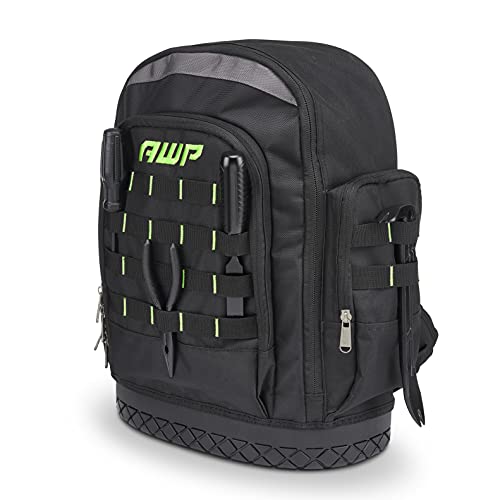


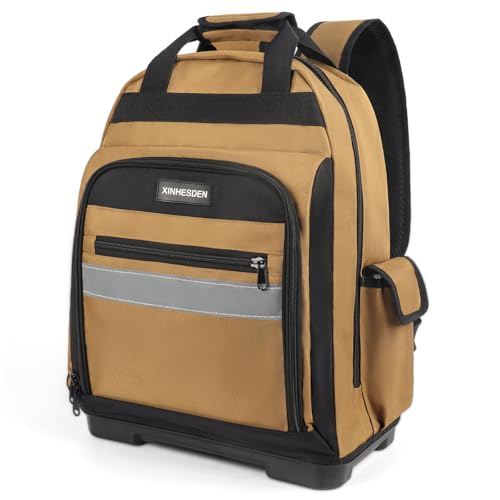
As an Amazon Associate we earn from qualifying purchases at no extra cost to you. Ratings are shown as listed on Amazon.
Choose by job and travel distance
| Your situation | What to prioritize | Useful target | Main trade-off |
|---|---|---|---|
| Short walk, mostly hand tools | Lightweight design, open access, secure tool loops | About 20–30 L; roughly 4–6 lb empty | Less room for power tools and bulky safety gear |
| Service calls with a laptop | Separate padded laptop sleeve, document pocket, organized tool storage | About 25–35 L; sleeve sized to your device | Padding and structure add weight and bulk |
| Long walk or public transit | Padded shoulder straps, sternum strap, breathable back panel, manageable empty weight | Often 20–30 L; try it with your typical load | Compact layouts may not fit larger kits |
| Outdoor work in wet or dirty conditions | Water-resistant fabric, covered zippers, sealed or molded base | About 25–40 L, depending on tools | “Water-resistant” does not mean submersible or fully waterproof |
| Large power-tool kit, mostly moved by vehicle | Wide opening, reinforced structure, durable base, strong handles | About 35–50 L; check loaded weight before buying | Heavy and awkward on stairs or long walks |
Capacity is not a weight rating. A 40 L bag can still become uncomfortable or strain its seams if loaded with dense tools. Weigh your usual kit, including chargers and batteries, and check the manufacturer’s stated load guidance when available. If you regularly carry a heavy load on foot, consider splitting it between a backpack and a cart or separate tool case.
Storage capacity and pocket layout
Choose capacity based on the largest items you carry, not on a promise that a bag will hold “all your tools.” Measure a drill, impact driver, meter, or other bulky item and compare it with the main compartment’s usable dimensions. A bag can have plenty of listed liters yet waste space through narrow openings, thick dividers, or pockets that interfere with one another.
- For hand tools: Look for upright loops or sleeves that keep pliers, screwdrivers, and wrenches visible. A deep open compartment may bury small tools at the bottom.
- For power tools: Prioritize a wide opening and a large, unobstructed bay. Check whether the tool fits with its battery attached.
- For small parts: Use zippered pockets or removable organizers for bits, fasteners, and electrical connectors. Loose items can migrate or spill when the pack tips over.
- For mixed kits: Favor a layout that separates sharp tools from electronics and paperwork. Too many fixed pockets can make an otherwise roomy bag hard to reconfigure.
Before choosing a highly compartmentalized design, count how many tools you actually want to access without setting the bag down. More pockets help only when their size and position match your kit.
Construction trade-offs: fabric, base, and protection
| Construction | What it offers | Where it can disappoint | Best fit |
|---|---|---|---|
| Coated polyester or nylon | Usually lighter than heavily reinforced canvas; coatings can resist splashes | Coating, seams, and zippers can still admit water; abrasion performance varies by fabric and stitching | Everyday carry and occasional exposure to rain |
| Heavy-denier nylon or reinforced fabric | Often better suited to repeated scraping and rough handling | Can cost more and feel stiff or heavy; fabric denier alone does not prove durability | Frequent jobsite use and heavier kits |
| Water-resistant fabric with a molded or reinforced base | Helps keep the pack upright and reduces wear from setting it on concrete | Added base structure increases weight; the body and zipper still need separate weather protection | Dirty floors, damp ground, and frequent vehicle loading |
| Fully waterproof construction | Designed to keep water out under specified conditions | May use roll-top closures or less convenient access; verify the stated rating and construction | Regular exposure to heavy rain or wet outdoor work |
For most jobsite bags, a tough body and a reinforced base are a practical combination. The base is often the first area to show damage because it drags against floors, catches on vehicle thresholds, and supports the bag when it is packed. Inspect base corners, seams, zipper ends, and the stitching where shoulder straps meet the body.
Do not treat “waterproof” and “water-resistant” as interchangeable. Coated fabric can shed light rain while water enters through a zipper or seam. If your laptop or instruments cannot get wet, use a separate dry sleeve unless the backpack’s water protection is clearly specified for that level of exposure.
Laptop protection and harness comfort
A padded laptop sleeve is useful for technicians who move between a vehicle, office, and jobsite, but tool pockets do not automatically protect electronics. Choose a sleeve that fits your laptop’s dimensions, sits away from sharp tools, and has padding at the bottom. A separate compartment can make it easier to keep dust, metal edges, and wet gear away from the computer.
For comfort, compare the shoulder straps, back panel, and adjustment options—not just the padding thickness. A sternum strap can help stabilize the load while walking. A waist belt is more valuable when carrying a heavier pack over longer distances; on a small, light bag it may add bulk without much benefit. Try the pack with a representative load and adjust the straps so the bag sits close to your back rather than pulling away from it.
Empty weight matters especially if your route includes stairs, transit, or a long walk from parking. As a simple comparison, an extra 2 lb of bag weight is 2 lb you carry on every trip before adding a single tool. A heavily reinforced pack may still be the better choice for a vehicle-based crew, where base durability matters more than low carry weight.
How to check fit before buying
- Measure your largest tools. Include the battery, protective case, or handle if those stay attached during transport.
- Estimate your typical load. Gather the tools, laptop, charger, and safety items you actually take on a normal day.
- Check compartment access. Confirm that the main opening is wide enough to load bulky tools and that frequently used items are reachable.
- Compare the empty weight and harness. If possible, try the pack with a similar load and walk around before deciding.
- Inspect the wear points. Look for reinforcement at the base, strap anchors, handles, and zipper ends.
- Match protection to exposure. For persistent rain, check the stated waterproofing rather than relying on a coated-fabric description alone.
Practical picks by type
Compact organizer for hand tools
Choose a lighter backpack with a clear tool layout, a secure top closure, and enough room for the essentials. This is a sensible option for punch-list work or short walks where fast access matters more than carrying a full power-tool kit.
Structured backpack for service technicians
Look for a separate laptop compartment, divided tool storage, and enough structure to keep the bag upright. This style suits people who carry both electronics and hand tools between a vehicle and multiple work locations. Check that the laptop sleeve is isolated from the sharpest tools.
Heavy-duty pack for rough sites
Prioritize reinforced fabric, a durable base, strong handles, and a roomy main compartment. This makes sense when the bag spends most of its time in a vehicle or on a shop floor. If you must carry it far, compare empty weight carefully and avoid filling unused capacity just because it is available.
Bottom line
The best tool backpacks balance organization with the burden of carrying them. For a short commute with hand tools, favor a compact layout and low empty weight. For service work, add a well-placed laptop sleeve and useful dividers. For rough or wet jobsites, invest in stronger base protection and verified weather resistance. In every case, size the bag to your real kit, then judge comfort with the load you expect to carry—not by capacity alone.