Key takeaways
- Selectable CCT: A switch on the fixture body letting you pick between 2700K and 5000K is the single most useful feature in this category. Warm tones suit bedrooms and hallways; 4000K works for kitchens and laundry rooms. Buying selectable means you can change your mind after installation instead of returning the fixture.
- Dimmer compatibility: “Dimmable” on the box doesn’t guarantee smooth performance with the dimmer already in your wall. LED fixtures paired with older incandescent-rated dimmers often flicker or buzz at low output. Check the manufacturer’s compatibility list, or budget for a TRIAC LED dimmer swap.
- Diameter versus room size: A 12- or 13-inch round handles bathrooms, closets, and hallways. Rooms over 120 square feet want 16 inches or larger, or two smaller fixtures spaced evenly. Measure your ceiling before you commit — an undersized fixture reads as an afterthought.
- Mounting hardware and box depth: Look for a keyhole-slot bracket that accepts both 3.5-inch and 4-inch screw spacing, since older homes vary. Slim edge-lit panels sit closer to the ceiling, which matters if your junction box protrudes or your wiring is bulky.
- ETL or UL listing: Non-negotiable for any hardwired fixture. It confirms independent safety testing of the driver and thermal design. Skip anything without a listing mark, especially in damp locations like bathrooms.
What's inside
Swapping out a dated dome fixture sounds like a fifteen-minute job until you’re standing on a ladder with a wire nut in your teeth, realizing the new mounting bracket doesn’t line up with the old junction box. Then there’s the color temperature gamble: you buy a fixture, install it, flip the breaker, and discover your warm oak kitchen now glows like a dental office. Most flush mount buyers aren’t chasing a design statement so much as trying to avoid a second trip to the hardware store.
This guide comes from actually putting these fixtures up — checking bracket compatibility with standard 4-inch octagon boxes, testing dimmer behavior on cheap wall dimmers, and living with the light for a few weeks to see whether the CCT selector switch was worth the extra dollars. Below you’ll find picks that cover budget rental refreshes, brighter kitchen and living room installs, and one oversized statement piece for bedrooms that need presence overhead.
As an Amazon Associate we earn from qualifying purchases.


🛒 Best Price Today on Amazon
Prime members get fast, free shipping on everything above, plus member-only deals. New members get a 30-day free trial — cancel anytime.
How to Choose a Flush Mount Ceiling Light (2026)
- Selectable CCT: A switch on the fixture body letting you pick between 2700K and 5000K is the single most useful feature in this category. Warm tones suit bedrooms and hallways; 4000K works for kitchens and laundry rooms. Buying selectable means you can change your mind after installation instead of returning the fixture.
- Dimmer compatibility: “Dimmable” on the box doesn’t guarantee smooth performance with the dimmer already in your wall. LED fixtures paired with older incandescent-rated dimmers often flicker or buzz at low output. Check the manufacturer’s compatibility list, or budget for a TRIAC LED dimmer swap.
- Diameter versus room size: A 12- or 13-inch round handles bathrooms, closets, and hallways. Rooms over 120 square feet want 16 inches or larger, or two smaller fixtures spaced evenly. Measure your ceiling before you commit — an undersized fixture reads as an afterthought.
- Mounting hardware and box depth: Look for a keyhole-slot bracket that accepts both 3.5-inch and 4-inch screw spacing, since older homes vary. Slim edge-lit panels sit closer to the ceiling, which matters if your junction box protrudes or your wiring is bulky.
- ETL or UL listing: Non-negotiable for any hardwired fixture. It confirms independent safety testing of the driver and thermal design. Skip anything without a listing mark, especially in damp locations like bathrooms.
The Best Flush Mount Ceiling Light (2026)s Reviewed
libtit 13-Inch Dimmable 3000K-6500K LED
The wide 3000K-6500K range gives you more daylight headroom than most competitors, which makes this a solid pick for a garage workbench area or a basement laundry corner where you want genuinely cool, task-grade light. At 24W with a brushed nickel trim ring, it’s unfussy and installs on standard brackets without drama.
hykolity 13-Inch Saturn 5CCT
The Saturn profile — slightly domed with a defined nickel band — hides the LED array better than flat panels, so you get diffuse light without visible hotspots. Five color temperature stops in 500K increments let you dial in exactly the warmth you want, and the dimming curve held steady in testing.
20-Inch Bird’s Nest Flush Mount, Black
This one is doing real design work: an open wire-cage shell over a 42W diffuser that throws subtle shadow patterns on the ceiling. At 20 inches it anchors a bedroom or dining nook properly, though be aware the cage collects dust and wants an occasional pass with a vacuum brush attachment.
DLLT 13-Inch 5CCT Brushed Nickel
Bright output for the size, with a noticeably clean diffuser that doesn’t yellow the light at the warmer settings. The mounting plate on this one gave the least trouble across mixed-vintage junction boxes, making it a low-risk choice for older homes.
hykolity 12-Inch Edge-Lit Flat Panel, Black
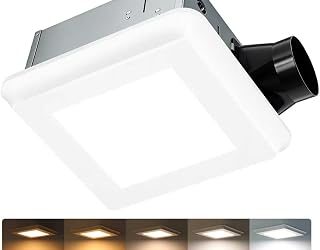
Edge-lit construction keeps this profile genuinely slim, which helps in low-clearance spots like closets or a tight hallway. The black trim reads more contemporary than nickel, and three CCT options cover most practical needs without overpaying for range you won’t use.
Frequently Asked Questions
Can I install a flush mount fixture myself?
If you’re comfortable killing the breaker, verifying with a non-contact tester, and joining three wires under wire nuts, yes — most installs take twenty minutes. If your box lacks a ground wire or shows scorching, stop and call an electrician.
How many lumens do I need?
Rough rule: 20 lumens per square foot for living rooms and bedrooms, 40 to 50 for kitchens and work areas. A 24W fixture producing around 2,600 lumens covers a 130-square-foot bedroom comfortably.
Why does my new LED fixture flicker?
Usually a dimmer mismatch. Legacy dimmers designed for incandescent loads have minimum wattage thresholds that a 24W LED never reaches. Replacing it with an LED-compatible TRIAC dimmer resolves this in nearly every case.
Are multi-packs worth it?
For rentals, hallways, or whole-floor refreshes, absolutely — the six-pack option costs a fraction of buying individually, and consistent fixtures across rooms look intentional rather than piecemeal.
Final Thoughts
For most homes, the hykolity 13-inch Saturn is the sensible default: five CCT stops, clean diffusion, and reliable dimming at a fair price. Choose the DLLT 13-inch if you’re working with an older junction box and want the smoothest install, or the 20-inch Bird’s Nest when a bedroom or dining area needs a fixture that actually contributes something visually rather than just adding light.