Key takeaways
- Everyday patio, furniture and garden-tool cleaning with soap: Chapin 20541 (1 gallon, foaming and adjustable cone nozzles).
- Acidic cleaners (deck brighteners, rust removers, mineral deposit cleaners): Solo 309-FA CLEANLine, 2.5 gallon, Viton seals.
- Alkaline cleaners (degreasers, concrete and grill cleaners): Solo 309-FB CLEANLine, EPDM seals.
- Fine, dense foam for vehicles, grills and equipment: iK Foam PRO 2, Viton seals, color-coded mixer adapters.
- Cleaning plus garden spraying with several nozzles: D.B. Smith 2-Gallon Contractor, five nozzles including foaming.
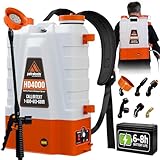
- Large fences, decks and siding: D.B. Smith Field King 190328, 4-gallon backpack with foaming nozzle.
- Same large job without pumping: D.B. Smith Field King 190515 battery backpack.
The Chapin 20541 1-gallon foaming sprayer is the best all-round foaming pump sprayer for yard and patio chores, the Solo 309-FA CLEANLine (Viton seals) is the pick for acidic cleaners, and the Solo 309-FB (EPDM seals) is the pick for alkaline degreasers and soaps. The choice is driven less by foam quality than by seal chemistry: match the seal material to the pH of what you are spraying, then size the tank to the job.
Our top picks


As an Amazon Associate we earn from qualifying purchases at no extra cost to you.
Quick answer: match the sprayer to the job
- Everyday patio, furniture and garden-tool cleaning with soap: Chapin 20541 (1 gallon, foaming and adjustable cone nozzles).
- Acidic cleaners (deck brighteners, rust removers, mineral deposit cleaners): Solo 309-FA CLEANLine, 2.5 gallon, Viton seals.
- Alkaline cleaners (degreasers, concrete and grill cleaners): Solo 309-FB CLEANLine, EPDM seals.
- Fine, dense foam for vehicles, grills and equipment: iK Foam PRO 2, Viton seals, color-coded mixer adapters.
- Cleaning plus garden spraying with several nozzles: D.B. Smith 2-Gallon Contractor, five nozzles including foaming.
- Large fences, decks and siding: D.B. Smith Field King 190328, 4-gallon backpack with foaming nozzle.
- Same large job without pumping: D.B. Smith Field King 190515 battery backpack.
How we chose
This guide is research-based. We compared published manufacturer specifications, independent pump-sprayer comparisons and seal-material data, keeping only models whose tank size, nozzle set and seal type could be cross-checked. Where a figure could not be confirmed, we describe the product by spec class and say so. Nothing here describes our own use of any sprayer, and foam quality is discussed in terms of the nozzle and mixing design, not personal impressions.
The criteria, in priority order:
- Seal material: Viton for acids, oils and many solvents; EPDM for alkaline solutions and water-based soaps; general-purpose gaskets for mild soap and plain water.
- Foam mechanism: a dedicated foaming nozzle or foam head that draws air into the liquid. A standard adjustable nozzle on a plain sprayer does not make real foam.
- Tank capacity: 1 gallon for spot jobs, 2 to 2.5 gallons for patios and vehicles, 4 gallons for fences and decks.
- Nozzle durability: brass and stainless last longer than plastic against abrasive cleaners.
- Chemical compatibility labeling: a published pH range on the sprayer is more useful than the word “heavy duty”.
Comparison table
| Model | Tank | Seals | Nozzles | Foaming | Chemical fit |
|---|---|---|---|---|---|
| Chapin 20541 | 1 gal | Standard gaskets, kit with Viton seal in value pack | Foaming plus adjustable cone | Yes | Soap, mild cleaners, garden oils per label |
| Solo 309-FA CLEANLine | 2.5 gal | Viton (pH 1 to 7) | Foaming head, handheld | Yes | Acidic cleaners |
| Solo 309-FB CLEANLine | 2.5 gal class | EPDM | Foaming head, handheld | Yes | Alkaline cleaners |
| iK Foam PRO 2 | Roughly 2 gal class | Viton | Foaming head, color-coded mixer adapters | Yes | Car wash, degreasing |
| D.B. Smith 2-Gallon Contractor | 2 gal | No-leak gaskets | 5: poly, brass, two flat fans, foaming | Yes | Soap, general garden |
| D.B. Smith Field King 190328 | 4 gal backpack | High-end seals, internal piston pump | 4: two flat fans, brass adjustable, foaming | Yes | Large-area soap and garden |
| D.B. Smith Field King 190515 | 4 gal backpack, battery | Not confirmed | 4: low and high-volume fans, brass adjustable, foaming | Yes | Large areas, no hand pumping |
| Chapin 20000 (contrast) | 1 gal | No-leak gaskets | 1 adjustable | No | Water-based garden sprays |
Best foaming pump sprayers, one by one
1. Chapin 20541: best for everyday cleaning around the yard
Specs: 1-gallon tank · Foaming nozzle plus adjustable cone nozzle · In-tank anti-clog filter · Value packs add nozzle kits with two flat fans, two foaming nozzles and a Viton seal.
The in-tank filter keeps undissolved soap flakes from blocking the nozzle, a common failure with cheap foamers. The foam also acts as a visual marker, so you can see which part of a patio table or siding panel has been covered. One gallon is the right size for furniture, grills and garden tools, and the sprayer stays light enough to carry across a lawn.
Pros: true foaming nozzle; anti-clog filter; compact; inexpensive replacement nozzles.
Cons: one gallon needs frequent refills on decks; standard seals are not meant for strong acids or solvents.
Best for: soap and mild cleaners around the patio. Skip if: your cleaner is strongly acidic or solvent-based.
2. Solo 309-FA CLEANLine: best for acidic cleaners
Specs: 2.5-gallon tank · Handheld foaming sprayer · Viton seals and O-rings · Rated for solutions in the pH 1 to 7 range.
Viton is the material to look for with acids. Deck brighteners, rust and mineral remover products, and many brick and paver cleaners fall in the acidic range, and standard rubber seals swell, harden or crack with them. A published pH range lets you check your product against the sprayer before you pour.
Pros: stated pH range; Viton seals; generous tank for patios and walkways.
Cons: not for alkaline products, which suit the EPDM version better; larger body to carry.
Best for: acid-based hardscape and metal cleaners. Skip if: you only use mild dish-soap solutions.
3. Solo 309-FB CLEANLine: best for alkaline degreasers
Specs: 2.5-gallon class · Handheld foaming sprayer · EPDM seals for alkaline solutions.
EPDM resists high-pH solutions such as concrete cleaners, degreasers and many grill and driveway products. Using this version for alkaline chemistry, and the FA for acidic chemistry, keeps seals alive far longer than trying one sprayer for everything. Confirm current tank volume on the listing.
Pros: seal chemistry matched to alkaline products; same body as the FA.
Cons: not rated for acids or oils.
Best for: driveway, grill and equipment degreasing. Skip if: you need acid compatibility.
4. iK Foam PRO 2: best for dense, controllable foam
Specs: Viton seals · Color-coded mixer adapters to tune foam consistency · Foaming head.
The adapters change the air-to-liquid mix, letting you choose a wetter, runnier foam for rinsing or a thicker foam for vertical surfaces where dwell time matters. This design is popular for vehicles, but it works the same on grills, trash cans, garage floors and outdoor equipment.
Pros: tunable foam; Viton seals; suited to degreasers.
Cons: cost sits above basic garden sprayers; capacity is smaller than a backpack.
Best for: detailed cleaning and equipment. Skip if: you need a big tank for fences or decks.
5. D.B. Smith 2-Gallon Contractor: best multi-use sprayer
Specs: 2-gallon tank · Five nozzles: poly, brass, two flat fans, foaming · Gaskets described as no-leak in a published comparison.
Because it ships with a foaming nozzle and four other tips, one sprayer covers soap foam, garden fungicide, and fence stain. Brass adds wear resistance against abrasive solids.
Pros: five nozzles; 2-gallon capacity; brass nozzle durability.
Cons: standard seals limit use with strong acids or solvents.
Best for: mixed cleaning and garden jobs. Skip if: you only need a pH-rated specialist foamer.
6. D.B. Smith Field King 190328 backpack: best manual option for big areas
Specs: 4-gallon backpack · Internal piston pump · Four nozzles: two flat fans, brass adjustable, foaming · High-end seals.
Washing a long fence or a large deck with a handheld foamer takes many refills. A backpack with a piston pump keeps both hands free and lets you foam a full panel in one pass.
Pros: large capacity; foaming nozzle; hands-free carry.
Cons: heavier when full; confirm seal grade before using aggressive chemicals.
Best for: fences, decks, large siding. Skip if: your tasks are small and occasional.
7. D.B. Smith Field King 190515 battery backpack: best without pump fatigue
Specs: 4-gallon backpack · Battery powered · Four nozzles: low and high-volume fans, brass adjustable, foaming.
A motorized version of the manual Field King. Constant pressure gives even foam coverage across a large surface, and no pumping means more focus on technique. Confirm battery details and seal type on the current listing.
Pros: constant pressure; large tank; four nozzles.
Cons: needs charging; seal compatibility details are not confirmed.
Best for: repeated large jobs. Skip if: you want a lightweight tool for small tasks.
Contrast pick: Chapin 20000
The Chapin 20000 earned a top value mark in a published independent comparison for its leak-free construction, but it has one adjustable nozzle and does not make true foam. It is a good garden sprayer for water-based solutions. Do not buy it expecting foam.
Buyer criteria with concrete thresholds
Seal material by chemical class
- pH 1 to 7 (acidic) cleaners: Viton.
- pH 8 to 14 (alkaline) cleaners: EPDM.
- Oil-based pest products, dormant oil, neem-type oils: Viton, if the label allows spraying through a foamer at all.
- Mild dish soap in water: standard gaskets are acceptable.
Tank size by task
- Up to 200 square feet (table, furniture, grill): 1 gallon.
- 200 to 800 square feet (patio, small deck): 2 to 2.5 gallons.
- Above 800 square feet (fence line, siding, large deck): 4-gallon backpack.
Nozzle durability
- Brass or stainless for abrasive or gritty cleaners.
- Plastic nozzles are fine for soap but wear faster, so choose a model with spare nozzles.
Worked example: how much cleaner and how many fills
Use this step-by-step logic to size the sprayer and the chemical. Numbers are planning assumptions.
- Measure the surface. A 12 by 16 foot patio is 192 square feet.
- Read the dilution. Suppose the cleaner label says 1 part concentrate to 10 parts water, and foam coverage is roughly 1 gallon of solution per 150 to 250 square feet.
- Solution volume: 192 / 200 is about 1 gallon of mixed solution.
- Concentrate needed: a 1:10 mix makes 1 gallon from about 11.6 ounces of concentrate and 116 ounces of water (1 gallon is 128 ounces, split into 11 parts of roughly 11.6 ounces each).
- Add a second pass. Stained areas often need a second foam application, so plan 1.5 gallons.
- Pick the tank. A 1-gallon sprayer needs two fills; a 2.5-gallon model finishes in one.
- Check chemistry. Acidic concentrate points to Viton; alkaline points to EPDM.
The conclusion: for a single patio, a 1-gallon foamer works but a 2-gallon model saves a refill. For a 600 square foot deck, expect about 3 gallons per pass, which is why a 4-gallon backpack saves time.
Safety and use guidance
- Read the cleaner and any pest or garden product label. Many cleaners and horticultural oils must not be sprayed through a foaming nozzle, and pesticides have specific application methods.
- Wear chemical-resistant gloves, eye protection and long sleeves. Foam and fine mist can irritate skin and eyes.
- Never mix bleach with ammonia-based or acidic cleaners. Dangerous gases can form.
- Ventilate outdoors, avoid spraying on windy days, and keep foam away from plants, pets and children unless the label says it is safe.
- Dedicate separate sprayers for cleaners and for anything that touches plants or edibles.
- Release tank pressure before opening the lid or changing a nozzle.
Care and troubleshooting
- Rinse with clean water after every use and spray until the nozzle runs clear.
- Clean the foam head and mixer screen if foam turns watery; clogged screens are the most common reason.
- Replace worn O-rings with the correct seal material; do not swap Viton for general rubber to save money.
- Store with the lid loose and the tank empty and dry.
- Use soft or filtered water when your tap is hard; mineral deposits clog nozzles and reduce foam.
Frequently asked questions
What makes a foaming sprayer different from a regular pump sprayer?
A foaming sprayer mixes air into the liquid through a foam head or nozzle. A regular pump sprayer only atomizes liquid into a spray.
The result is a thick foam that clings to vertical surfaces, which gives cleaners more contact time and shows where you have sprayed.
Do I need Viton seals for a foaming sprayer?
Only for acids, oils and many solvents. Viton resists these better than standard rubber, while mild soap works with ordinary gaskets.
When in doubt, check the cleaner label for materials compatibility, and choose a sprayer that publishes its pH or chemical range.
Can I use a foaming sprayer for garden pest oils?
Some can, but only if the product label allows it and the sprayer seals are compatible with oils, usually Viton.
Foam application is not appropriate for every pest product. Follow the label, and use a dedicated sprayer you will not use for cleaners.
Why does my sprayer produce watery foam?
Causes include low pressure, a clogged foam screen, too little soap, or water that is very hard.
Pump to full pressure, clean the screen, and try a slightly richer mix, then adjust until foam is thick without clogging.
How much cleaner do I mix for a patio?
Plan about 1 gallon of mixed solution per 150 to 250 square feet, then dilute the concentrate exactly as the label states.
Mix a little more than you think you need, since a second pass on stains uses extra.
What tank size should I choose?
Choose 1 gallon for furniture and tools, 2 to 2.5 gallons for patios and vehicles, and a 4-gallon backpack for fences and decks.
A larger tank cuts refills but adds weight, so match capacity to your largest regular job.
Is a battery foaming sprayer worth it?
For large, repeated jobs, yes. Constant pressure gives even foam and removes pumping fatigue. For small spot jobs, a manual unit is simpler.
Battery models add charging and electronics to maintain, so they pay off with regular large-area cleaning.
How do I stop nozzle clogs?
Use a model with an in-tank filter, dissolve cleaner fully before pouring, and rinse with clean water after each session.
Replace worn nozzles; a damaged orifice sprays unevenly and clogs sooner.
Final verdict
Pick the Chapin 20541 for everyday patio and garden-tool cleaning, the Solo 309-FA when your cleaner is acidic, and the Solo 309-FB when it is alkaline. Choose the iK Foam PRO 2 for dense, tunable foam, and a D.B. Smith Field King backpack when the surface is a fence or large deck. Always match seals to chemistry, verify any unconfirmed specs on the current manufacturer listing, and follow every product label.