Key takeaways
- Read the leather grade, not the leather claim: Full-grain and top-grain are the two terms that matter. “Genuine leather” is technically accurate for the lowest tiers too, so if a listing only says genuine without naming the grain, assume it’s split hide with a finish coat and price your expectations accordingly.
- Get under it and check the frame: Kiln-dried hardwood is the standard you want. Solid wood legs are a good sign, but they’re also the easiest part to advertise, so look for frame language in the spec table. Engineered board frames are the single biggest reason a cheap sofa develops a sag or a squeak.
- Understand what’s in the cushions: Feather down over a foam core gives you that sink-in luxury but needs regular fluffing. High-density foam holds its shape with zero maintenance but feels firmer. Neither is wrong, they’re just different commitments.
- Count the assembly steps before you commit: Bolt-on legs and a pre-built body is a ten-minute job. Sofas that ship as separate back panels, arms, and base need a second set of hands and a hex key you won’t lose. No-assembly models cost more to ship but arrive ready.
- Measure the doorway, then the turn: An 88″ sofa clears most front doors, but the hallway pivot and stairwell landing are what actually stop deliveries. Measure the diagonal of your tightest turn and compare it to the sofa’s depth plus height.
What's inside
Clearance leather sofas are where the real bargains hide, but they’re also where the shortcuts show. I’ve flipped enough furniture in my own workshop to know that “genuine leather” on a listing can mean anything from a buttery full-grain hide that’ll patina beautifully for twenty years to a thin split-leather veneer glued over particle board, destined to flake by year three. The markdown tag doesn’t tell you which one you’re getting. The construction details do.
This guide takes a builder’s eye to the current crop of discounted genuine leather sofas. I’m looking at frame material, leather grade, cushion fill, and how the thing actually goes together, because those four things determine whether a clearance buy is a steal or a slow-motion regret. Below you’ll find the picks worth your money, followed by the specific spec language to hunt for and a few questions I get asked constantly.
As an Amazon Associate we earn from qualifying purchases.


🛒 Best Price Today on Amazon
Prime members get fast, free shipping on everything above, plus member-only deals. New members get a 30-day free trial — cancel anytime.
How to Choose a Genuine Leather Sofa Clearance (2026)
- Read the leather grade, not the leather claim: Full-grain and top-grain are the two terms that matter. “Genuine leather” is technically accurate for the lowest tiers too, so if a listing only says genuine without naming the grain, assume it’s split hide with a finish coat and price your expectations accordingly.
- Get under it and check the frame: Kiln-dried hardwood is the standard you want. Solid wood legs are a good sign, but they’re also the easiest part to advertise, so look for frame language in the spec table. Engineered board frames are the single biggest reason a cheap sofa develops a sag or a squeak.
- Understand what’s in the cushions: Feather down over a foam core gives you that sink-in luxury but needs regular fluffing. High-density foam holds its shape with zero maintenance but feels firmer. Neither is wrong, they’re just different commitments.
- Count the assembly steps before you commit: Bolt-on legs and a pre-built body is a ten-minute job. Sofas that ship as separate back panels, arms, and base need a second set of hands and a hex key you won’t lose. No-assembly models cost more to ship but arrive ready.
- Measure the doorway, then the turn: An 88″ sofa clears most front doors, but the hallway pivot and stairwell landing are what actually stop deliveries. Measure the diagonal of your tightest turn and compare it to the sofa’s depth plus height.
The Best Genuine Leather Sofa Clearance (2026)s Reviewed
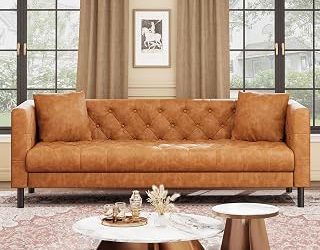
80″ Full-Grain Leather Chesterfield, Caramel
Full-grain hide plus feather down filling is a combination you rarely see at clearance pricing, and the deep seat with tufted back gives it genuine Chesterfield proportions rather than a token roll. The caramel finish will darken and soften with use, which is exactly what you want from full-grain, so treat early wear marks as character rather than damage.
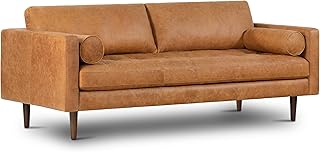
AMERLIFE Modern Top Grain Leather Sofa, Brown
This is the cleanest mid-century silhouette in the group, with tapered legs and low arms that keep it from swallowing a small room. Top grain leather at this width is a sensible compromise: slightly more uniform than full-grain and easier to wipe down, which makes it the practical pick for a shared living space or a home office.
84″ Traditional Real Leather Sofa, Black
Carved solid wood legs and a traditional three-seat frame make this the most formal option here, and black leather hides scuffs better than any other color. At 84″ it seats three adults without crowding, though I’d confirm your ceiling-to-doorway clearance before ordering since traditional frames tend to run tall in the back.
81″ Genuine Leather Sofa, Sage
Sage is an unusual color to find in leather and it reads far softer than brown or black in a room with natural light. Assembly is straightforward and maintenance is minimal, making this a good first leather sofa for someone who wants the material without the ritual of monthly conditioning.
Valencia Artisan Full Leather Sofa 88″
Pure Italian Nappa leather over a solid wood accent frame puts this at the top of the quality range, and Nappa’s tight grain feels noticeably smoother than standard top grain under your hand. At 88″ it’s the longest option here, so it earns its keep in a wide room where an 80″ sofa would look undersized.
Frequently Asked Questions
Is clearance leather furniture lower quality than full-price stock?
Usually not. Clearance pricing typically reflects discontinued colorways, seasonal inventory clearing, or overstock from a canceled retail order. The construction is the same. What you do lose is selection and, sometimes, return flexibility, so read the return window carefully before buying.
How much upkeep does genuine leather actually need?
Less than most people fear. Wipe spills immediately with a dry cloth, dust monthly, and condition twice a year with a pH-neutral leather cream. Keep it out of direct sun and away from radiators, since heat is what dries hide into cracks.
What’s the real difference between full-grain and top-grain?
Full-grain keeps the hide’s outer surface intact, including natural marks, and develops a patina over decades. Top-grain has that surface sanded and refinished for consistency, which makes it more stain-resistant but means it won’t age the same way. Full-grain is the durability winner; top-grain is the easier daily driver.
Will leather work in a house with pets or kids?
Better than most fabrics, actually. Leather doesn’t hold odors or pet hair, and spills sit on the surface long enough to blot. Claws are the real risk, and darker colors with a protected finish handle scratches most gracefully.
Final Thoughts
If you want the sofa that will look better in a decade than it does on delivery day, the 80″ full-grain Chesterfield in caramel is the one to beat, with feather down filling that makes it as comfortable as it is handsome. The Valencia Artisan 88″ is my pick for larger rooms thanks to that Italian Nappa hide, and the AMERLIFE top grain sofa is the most sensible everyday buy if you want clean modern lines and low-fuss maintenance.