Key takeaways
- Short hair (above the chin): a small hair towel or a plain hand towel is generally enough.
- Medium hair (shoulder length): a mid-size rectangle or a standard twist wrap.
- Long or very thick hair: a large rectangle or an oversized wrap, since small versions may not wrap fully around the length.
- Curly and coily hair: a soft, smooth surface used for gentle pressing rather than rubbing, such as microfiber or a cotton T-shirt.
For most people with long or thick hair, a dedicated microfiber hair towel or a twist-style wrap is the better choice, while short hair and tight budgets are fine with a soft cotton towel or an old cotton T-shirt. The right pick depends on hair length, how much time you want to spend standing at the mirror, and whether you care more about speed or about gentleness on the hair surface.
Our top picks


As an Amazon Associate we earn from qualifying purchases at no extra cost to you.
Hair Drying Towels at a Glance
| Type | Example brands | Best for | Stated materials | Limits |
|---|---|---|---|---|
| Microfiber hair towel | Aquis | Long, thick or curly hair | Makers describe fine microfiber, often in a lightweight weave | Needs gentle washing; can feel slick on very fine hair |
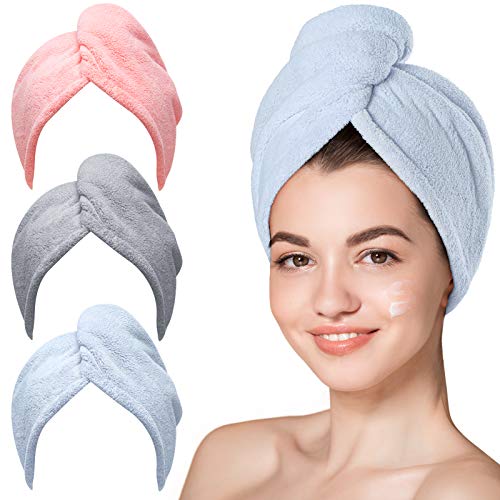
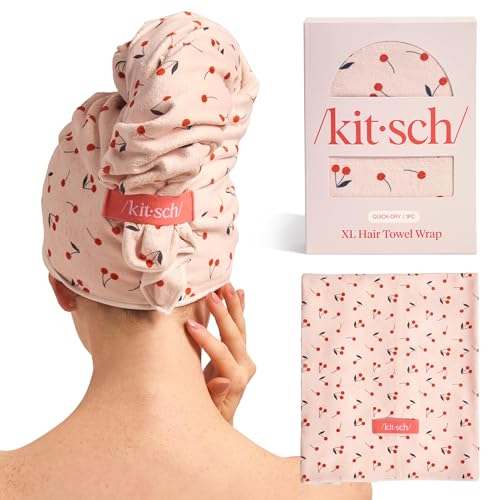
| Twist or turban wrap | Turbie Twist, Kitsch | Hands-free drying while you get dressed | Microfiber blends; some wraps use a loop and button closure | May slip on heavy hair; smaller coverage |
| Cotton or Turkish cotton towel | Parachute, Brooklinen | Short hair and all-purpose use | Cotton terry, often long-staple | Slower to dry hair; heavier when wet |
| Cotton T-shirt or flat-weave cotton cloth | Household items | Curly and wavy hair routines on a minimal budget | Plain cotton jersey or flat weave | Less absorbent per pass; no closure |
| Hooded hair wrap | Various | Wearing after a shower while you get ready | Microfiber or terry | Bulky on the head; may press on the neck |
Product lines and designs change, so read the maker’s own product page for the current size and material list before you buy. The notes below focus on how to choose rather than on one single winner.
Why Hair Towels Exist
A standard bath towel is built to dry a whole body, so it is large and heavy and uses loops of cotton thread designed for surface absorption. Hair towels are smaller and lighter, and many are made of microfiber, a synthetic fabric woven from very fine strands. Makers of microfiber hair towels commonly say the fabric pulls water from the hair quickly and reduces rubbing. Reviewers in the hair-care space often say that gentle blotting or squeezing is easier on hair than vigorous rubbing, and the shape of a hair towel makes that easier to do. These are general claims, and results vary with hair type and condition.
Materials Explained
Microfiber
Microfiber towels are usually polyester and polyamide blends. They are light, they absorb water well for their weight, and they dry quickly after use. The trade-off is that they can hold on to oils and product residue, so washing them separately without fabric softener is typical advice on care labels. Fabric softener is often said to coat the fibers and lower absorbency.
Cotton and Turkish cotton
Cotton terry is the classic towel material. Turkish cotton is usually described as long-staple and relatively thin, which means it tends to dry faster than thick, plush terry. A cotton towel works well if you already own a few and like the feel. It is also the easiest option to wash with regular laundry.
Cotton T-shirt
Curly-hair communities often suggest a soft cotton T-shirt because its smooth knit has no loops that can snag strands. It is the cheapest option and a reasonable way to test whether a gentle-blot approach suits you before buying a dedicated towel.
Style: Towel, Twist or Wrap
Flat or rectangular hair towels
These are the most flexible. You can squeeze hair, scrunch curls, or fold the towel into a turban. Larger rectangles cover thick or long hair better. If your hair reaches below your shoulder blades, a larger size is generally easier to manage.
Twist-style wraps
Twist-style wraps loop around the head and secure with a button, loop or tuck. They are quick to put on and stay in place while you brush your teeth or choose clothes. Reviewers point out that heavy, very long hair can pull a wrap loose, and that elastic loop closures can stretch over many washes.
Hooded or cap-style wraps
Cap-style designs resemble a shower cap with a towel lining. They cover the whole head with less folding but can feel heavy on the neck once the hair has absorbed water.
Size and Fit
- Short hair (above the chin): a small hair towel or a plain hand towel is generally enough.
- Medium hair (shoulder length): a mid-size rectangle or a standard twist wrap.
- Long or very thick hair: a large rectangle or an oversized wrap, since small versions may not wrap fully around the length.
- Curly and coily hair: a soft, smooth surface used for gentle pressing rather than rubbing, such as microfiber or a cotton T-shirt.
Budget Tiers
- Budget: multi-packs of basic microfiber wraps or a cotton T-shirt. Good for trying the method, though stitching and closures may wear sooner.
- Mid-range: established wrap brands such as Turbie Twist and Kitsch, which have simple designs and wide availability.
- Premium: Aquis and similar brand-name hair towels, which makers present as higher-grade fabrics and finishing, along with premium Turkish cotton towel sets.
Pick X If …
| If you … | Pick |
|---|---|
| Have long or thick hair and want faster drying | A large microfiber hair towel in the Aquis style |
| Want to keep both hands free | A twist-style wrap such as Turbie Twist or Kitsch |
| Already own soft cotton towels and have short hair | A cotton hand or bath towel |
| Follow a gentle curly-hair routine | Smooth microfiber or a cotton T-shirt |
| Travel often | Lightweight microfiber that folds small |
| Want one multi-purpose towel for the family | A cotton or Turkish cotton set |
Care Notes
Follow the care label on whichever towel you buy. As a general rule, microfiber is washed with mild detergent and without fabric softener, then dried on low heat or air dried. Wash new cotton towels before first use to remove finishing residue. Replace a towel when it looks frayed, smells even after laundering, or stops absorbing well.
If you color your hair, some dyes and treatments can stain towels, so many households keep a dark towel for that purpose. If you notice irritation on the scalp, change laundry products or stop using the towel, and consider talking to a dermatologist or other health professional.
Alternatives to Consider
- Regular bath towel with the blot method: no extra purchase, but slower on thick hair.
- Cotton T-shirt: inexpensive and gentle, but not as absorbent as a hair towel.
- Quick-dry travel towel: thin microfiber towels made for backpacking can double as hair towels, as long as the fabric feels soft on your hair.
How to Use a Hair Towel Well
- Squeeze excess water out of your hair with your hands first.
- Press and scrunch the towel gently along the lengths rather than rubbing the roots.
- For a wrap, lean forward, flip the hair into the towel, and secure the closure.
- Leave the wrap on for the time the maker suggests, then remove it and style.
- Hang the towel to dry fully between uses.
Frequently Asked Questions
Is a microfiber hair towel better than cotton?
Makers and reviewers commonly say microfiber absorbs quickly and is lighter, which helps with long hair. Cotton works well for short hair and is easier to wash with the rest of your laundry. Neither is universally better, so choose based on your hair length and routine.
Will a hair towel stop frizz?
Many people find that blotting instead of rubbing helps limit frizz, and a hair towel makes that easier. A towel cannot guarantee a result, because frizz depends on humidity, hair type and styling products.
How long should I leave a hair wrap on?
Follow the maker’s guidance on the product page or label. Many people leave a wrap on while they get dressed or do skincare. If the wrap feels tight or heavy, take it off sooner.
How do I wash a microfiber hair towel?
Wash it with mild detergent, avoid fabric softener, and use a low heat setting or air dry, in line with its care label. Wash it separately from lint-shedding items such as cotton bath towels.
What size hair towel do I need for long hair?
For hair past the shoulders, choose a larger rectangular towel or an oversized wrap so it can fold fully around the length. Small twist wraps may leave the ends uncovered.
Can I use a hair towel if I have a sensitive scalp?
Choose a soft towel and a fragrance-free laundry routine, and see how your skin responds. If you have ongoing scalp irritation, see a dermatologist rather than relying on a towel change.
More from Amazon
Programs that pair well with the guide above. Offers and eligibility are set by Amazon and may change.
A free business account with business pricing and bulk-buying tools for work, shop or home office.
Create a business accountFree shipping on eligible items, Prime Video and more. Eligible new members can start with a free trial.
Start a Prime free trialAudiobooks and podcasts to listen to on the go. Eligible new members can start with a free trial.
Try Audible freeAd-free music streaming. Eligible new subscribers can start with a free trial.
Try Music Unlimited freeAs an Amazon Associate we earn from qualifying purchases.