Our Top Picks
 Comfort Glow Indoor Kerosene Convection Heater23,800 BTUs22 x 18 x 18 inches20 poundsCheck on Amazon
If you want kerosene heat inside a house, cabin or garage, the two classic portable units in this set are the closest fit: the Sengoku HeatMate and the Comfort Glow KW-24J both state a safety feature or a heating area right in the title. The small 2-in-1 stove heaters are cheaper and lighter on stated detail, and the three forced-air torpedo models belong to a different job altogether. This guide covers ten listings using only what each title says. Treat every figure as a seller claim, and read the manual before burning anything indoors.
Top picks at a glance
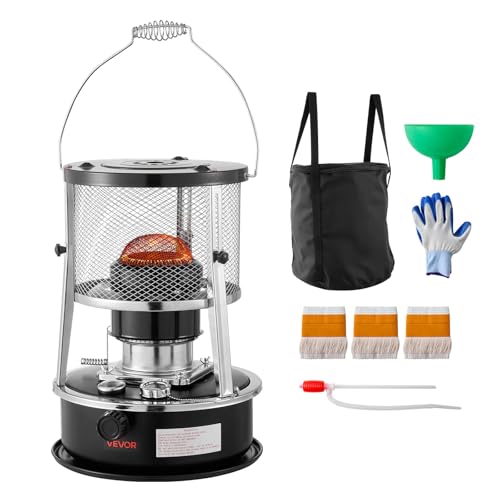
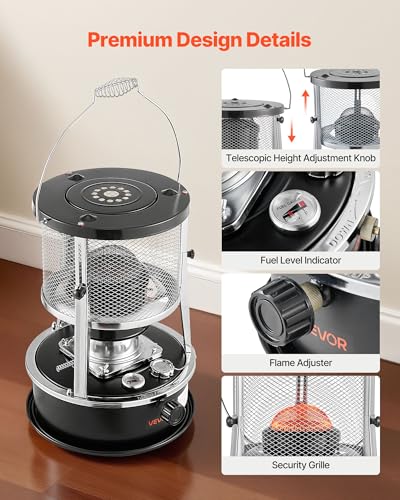
VEVOR 9000 BTU Portable Kerosene Heater & Stove, 2 in 1 Non-Electric Indoor Outdoor Heater with Adjustable Height & Flame & Easy Storage,for Camping, Hunting, Cooking, Home, Garage, Black




As an Amazon Associate we earn from qualifying purchases. Product prices and availability are accurate as of the date/time indicated.

Sengoku HeatMate Portable Kerosene Heater, 10,000 BTU, Cordless, White | Heats Up to 400 Sq Ft, 1.2 Gal Tank, Up to 14 Hr Burn Time, Automatic Safety Shut-Off, Tip-Over Switch, Push-Button Start
As an Amazon Associate we earn from qualifying purchases. Product prices and availability are accurate as of the date/time indicated.

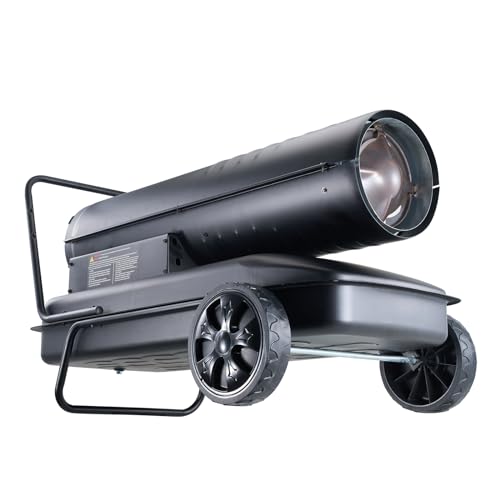
VEVOR Kerosene Forced Air Heater, 175000 BTU Portable Torpedo Diesel Space Heater with Thermostat, 13.2 Gallon Tank Energy-Efficient heavy-duty Heater, for Indoor Outdoor Use Workshop Industry



As an Amazon Associate we earn from qualifying purchases. Product prices and availability are accurate as of the date/time indicated.
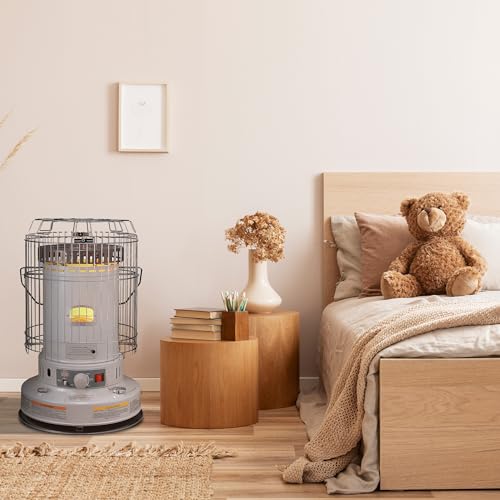
Comfort Glow Indoor Kerosene Convection Heater, 23,800 BTUs, Grey - KW-24J | Heater for Winter Emergencies, 360 Degree Heating Radius, Heats up to 1,000 sq. ft., Operates up to 12 Hour on One Tankful




As an Amazon Associate we earn from qualifying purchases. Product prices and availability are accurate as of the date/time indicated.
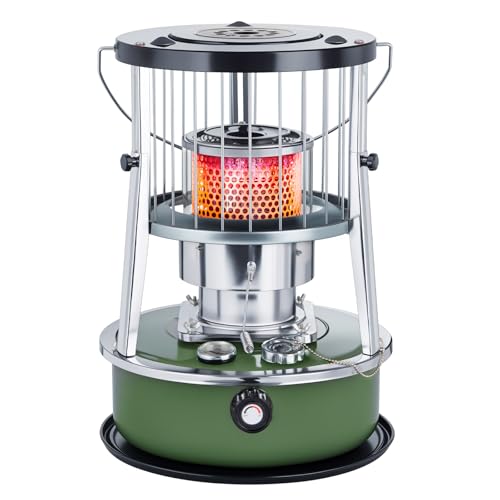
10,000 BTU Kerosene Heater & Stove, Kerosene Heaters for Indoor Use | Non Electric, Adjustable Height, Portable, Emergency, for Camping, Cooking, Garage, Home, Green


As an Amazon Associate we earn from qualifying purchases. Product prices and availability are accurate as of the date/time indicated.

9,000 BTU Kerosene Heater, Kerosene Heaters for Indoor Use | Non Electric, 2 in 1 Stove & Heater, Adjustable Height, Portable, Emergency, for Camping, Cooking, Garage, Home, Black


As an Amazon Associate we earn from qualifying purchases. Product prices and availability are accurate as of the date/time indicated.

VEVOR Kerosene Forced Air Heater, 70000 BTU Portable Torpedo Diesel Space Heater with Thermostat, 5 Gallon Tank Energy-Efficient heavy-duty Heater, for Indoor Outdoor Use Workshop Industry


As an Amazon Associate we earn from qualifying purchases. Product prices and availability are accurate as of the date/time indicated.

2 in 1 Portable Kerosene Heater 9000 BTU Kerosene Stove for Camping Non-Electric Indoor Outdoor Heater Emergency Oil Heaters for Heating, Cooking, Camping (Green)


As an Amazon Associate we earn from qualifying purchases. Product prices and availability are accurate as of the date/time indicated.

Garvee 9000 BTU Portable Kerosene Heater, No-Electric Heater & Stove, Black | Indoor Outdoor Heater with Adjustable Flame, Heats Up to 19㎡, 1.2 Gal Tank, for Camping, Hunting, Garage


As an Amazon Associate we earn from qualifying purchases. Product prices and availability are accurate as of the date/time indicated.

BILT HARD 85,000 BTU Forced Air Kerosene Diesel Heater, Portable Torpedo Space Heater with Thermostat Control for Outside, Jobsite, Garage, and Construction Sites, CSA Certified


As an Amazon Associate we earn from qualifying purchases. Product prices and availability are accurate as of the date/time indicated.
| Model | Key point from title | Price tier | Best for |
|---|---|---|---|
| Sengoku HeatMate | 10,000 BTU, 400 sq ft claim, tip-over switch | Mid-range | Small rooms, outages |
| Comfort Glow KW-24J | 23,800 BTUs, 1,000 sq ft claim | Premium | Larger open spaces |
| VEVOR 9000 BTU | 2-in-1 heater and stove | Budget | Camping, garage |
| AHUAWA 10,000 BTU | Stove and heater, adjustable height | Mid-range | Backup heat |
| AHUAWA 9,000 BTU | Near-twin of the 10,000 listing | Budget | Light-duty use |
| Garvee 9000 BTU | 1.2 gal tank, 19 square meter claim | Mid-range | Small garage |
| Titunjian 9000 BTU | Lowest price in the set | Budget | Occasional camping |
| VEVOR 70000 BTU | Forced air, 5 gal tank | Mid-range | Ventilated workshops |
| BILT HARD 85,000 BTU | Forced air, CSA certified claim | Premium | Job sites |
| VEVOR 175000 BTU | Forced air, 13.2 gal tank | Premium | Large industrial areas |
What is changing in this category
Kerosene heating used to mean one of two things: a classic wick-fed room heater or a loud jobsite torpedo. Search results now show a third group, small 2-in-1 units that pitch themselves as both a heater and a cooking stove, usually with camping and emergency language in the title. Several listings here fit that pattern, and they tend to share near-identical wording, which makes it hard to tell which are genuinely different products and which are rebadged versions of each other.
Interest in non-electric backup heat usually rises after severe winter storms and long outages, and sellers market to that worry. That is a fair use case, but it also attracts claims that outrun the evidence. A heater that needs no electricity still consumes room air and produces combustion gases, so it is not automatically the safer outage choice compared with other options.
Rules matter more than product trends. Some cities, states and rental agreements limit or prohibit unvented kerosene heaters indoors, and insurers sometimes ask about them. Before spending money, check local codes and any lease or policy terms. Insurance and landlord terms deserve a phone call before you buy, not after. Buyers who only want warmth for a bedroom or bathroom may find an electric option simpler, and our panel space heater comparison covers that quieter route.
How we picked these
We started from ten listings that clearly describe a kerosene-burning heater, then sorted them into three classes: small 2-in-1 stove heaters, classic indoor convection units, and forced-air torpedo heaters. For each one we read the title closely, noted what it actually states, and flagged the gaps. Selection draws on published specifications, manufacturer documentation and buyer reviews. Nobody on the team used or measured these units. Where we give numbers beyond a title, they are labeled estimates with their assumptions shown.
Kerosene heaters compared one by one
Sengoku HeatMate: classic indoor pick with the most safety detail
This is the only small unit whose title lists a full safety set: automatic safety shut-off, a tip-over switch and push-button start. It also states 10,000 BTU, a cordless design, a 1.2 gallon tank and up to 14 hours of burn time, plus heating of up to 400 square feet. Those are seller claims, but the specificity helps you compare.
It suits a bedroom-sized space, a cabin or a garage during an outage when a cautious owner wants a listing that explains its protections. A quick scenario: an owner heats a single 300 square foot room while the furnace is down, with a window cracked as the manual directs.
The practical appeal is predictability. A household that has never run a kerosene heater benefits from a listing that names its protections, because those are the first things to look for when the manual arrives. The tradeoff is price: it sits above the generic 2-in-1 units, so you are paying for stated features and a fuller description rather than for extra heat. If your room is under 400 square feet and you want one dependable backup, this is the easiest listing to defend.
- Pros: detailed safety list in the title; long stated burn time; cordless.
- Cons: mid-range price; 400 square foot claim is modest; combustion still needs ventilation.
Check the listing for fuel type, certifications and the wick or burner replacement process. Ask before buying: where will I store the fuel?
Comfort Glow KW-24J: the high-output convection heater
The title gives 23,800 BTUs, a 360 degree heating radius, a claim of heating up to 1,000 square feet and up to 12 hours on a tankful. That is more than double the output of the Sengoku, so it fits a bigger open room, a workshop or a garage that stays cold.
More output is not automatically better. A powerful unit in a small, tight room raises the combustion load, and the title does not list a tip-over switch or shut-off, so check the listing for protective features. It is also one of the pricier non-torpedo choices here.
A realistic use case is a detached workshop or a large basement that never fully warms up. In that kind of space, a unit with a wide heating radius can warm the whole floor area without a fan, which also keeps noise low. Because the listing is silent on shut-off protection, a cautious owner would want to confirm the burner design and any certification marks before the first use, and would keep the heater on a flat, hard surface well away from stored materials.
- Pros: high stated output; large coverage claim; 360 degree radius.
- Cons: premium price; no safety features named in the title; likely overkill for a bedroom.
Ask before buying: is my space really big and open enough to need nearly 24,000 BTUs?
VEVOR 9000 BTU: the 2-in-1 with an adjustable flame
This one calls itself a portable kerosene heater and stove, non-electric, with adjustable height and flame and easy storage. The title lists camping, hunting, cooking, home and garage uses. It is among the cheaper listings, and the brand-name match with the torpedo models means one seller family covers both ends of the market.
The title says nothing about a tip-over switch, a tank size, a burn time or a coverage area. That absence matters: without a stated safety feature, you need the manual in hand before you rely on it indoors.
The adjustable height is worth noting because it hints at a stand that doubles as a cooking platform. That flexibility is the reason these units sell for camping and hunting trips. For household backup, it means you may carry a hot, open-flame device around a living space, which raises the stakes on placement and supervision. It is best suited to someone who will mostly use it outdoors or in a ventilated garage and who accepts that the listing is brief.
- Pros: low price tier; flame and height adjustment; doubles as a stove.
- Cons: no stated safety features, tank size or coverage area; cooking use adds a hot-surface hazard.
Check the listing for documentation and fuel type. Ask before buying: how will I handle the open flame near children or pets?
AHUAWA 10,000 BTU: a heater and stove in green
The title pitches a 10,000 BTU non-electric heater and stove with adjustable height, for emergency, camping, cooking, garage and home. It is close in wording to the 9,000 BTU AHUAWA listing and to the VEVOR, so shoppers should compare carefully rather than assuming differences.
The extra 1,000 BTU over the 9,000 models is a small step, and the title gives no tank size, runtime or safety features. Its main appeal is the slightly higher stated output at a mid-range price.
A typical buyer here is comparing three or four lookalike products and trying to decide whether an extra 1,000 BTU is worth a higher price. On paper it is a modest bump, roughly 11 percent over 9,000 BTU, and it will not change a room’s comfort dramatically. If both are the same design underneath, pick based on documentation, return terms and the quality of the manual rather than on the headline BTU number alone.
- Pros: highest output in the small 2-in-1 group; adjustable height; emergency framing.
- Cons: sparse title detail; near-duplicate of other listings; unclear safety features.
Ask before buying: does the seller publish a manual with burner and fuel specifications?
AHUAWA 9,000 BTU: the lower-output sibling
This near-twin of the 10,000 BTU listing swaps the stated output down to 9,000 BTU and the color to black, with the same non-electric stove-and-heater pitch. It sits at a lower price tier, which is the real reason to choose it over its sibling.
For a small garage or a camp setup, the difference between 9,000 and 10,000 BTU is minor, and the same warnings apply: no tank, runtime or safety information in the title. If the manual proves identical, saving money is reasonable, but only after confirming that.
Think of it as the choice for light duty: a tent vestibule on a hunting trip, a well-ventilated shed, or a short-term emergency kit that sits mostly in storage. Because it burns fuel, keep expectations modest and avoid sleeping areas. If you cannot find a clear manual from the seller, treat the missing paperwork as a reason to pass, since a low price rarely offsets uncertainty about how a flame appliance behaves.
- Pros: budget-friendly; same adjustable height; portable.
- Cons: thin spec detail; near-duplicate listing; lower stated output.
Check the listing to see whether the two AHUAWA units really share a design. Ask before buying: is the manual written for this exact model?
Garvee 9000 BTU: the listing that gives a tank size
Garvee states 9000 BTU, a 1.2 gallon tank, an adjustable flame and heating up to 19 square meters, which is roughly 205 square feet by simple conversion. It is described as a non-electric heater and stove for camping, hunting and garage use.
It is useful for the tank and coverage figures that most 2-in-1 listings omit, though the coverage claim is the smallest in the set, which is a more modest and perhaps more honest number. Price is mid-range for this class.
Using the stated numbers, a 1.2 gallon tank at 9000 BTU suggests a burn rate that the title does not give, so runtime stays unknown. What you can do is compare the coverage claim with your room: a 200 square foot space such as a small workshop bay is the target, and anything larger will probably leave you wanting more heat. It suits tidy, compact spaces where a modest heater is enough.
- Pros: stated tank size and coverage; adjustable flame; compact use case.
- Cons: small coverage area; no safety features named; mid-range price for a basic design.
Ask before buying: is a space of about 200 square feet really what I need to heat?
Titunjian 9000 BTU: the cheapest way in
This listing carries the lowest price in the set. The title offers 9000 BTU, a non-electric design, and uses for camping, heating, cooking and emergencies, in green. The brand is far less recognizable than the others, and the title is generic.
Low price and low detail go together. There is no tank size, no burn time and no safety feature in the title, so the manual and any certification marks matter even more than usual. A low price cannot replace documentation for a device that burns fuel.
The scenario for this unit is occasional, supervised use: a weekend camping trip, a hunting blind that allows fuel heaters, or a spare emergency unit. It is a poor choice for anyone who wants a primary home heat source. If you buy it, record the seller’s contact details, keep the packaging, and use the return window early, because documentation problems tend to show up early.
- Pros: lowest price tier; portable; stove function.
- Cons: no stated safeguards; unfamiliar brand; thin documentation signals.
Check the listing for return terms and manual availability. Ask before buying: what happens if the burner or wick needs a replacement part?
VEVOR 70000 BTU forced air: the smaller torpedo
This is a different tool. The title describes a kerosene and diesel forced-air torpedo heater with a thermostat, a 5 gallon tank and 70,000 BTU, for indoor and outdoor, workshop and industrial use. It is not a bedroom heater and should not be bought like one.
Torpedo heaters move large volumes of hot air quickly, which suits open, ventilated areas. A thermostat is a useful control feature, and the title calls it energy-efficient, which is a seller claim. Forced-air models generally need electrical power for the fan, so check the listing.
A sensible use is a large open workshop, a barn with the doors cracked, or a construction area where fumes can disperse. In those settings a thermostat helps avoid overshooting, and a 5 gallon tank cuts refilling trips. Many forced-air heaters vent combustion products into the space they heat, so ventilation is a requirement, not an option, and the manual’s clearance and airflow rules are essential reading.
- Pros: large stated output; thermostat; sizable tank.
- Cons: too powerful for small rooms; noise and fumes are likely higher than classic units; ventilation requirements matter.
Ask before buying: is the space large, open and ventilated enough?
BILT HARD 85,000 BTU: the job site heater with a certification claim
BILT HARD pitches an 85,000 BTU forced-air kerosene and diesel heater with thermostat control for outside work, job sites, garages and construction sites, and says it is CSA certified. That certification claim is the most concrete safety signal among the three torpedo models, although the title does not say which standard applies.
Look at the wording: it targets outdoor and jobsite use, not enclosed living spaces. A garage may be acceptable only with proper ventilation and a manual that allows it.
For a contractor warming a framed building during finishing work, this type of heater is common because it delivers heat quickly in unfinished spaces. A homeowner with a drafty two-car garage is the borderline case. Even there, the title does not promise enclosed-space suitability, so the owner should ask the seller or the manufacturer whether use in an attached garage is permitted, and should keep a working carbon monoxide alarm nearby.
- Pros: certification claim; thermostat; strong jobsite fit.
- Cons: premium price; heavy output for casual use; certification scope not explained.
Check the listing for the certification details. Ask before buying: does the manual allow use in my kind of space?
VEVOR 175000 BTU forced air: industrial-scale heat
The largest unit here lists 175,000 BTU, a 13.2 gallon tank and a thermostat, for indoor and outdoor, workshop and industry use. It is a heavy-duty heater for very large spaces, and it is the most expensive in the set.
For a home garage this is almost certainly more than necessary, and oversizing is wasteful and risky in tight spaces. Treat it as equipment for big shops, barns or construction areas with serious airflow.
The tank size means long unattended-feeling runs, which is exactly why safety discipline matters: fuel level checks, cool-down periods, and a clear zone around the unit. For most readers of this page, this listing is useful mainly as a reminder of how far the category stretches. If your goal is a heated bedroom or a small garage, step down to the classic or 2-in-1 units instead.
- Pros: very large stated output; big tank; thermostat.
- Cons: highest price; far too much for homes; needs generous ventilation.
Ask before buying: do I need industrial heat, or will a smaller unit do the job?
Buying guide: how to choose a kerosene heater
Start with the class, not the brand
The ten listings sort into three classes. Small stove heaters at 9,000 to 10,000 BTU suit camping, garages and short outages. Classic indoor convection units such as the Sengoku and Comfort Glow are meant for rooms. Torpedo heaters are for large, open, ventilated work areas. Choosing the wrong class is the most common costly mistake in this category.
Safety features and ventilation
Look for a tip-over switch, automatic shut-off and a stable base. Pair any combustion heater with a working carbon monoxide alarm, keep it away from flammables, and provide fresh air as the manual specifies. Follow the manufacturer’s instructions and local codes, and never refuel while the unit is hot or lit.
How these heaters work and where they fall short
A classic kerosene heater draws fuel up a wick or through a burner, burns it, and releases heat directly into the room, while a torpedo heater blows air across a combustion chamber. Both consume oxygen and release combustion gases, which is the reason ventilation, alarms and fuel discipline dominate the advice. The upsides are portability, no electricity for many classic designs, and strong heat per dollar. The downsides are odor, refueling chores, moisture added to the air, and the safety work that comes with any open combustion.
Sizing, fuel and runtime
Match output to the space using a rough 20 to 40 BTU per square foot guide, then add margin for poor insulation. Fuel capacity and burn time determine how often you refuel, which is a handling risk in itself.
Worked example
Assume a 300 square foot garage with moderate insulation. At an estimated 30 BTU per square foot, the target is about 9,000 BTU, so a 9,000 to 10,000 BTU unit sits at the low edge. The Sengoku states 1.2 gallons and 14 hours, or roughly 0.09 gallons per hour. If kerosene cost a placeholder $5 per gallon, an eight-hour session would burn about 0.7 gallons, or around $3.50. These are estimates; use your local fuel price and the real manual.
| Spec concept | What to look for | Why it matters |
|---|---|---|
| BTU output | Roughly 20 to 40 per sq ft | Too little leaves the room cold; too much wastes fuel |
| Tip-over switch | Named in the listing | Cuts the flame if knocked over |
| Tank and burn time | Gallons and hours stated | Sets refuel frequency |
| Certification | Standard named, not just a logo | Signals a third-party review exists |
| Power need | Non-electric or plug required | Matters during outages |
For the electric alternative, our space heater electricity cost guide helps compare running costs, and the smart space heater roundup covers models with scheduling.
Maintenance and storage
Wick and burner care, fuel quality and storage conditions affect how a kerosene unit behaves over time. Keep fuel in an approved, labeled container outdoors, let the heater cool before moving it, and follow the manual’s cleaning steps. For general upkeep habits, the guide to cleaning a space heater is a useful companion, though kerosene units have their own parts.
Mistakes buyers make
- Treating a torpedo heater like a room heater. Forced-air units are meant for open, ventilated areas.
- Skipping the carbon monoxide alarm. Any combustion heater indoors needs one that works.
- Trusting square foot claims. Seller coverage numbers ignore insulation and drafts.
- Buying on price alone. The cheapest listings name no safety features at all.
- Ignoring local rules. Some places restrict indoor kerosene heaters.
- Using the wrong fuel. Only the fuel named in the manual is acceptable.
- Refueling a warm unit. Let it cool completely, and refuel outdoors where possible.
- Overlooking storage. Fuel needs an approved container and a safe place, and a heater with no storage plan becomes a hazard in a closet.
Verdict by use case
Small room during an outage: the Sengoku HeatMate has the clearest safety detail. Larger open space: the Comfort Glow KW-24J offers the most stated coverage among classic units. Budget camping or garage backup: the Garvee, VEVOR 9000 or AHUAWA 9,000 BTU, after reading the manual. Job sites and big shops: the BILT HARD for its certification claim, or the VEVOR 70000 for a smaller area. The VEVOR 175000 is for industrial-scale areas only. Installation of any permanent fuel setup should go to a qualified professional.
Frequently asked questions
Is it safe to use a kerosene heater indoors?
It can be when the heater is designed for indoor use, the room is ventilated as the manual requires, and a working carbon monoxide alarm is installed. Kerosene burns fuel in the room, so ventilation and correct fuel matter. Some areas restrict or ban indoor kerosene heaters, so check local codes. Follow the manufacturer’s instructions, never refuel a hot or lit unit, and keep it clear of anything flammable.
What fuel does a kerosene heater use?
Most manufacturers specify clean, clear kerosene of a particular grade, and the manual names the exact requirement. Using gasoline, mixed fuel or dirty kerosene is dangerous and can damage the burner. Torpedo heaters in this list mention diesel in their titles, which suggests a different fuel allowance, so read each manual separately. When the listing is vague, treat the fuel question as unanswered until you see the manufacturer’s documentation.
How many BTUs do I need to heat a room?
A rough rule of thumb is 20 to 40 BTU per square foot, depending on insulation, ceiling height and how cold it gets. On that rough range, a 10,000 BTU unit would suit roughly 250 to 500 square feet in a mild, well-sealed space. Drafty garages and cabins land at the high end. Treat any square-foot claim in a title as a seller estimate and leave margin.
What is the difference between a torpedo heater and a regular kerosene heater?
A torpedo heater uses a fan to push hot air out of a barrel-shaped body, with much higher BTU output, and is built for large open areas such as job sites and workshops. A classic portable unit radiates or convects heat quietly in a smaller room. The torpedo style generally needs electrical power for the fan and more ventilation, so the two types suit very different jobs.
Do kerosene heaters need electricity?
Many classic portable models do not; several titles here say non-electric or cordless. Forced-air torpedo models generally need a power supply for the blower and thermostat, though you should confirm that on each listing. A non-electric heater is useful during outages, but it still needs fresh air, a carbon monoxide alarm and careful fuel handling, so power independence is not a safety feature.
How do I store kerosene fuel and the heater safely?
Keep fuel only in a container approved for kerosene, label it, and store it outdoors or in a detached space away from ignition sources and children. Let the heater cool fully before moving or storing it, and drain or manage leftover fuel as the manual directs. Do not mix old fuel with fresh without checking the instructions, and follow local codes for how much fuel you may keep.