Key takeaways
- For a compact, obstacle-filled large lawn: Look for a 42–46-inch lawn tractor with hydrostatic transmission and a tight turning radius. It may take more passes than a wider machine, but it is easier to steer around landscaping and maneuver through confined access points.
- For a typical 2–4-acre property: A 48–54-inch deck is a useful balance between coverage and maneuverability. Choose hydrostatic drive if mowing involves repeated speed changes, or compare geared models if the lawn is open and you are comfortable selecting gears.
- For broad, open acreage: A 54–60-inch deck can cut the number of passes. Confirm that the tractor can fit through your gate and that your terrain is suitable for a wide-deck riding mower. Extra width is less helpful if the lawn is full of trees, ditches, or tight turns.
- For year-round utility: Consider a tractor with manufacturer-approved options such as a bagger, mulch kit, trailer, snow blade, or snow thrower. Check compatibility by exact tractor model and deck size; attachments are not automatically interchangeable across a brand’s lineup.
Best Lawn Tractors for Large-Yard Mowing
The best lawn tractors for large yards are models matched to your acreage, terrain, and attachments: choose a 42–46-inch deck for roughly 1–2 acres, a 48–54-inch deck for 2–4 acres, and a 54–60-inch deck with a stronger engine for larger, open properties. A hydrostatic transmission is the easiest choice for frequent turns or obstacles; a geared transmission can make sense for simpler lawns and tighter budgets.
Start with the yard, not the biggest deck
Deck width affects mowing time, but it also determines how easily a tractor passes through gates, between trees, and around garden beds. Measure the narrowest route to the lawn before buying. A 48-inch deck is already 4 feet wide before accounting for the tires or any extra clearance needed to turn. For an irregular yard, a smaller deck can save time otherwise lost maneuvering and trimming.
Our top picks

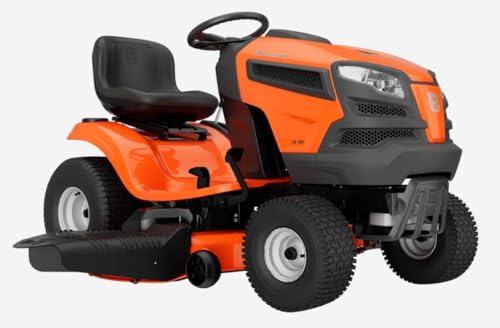

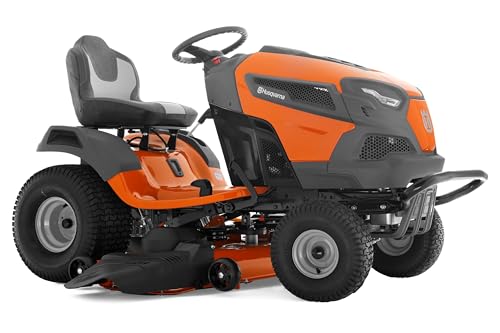
As an Amazon Associate we earn from qualifying purchases at no extra cost to you. Ratings are shown as listed on Amazon.
The acreage ranges below are practical starting points, not manufacturer guarantees. Slopes, wet grass, obstacles, and frequent stops can make a property take substantially longer to mow.
| Typical yard and layout | Suggested deck | Useful engine range | Best fit |
|---|---|---|---|
| About 1–2 acres; several trees or narrow passages | 42–46 inches | 18–22 hp | Agile lawn tractor, often with hydrostatic drive |
| About 2–4 acres; mostly open, gently rolling ground | 48–54 inches | 20–24 hp | Mid-size tractor with a comfortable seat and towing hitch |
| About 4–6 acres; broad, mostly open lawn | 54–60 inches | 22–26 hp | Higher-capacity tractor; compare deck design and service support |
| More than 6 acres or frequent heavy-duty work | 54 inches or wider | Varies by task | Compare lawn tractors with garden tractors or a zero-turn mower |
Horsepower alone does not tell you how quickly a mower will cut. Deck width, blade configuration, engine torque, grass height, and the pace you can maintain all matter. If you regularly tow a cart, move snow, or cut dense grass, prioritize the manufacturer’s towing and attachment specifications rather than relying on horsepower as a shortcut.
Strong picks by mowing situation
- For a compact, obstacle-filled large lawn: Look for a 42–46-inch lawn tractor with hydrostatic transmission and a tight turning radius. It may take more passes than a wider machine, but it is easier to steer around landscaping and maneuver through confined access points.
- For a typical 2–4-acre property: A 48–54-inch deck is a useful balance between coverage and maneuverability. Choose hydrostatic drive if mowing involves repeated speed changes, or compare geared models if the lawn is open and you are comfortable selecting gears.
- For broad, open acreage: A 54–60-inch deck can cut the number of passes. Confirm that the tractor can fit through your gate and that your terrain is suitable for a wide-deck riding mower. Extra width is less helpful if the lawn is full of trees, ditches, or tight turns.
- For year-round utility: Consider a tractor with manufacturer-approved options such as a bagger, mulch kit, trailer, snow blade, or snow thrower. Check compatibility by exact tractor model and deck size; attachments are not automatically interchangeable across a brand’s lineup.
Examples of established lawn-tractor lines to compare include the John Deere X300 Select Series, the Cub Cadet XT Enduro Series, and the Troy-Bilt Super Bronco. Their configurations vary by model and year, so verify current specifications—including deck width, engine, transmission, and attachment fit—rather than assuming every tractor in a series has the same equipment.
What to compare before you buy
Cutting deck and turning radius
A wider deck reduces passes on open ground, but the mower still needs room to turn. Turning-radius figures and cutting-width specifications are not always presented in directly comparable ways, so look for the stated turning radius and try the steering geometry in person if possible. On a property with many trees, a close-turning tractor may save more time than stepping up one deck size. Neither a lawn tractor nor a wide deck eliminates trimming along beds, fences, and posts.
Transmission and engine power
Hydrostatic transmission lets you vary speed smoothly using a pedal or lever, with no manual gear changes. It is convenient around obstacles and when the lawn has sections that call for different speeds. Manual or geared transmissions require more deliberate shifting but can suit a straightforward route where speed changes are infrequent. Some models use other transmission designs, so compare the exact specification and intended workload.
For an open, maintained lawn, a mid-range engine can be sufficient. Thick grass, hills, towing, and snow attachments increase demand. Follow the manufacturer’s guidance for slopes; a lawn tractor is not a safe choice for every steep or uneven property, even if its engine is powerful.
Comfort, fuel, and running costs
For long mowing sessions, check seat adjustment, back support, vibration, pedal position, and access to the controls. A high-back seat is useful only if it fits the operator and remains comfortable after an hour or more. If possible, sit on the tractor and test the control reach before purchase.
Fuel consumption varies with engine, deck, grass conditions, terrain, and cutting speed. Instead of relying on a universal gallons-per-hour figure, compare tank capacity and estimated mowing time for your lawn, then ask the dealer or manufacturer for model-specific guidance. Keeping blades sharp, clearing the deck, and mowing before grass becomes excessively tall can reduce strain and help maintain an even cut.
Budget for routine maintenance as well as the purchase: oil and filters, blades, belts, battery care, and seasonal service. Bagger systems, carts, and snow equipment can add substantially to the total cost. Lawn tractors commonly span broad price bands—from roughly $2,000–$3,500 for many basic to mid-range configurations, with larger or more capable models often around $3,500–$6,000 or more. Treat these as general market ranges; equipment and local pricing change the total.
Attachments: check fit before planning around them
A rear hitch does not mean every trailer or attachment is approved for every tractor. Confirm the attachment’s compatibility with the exact model, deck, and transmission, and check limits for towing, weight, and slope. Baggers and mulch kits are often specific to deck size; snow equipment may require a particular frame, lift system, or tire setup. If winter use is important, verify that the relevant attachments are available before choosing the tractor.
A quick decision rule
For a lawn under 2 acres with many obstacles, favor a 42–46-inch hydrostatic model over the widest deck you can afford. For 2–4 open acres, start with a 48–54-inch tractor and choose transmission based on how often you slow, stop, and turn. For larger, open properties, compare 54-inch-and-wider machines—but if you need to mow many acres quickly, handle steep terrain, or perform demanding ground-engaging work, also price a zero-turn mower or garden tractor. The right choice is the machine that fits your access, terrain, workload, and attachment plans, not simply the one with the most horsepower.