Key takeaways
- Finish type: Most modern sofas are pigmented (protected) leather with a topcoat, which handles water-based cleaners well. Aniline and nubuck are unfinished and thirsty, so they drink conditioner fast and stain from anything wet. Check the underside of a cushion for a tag before you commit.
- Darkening risk: Oil-rich conditioners can deepen tan and cream leather a shade or two. If your sofa is light, look for a formula that explicitly states it won’t darken, and always test on a hidden panel behind the skirt first.
- Cleaner and conditioner as a pair: Conditioning over trapped grime just seals it in. You want both steps, which is why kits usually beat buying a single bottle unless you already own one half of the equation.
- Bottle size versus sofa size: A three-seater plus ottoman eats through 8 oz quickly if you’re doing a full restoration. For a first deep treatment on a big sectional, 16 oz or larger saves you a reorder mid-job.
- No silicone, no petroleum distillates: These give an instant shine and long-term brittleness. Look for straightforward oil-and-emollient formulas, and favor non-toxic labeling if you have kids or pets sprawled on the cushions daily.
What's inside
Anyone who has run a hand across the seat cushion of a five-year-old leather sofa knows the feeling: dry, slightly chalky, a little too grippy where it used to glide. That’s not dirt so much as the hide crying out for oil. Leather is skin, and skin loses moisture, especially parked near a radiator or a sun-facing window. Left alone long enough, that dryness turns into hairline cracks along the seams and creases, and cracks don’t buff out. They’re structural.
I’ve refinished enough secondhand furniture in my garage to know that the fix is embarrassingly simple and cheap compared to reupholstering. Two products, a couple of cloths, twenty minutes twice a year. The hard part is picking formulas that actually feed the leather instead of coating it in silicone gloss that flakes off by spring. Below are the cleaners, conditioners, and full kits I keep on the shelf, plus what to look at on the label before you buy.
As an Amazon Associate we earn from qualifying purchases.



🛒 Best Price Today on Amazon
Prime members get fast, free shipping on everything above, plus member-only deals. New members get a 30-day free trial — cancel anytime.
How to Choose a Leather Care For Sofa (2026)
- Finish type: Most modern sofas are pigmented (protected) leather with a topcoat, which handles water-based cleaners well. Aniline and nubuck are unfinished and thirsty, so they drink conditioner fast and stain from anything wet. Check the underside of a cushion for a tag before you commit.
- Darkening risk: Oil-rich conditioners can deepen tan and cream leather a shade or two. If your sofa is light, look for a formula that explicitly states it won’t darken, and always test on a hidden panel behind the skirt first.
- Cleaner and conditioner as a pair: Conditioning over trapped grime just seals it in. You want both steps, which is why kits usually beat buying a single bottle unless you already own one half of the equation.
- Bottle size versus sofa size: A three-seater plus ottoman eats through 8 oz quickly if you’re doing a full restoration. For a first deep treatment on a big sectional, 16 oz or larger saves you a reorder mid-job.
- No silicone, no petroleum distillates: These give an instant shine and long-term brittleness. Look for straightforward oil-and-emollient formulas, and favor non-toxic labeling if you have kids or pets sprawled on the cushions daily.
The Best Leather Care For Sofa (2026)s Reviewed
Leather Honey Leather Conditioner
This is the one I reach for when a hide feels papery. It soaks in rather than sitting on top, and a small amount goes a long way, so the bottle outlasts what you’d expect from the size. Give it a few hours to absorb before you sit down, and expect a slight tonal deepening on very pale leather.
Leather Honey Leather Cleaner
A concentrate you dilute yourself, which means one bottle handles many jobs and you control the strength. It lifts body oils out of headrests and armrests without the squeaky, stripped feeling that harsh saddle soaps leave behind, and it’s fine on faux leather and vinyl too.
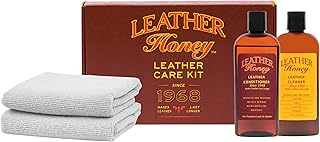
Leather Honey Complete Leather Care Kit
The 8 oz cleaner plus 8 oz conditioner pairing is the sensible entry point for a standard two- or three-seat sofa. Buying the pair costs less than sourcing them separately, and having both on hand means you actually do the clean step instead of skipping straight to the oil.
Bick 4 Leather Conditioner & Cleaner
Bick 4 is my pick for light and cream leather because it genuinely doesn’t darken. It cleans and conditions in one pass, which makes it ideal for quarterly maintenance rather than heavy restoration, and it dries fast with no tacky residue.
Furniture Clinic Large Leather Care Kit
Two 17 oz bottles, a sponge, and a cloth put this in restoration territory rather than touch-up. The conditioning protection cream leaves a subtle barrier that helps against future soiling, which is worth having on a family sofa that takes daily punishment.
Frequently Asked Questions
How often should I condition a leather sofa?
Twice a year is the baseline. Bump it to every three months if the sofa sits in direct sun, near a heat vent, or in a dry climate, and spot-treat high-contact areas like headrests and armrests whenever they start feeling dry.
Will conditioner fix cracks that have already formed?
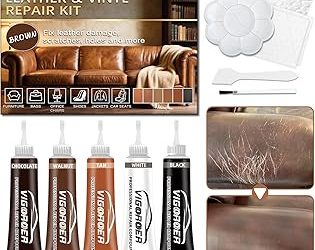
It can soften and disguise fine surface crazing and stop it spreading, but deep cracks that have split the finish need a filler and pigment repair. Conditioner is prevention first, cosmetics second.
Can I use these on faux leather or vinyl?
Cleaners generally yes. Conditioners are formulated to penetrate real hide, and synthetic surfaces have nothing to absorb them, so you’ll usually just get a slippery film. Stick to the cleaner side for vinyl.
What’s the right way to apply it?
Vacuum the creases, clean with a damp cloth and diluted cleaner, let it dry fully, then apply conditioner in thin coats with a lint-free cloth using small circles. Wipe off any excess after ten minutes and let it cure overnight.
Final Thoughts
For most sofas, the Leather Honey Complete Leather Care Kit covers both steps at a fair price and is hard to get wrong. If your leather is pale and you’re nervous about darkening, Bick 4 is the safer choice, and for a large sectional needing a full revival, the Furniture Clinic Large Leather Care Kit gives you the volume to finish the job in one weekend.