Key takeaways
- Leather grade and placement: Top-grain or full-grain leather on the seat, back, and armrests is what you want — those are the high-wear zones. Many chairs use real hide on contact surfaces and bonded leather or vinyl on the sides and back, which is a reasonable cost tradeoff as long as you know that’s what you’re getting.
- Frame construction: Kiln-dried hardwood with corner blocks and screws beats particleboard with staples every time. If a listing mentions “solid wood frame” with no species named, assume softwood and factor in that reclining puts real leverage on those joints.
- Mechanism type: Push-back recliners use your body weight against a spring-loaded pivot — simple, no lever, nothing to snag. Manual lever mechanisms give you a footrest and more defined positions but add hardware that can loosen. Both are serviceable with a socket wrench; powered units usually aren’t.
- Seat foam density: High-density foam over sinuous springs holds its shape. Thick-cushioned seats feel great in week one, but if the foam is low-density it’ll compress into a hollow. Look for anything specifying HD foam or a foam density rating.
- Wall clearance and footprint: Measure the recline depth, not just the chair. Push-back models typically need six to ten inches behind them; some wingback designs need more. Tape it out on your floor before ordering.
What's inside
Shopping for a leather recliner means sorting through a lot of confident marketing and very little useful detail. Listings say “genuine leather” without telling you whether that means a thick top-grain hide on the seating surfaces or a paper-thin split hide glued to a backing. They advertise a reclining mechanism without mentioning whether the frame underneath is kiln-dried hardwood or stapled softwood that starts creaking by month eight. If you’ve ever flipped a chair over to inspect the underside before buying, you already know that’s where the real story lives — and it’s exactly the part you can’t see online.
This guide takes the tinkerer’s approach: what’s actually holding the thing together, how the mechanism behaves after a few hundred cycles, and which chairs are worth reupholstering in a decade versus which ones are disposable. I’ve focused on manual and push-back recliners because fewer motors means fewer failure points, plus a couple of massage-and-heat models for anyone who wants the extras. Below are six leather recliners worth a look in 2026, followed by the specs that separate a chair you’ll keep from one you’ll curb.
As an Amazon Associate we earn from qualifying purchases.



🛒 Best Price Today on Amazon
Prime members get fast, free shipping on everything above, plus member-only deals. New members get a 30-day free trial — cancel anytime.
How to Choose a Leather Recliner Chair (2026)
- Leather grade and placement: Top-grain or full-grain leather on the seat, back, and armrests is what you want — those are the high-wear zones. Many chairs use real hide on contact surfaces and bonded leather or vinyl on the sides and back, which is a reasonable cost tradeoff as long as you know that’s what you’re getting.
- Frame construction: Kiln-dried hardwood with corner blocks and screws beats particleboard with staples every time. If a listing mentions “solid wood frame” with no species named, assume softwood and factor in that reclining puts real leverage on those joints.
- Mechanism type: Push-back recliners use your body weight against a spring-loaded pivot — simple, no lever, nothing to snag. Manual lever mechanisms give you a footrest and more defined positions but add hardware that can loosen. Both are serviceable with a socket wrench; powered units usually aren’t.
- Seat foam density: High-density foam over sinuous springs holds its shape. Thick-cushioned seats feel great in week one, but if the foam is low-density it’ll compress into a hollow. Look for anything specifying HD foam or a foam density rating.
- Wall clearance and footprint: Measure the recline depth, not just the chair. Push-back models typically need six to ten inches behind them; some wingback designs need more. Tape it out on your floor before ordering.
The Best Leather Recliner Chairs (2026) Reviewed
Classic Manual Recliner in Nut Brown
A straightforward traditional recliner with generously padded arms and a supportive back — the kind of chair that doesn’t try to be clever. The nut brown finish hides scuffs well, and the manual mechanism is simple enough that a loose bolt is a five-minute fix rather than a service call.
Genuine Leather Overstuffed Manual Recliner, Dark Brown
The overstuffed padding here is the selling point: deeper cushioning through the backrest and armrests than most chairs in this range. It reads as a proper armchair rather than a recliner that happens to look like one, which matters if it’s going in a living room instead of a den.
HULALA HOME Burgundy Push Back Recliner
Nailhead trim and a thick cushioned seat give this one genuine traditional character, and the push-back action keeps the silhouette clean with no lever breaking the lines. Burgundy is a commitment, but on real leather it develops a patina that vinyl never will.
Traditional Wingback Push Back Recliner, Brown
The wingback profile does real work — it blocks drafts and gives your head somewhere to rest when you recline, which most recliners handle poorly. Doubles convincingly as an accent chair, so it earns its place in a formal room.
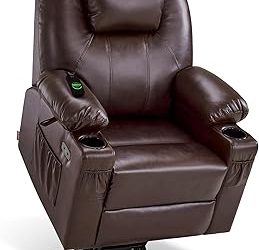
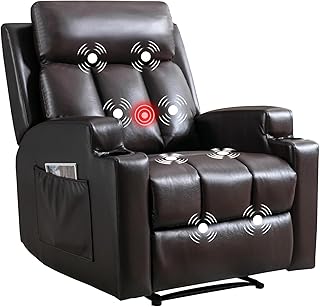
Manual Recliner with Massage and Heat, Dark Brown
Massage and lumbar heat plus two cup holders and a side pocket makes this the most feature-dense pick here. The breathable leather is a smart pairing with the heat function, since heated seating on non-perforated upholstery gets clammy fast.
Frequently Asked Questions
Is “genuine leather” the same as top-grain leather?
No. “Genuine leather” is a loose category that includes split hides and corrected grain — real leather, but from lower layers of the hide and often heavily finished. Top-grain comes from the outer layer and wears far better. Both beat bonded leather, which is leather scrap bound with polyurethane and tends to flake within a few years.
Can I tighten a recliner mechanism myself?
Usually yes. Most creaking and wobble traces back to loosened bolts on the pivot brackets. Flip the chair, find the hex or socket heads on the mechanism, and snug them in a crossing pattern. Add a drop of removable thread locker if they keep backing out.
How do push-back recliners compare to lever recliners?
Push-back models recline the backrest only and rely on your weight, so there’s less hardware and a cleaner look. Lever recliners extend a separate footrest and lock into set positions, better for full-length lounging but with more parts to wear.
How should I maintain leather upholstery?
Dust weekly, wipe spills immediately with a damp cloth, and condition with a pH-neutral leather conditioner every six to twelve months. Keep it out of direct sun and away from radiators — heat and UV dry out the hide and cause cracking faster than actual use does.
Final Thoughts
If you want one chair that will still be solid in ten years, the Genuine Leather Overstuffed Manual Recliner in dark brown is the most substantial build here and the easiest to service. The HULALA HOME burgundy push back is the pick for anyone prioritizing looks and simplicity — fewer moving parts, real traditional detailing. And if you want the extras without the complexity of a full power unit, the Manual Recliner with Massage and Heat delivers heated lumbar support on breathable leather, which is a genuinely well-matched combination.