Key takeaways
- Balm or penetrating dye: Almost every sofa sold in the last thirty years is pigment-finished leather, which means a recoloring balm is the correct tool — it bonds to the existing topcoat. Penetrating dyes like Angelus are formulated for raw, aniline, or stripped leather and will bead up or blotch on a factory finish unless you deglaze first.
- Color matching over color changing: Restoring a faded medium brown to medium brown is a weekend job with predictable results. Going from beige to black means multiple coats, full coverage of every seam and gusset, and dye transfer onto clothing for weeks. Match if you possibly can.
- Flexibility after cure: Cushion leather flexes thousands of times a year. Any product that dries hard will crack along stress lines within a season. Look for formulas that stay pliable and, ideally, include a conditioner in the base.
- Coverage math: A three-seat sofa with arms and a back is roughly 40 to 50 square feet of surface. Small tins cover scuffs on a chair; a full sofa restoration realistically needs a larger kit or two units of the same batch. Buy enough at once so your color is consistent.
- What’s in the kit: Prep does more for the final result than the dye itself. Kits that bundle a cleaner or prep solution, applicator sponges, and a sealer save you a separate shopping trip and generally produce a more durable finish.
What's inside
The failure mode is always the same: you sit in the same spot for eight years, and eventually the leather there stops matching the rest of the sofa. Cushion tops go pale and chalky, the arms pick up a network of fine scratches from rings and pet claws, and the headrest darkens with body oil. The frame is still solid, the springs are fine, and replacing the whole thing over cosmetic wear feels absurd. So you start looking at dye — and immediately hit a wall of products that all claim to fix everything.
They don’t do the same job. Some are pigmented balms that sit on the surface and rebuild color on finished leather. Others are penetrating dyes that soak into the fiber and permanently change it. Picking the wrong category is how people end up with a stiff, patchy sofa. This guide sorts the options by what they actually are, how they behave on a real cushion, and which one belongs on your project.
As an Amazon Associate we earn from qualifying purchases.


🛒 Best Price Today on Amazon
Prime members get fast, free shipping on everything above, plus member-only deals. New members get a 30-day free trial — cancel anytime.
How to Choose a Leather Sofa Dye (2026)
- Balm or penetrating dye: Almost every sofa sold in the last thirty years is pigment-finished leather, which means a recoloring balm is the correct tool — it bonds to the existing topcoat. Penetrating dyes like Angelus are formulated for raw, aniline, or stripped leather and will bead up or blotch on a factory finish unless you deglaze first.
- Color matching over color changing: Restoring a faded medium brown to medium brown is a weekend job with predictable results. Going from beige to black means multiple coats, full coverage of every seam and gusset, and dye transfer onto clothing for weeks. Match if you possibly can.
- Flexibility after cure: Cushion leather flexes thousands of times a year. Any product that dries hard will crack along stress lines within a season. Look for formulas that stay pliable and, ideally, include a conditioner in the base.
- Coverage math: A three-seat sofa with arms and a back is roughly 40 to 50 square feet of surface. Small tins cover scuffs on a chair; a full sofa restoration realistically needs a larger kit or two units of the same batch. Buy enough at once so your color is consistent.
- What’s in the kit: Prep does more for the final result than the dye itself. Kits that bundle a cleaner or prep solution, applicator sponges, and a sealer save you a separate shopping trip and generally produce a more durable finish.
The Best Leather Sofa Dyes Reviewed
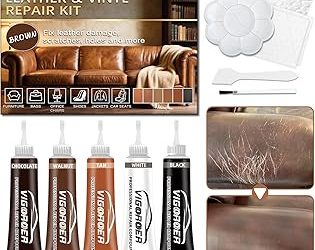
Leather Recoloring Balm & Vinyl Color Restorer
This is the safest starting point for anyone who hasn’t dyed leather before — it’s a thick, pigmented conditioner you work in with a sponge, so it fills scratches and evens out faded panels without any risk of runs or drips. It won’t dramatically change color, but for reviving a sofa that’s simply tired it’s the highest reward for the lowest skill floor.
Furniture Clinic Medium Brown Leather Dye
The most capable option here for genuine restoration work, and the one I’d reach for on a sofa that needs real color correction rather than a refresh. It’s a proper furniture-grade dye with a flexible finish that holds up on cushion tops, and it responds well to thin, layered coats — resist the urge to load it on.
Angelus Leather Dye (Jet Black)
A penetrating alcohol-based dye that leathercrafters have relied on for decades, and it earns its reputation on unfinished or deglazed leather where it soaks in and stays. On a typical finished sofa it needs prep work to bite properly, so treat this as the specialist pick for bare leather, repaired patches, or full color changes.
Dark Brown Leather Repair Kit & Recoloring Balm
The kit format is the draw — having prep solution and applicators in the box means you can go from cleaning to sealing in a single session, which matters when you’re matching color across panels. Dark brown is a forgiving shade that hides minor application unevenness better than any mid-tone.
Dark Brown Leather Recoloring Balm
A dedicated scratch-and-fade balm that shines on high-contact zones: arm tops, seat edges, the spot where the cat has been. Build it in two or three light passes with a lint-free cloth rather than one heavy one, and let each coat flash off before the next.
Frequently Asked Questions
Do I need to strip the old finish first?
Not for a recoloring balm — a thorough clean with isopropyl alcohol or the included prep solution is enough to remove oils and silicone from old conditioners. Penetrating dyes are a different story and need a deglazer to open the surface.
How long before I can sit on it?
Handle-dry in a couple of hours, but give it a full 24 to 48 hours before real use, and longer in humid weather. Rushing this is the main cause of transfer onto clothing.
Can I go lighter than my current color?
Going darker is straightforward; going significantly lighter is not. Pigmented balms have some opacity but you’ll fight the underlying tone through several coats, and the buildup risks a plasticky feel.
How much do I actually need for a full sofa?
Plan on two coats over roughly 45 square feet. For most standard three-seaters that means buying two units, ordered together so the pigment batch matches.
Final Thoughts
For most faded sofas, the Furniture Clinic dye gives you the most control and the most durable result, while the Leather Recoloring Balm is the low-risk choice if you just want the color back without a full project. Keep Angelus in reserve for bare leather, repaired sections, or a genuine color change — different tool, different job.