Key takeaways
- Leather grade, not “leather”: Top grain genuine leather develops a patina and resists cracking at the seat edge. Bonded leather is shredded scrap glued to backing — it will peel where your thighs meet the cushion, usually within 18 months. If the listing won’t say which, assume the cheaper one.
- Base material and diameter: A cast aluminum base is the single best durability upgrade you can get. Nylon bases flex under load and eventually crack at the caster sockets. Wider bases also resist tipping when you lean back hard into a recline.
- Real weight capacity math: A 400 lb rating means a Class 4 gas cylinder and a reinforced steel frame underneath, not just marketing. If you’re over 250 lb or over 6’2″, buy into the big-and-tall category deliberately — the seat pan and back height change, not just the sticker.
- Recline mechanism anchoring: Look for a tilt mechanism bolted through a steel plate, with visible tension adjustment. Cheap chairs anchor the tilt into the seat’s particleboard core, which is where the wobble comes from after a year of daily use.
- Footrest and armrest execution: A retractable footrest is genuinely useful for afternoon calls, but check that it stows flush and slides on metal rails. Padded armrests should be attached at two points, not cantilevered off a single bolt.
What's inside
Anyone who has ever flipped a chair upside down to see how it’s actually put together knows the truth: most “executive” chairs are a plywood shell wrapped in foam, stapled into bonded leather, and bolted to a nylon base sprayed to look like metal. Two years in, the staples pull, the foam pancakes, and the finish flakes off the base like old paint. The problem isn’t that buyers pick badly — it’s that the spec sheets hide exactly the parts that fail first.
This guide takes the maker’s approach. Instead of ranking chairs by how glossy they photograph, I looked at base material, leather grade, seat pan width, cylinder class, and how the reclining hardware is anchored — the stuff you’d inspect if you were building the thing yourself. Below you’ll find the chairs worth your money in 2026, a short checklist for judging any chair on a product page, and honest notes on where each pick earns its keep.
As an Amazon Associate we earn from qualifying purchases.


How to Choose a/an Luxury Executive Office Chair (2026)
- Leather grade, not “leather”: Top grain genuine leather develops a patina and resists cracking at the seat edge. Bonded leather is shredded scrap glued to backing — it will peel where your thighs meet the cushion, usually within 18 months. If the listing won’t say which, assume the cheaper one.
- Base material and diameter: A cast aluminum base is the single best durability upgrade you can get. Nylon bases flex under load and eventually crack at the caster sockets. Wider bases also resist tipping when you lean back hard into a recline.
- Real weight capacity math: A 400 lb rating means a Class 4 gas cylinder and a reinforced steel frame underneath, not just marketing. If you’re over 250 lb or over 6’2″, buy into the big-and-tall category deliberately — the seat pan and back height change, not just the sticker.
- Recline mechanism anchoring: Look for a tilt mechanism bolted through a steel plate, with visible tension adjustment. Cheap chairs anchor the tilt into the seat’s particleboard core, which is where the wobble comes from after a year of daily use.
- Footrest and armrest execution: A retractable footrest is genuinely useful for afternoon calls, but check that it stows flush and slides on metal rails. Padded armrests should be attached at two points, not cantilevered off a single bolt.
The Best Luxury Executive Office Chair (2026)s Reviewed
TOMU Top Grain Genuine Leather Executive Chair (Brown)
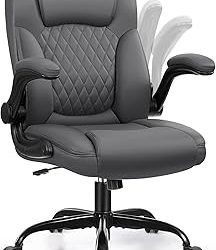
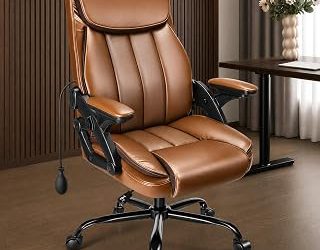
This is the pick if you want a chair that improves with age rather than degrading — real top grain hide over an aluminum base, with a recline that stays smooth through long stretches at the desk. The brown finish is warm enough for a home office that doubles as a video-call backdrop.
TOMU Genuine Leather Executive Office Chair (Black)
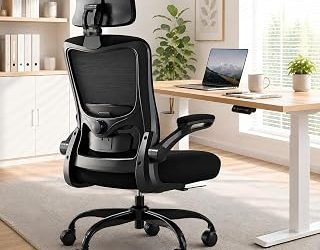
Same well-sorted platform as the brown model, dressed in a cleaner modern silhouette with an integrated headrest that actually supports the base of the skull instead of pushing your head forward. Black hides scuffs better if the chair lives in a busy room.
TOMU Executive Chair with Foot Rest (Beige)
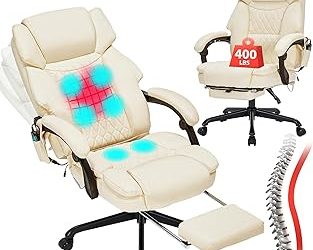
The beige version adds a retractable footrest to the top grain leather build, which turns it into a legitimate reading and thinking chair between work blocks. Light leather demands a wipe-down habit, but the payoff is a chair that doesn’t read as corporate furniture in a living space.
Big and Tall Office Chair with Foot Rest, 400 lbs
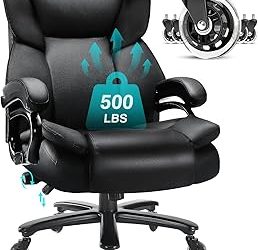
Built around a genuinely wide seat and a 400 lb frame rating, this one solves the problem most executive chairs ignore — that a standard 19-inch pan is uncomfortable for larger frames regardless of padding quality. The high back reclines far enough for a real break.
EXCEBET Big and Tall Executive Chair with Footrest
Strong value in the heavy-duty tier, with thick cushioning, defined lumbar support, and padded armrests over a 400 lb chassis. The PU leather won’t age like top grain, but the structure underneath is where the budget went, which is the right trade at this price.
Frequently Asked Questions
Is top grain leather worth the premium over PU?
For daily use, yes. PU and bonded surfaces delaminate at stress points, while top grain flexes and softens. If the chair sees under an hour a day, a good PU build is defensible.
How can I tell if a base is real aluminum?
Weight and temperature. Aluminum feels cold and noticeably heavy in hand; nylon is light and room-temperature. Listings that call it a “metal-look base” are telling you the answer.
Do I need a big-and-tall chair?
If you’re over roughly 250 lb or 6’2″, the wider seat pan and taller back matter more than any cushion upgrade. Undersized chairs concentrate load on the frame edges and fail early.
Can I service these chairs myself?
Gas cylinders and casters are standard sizes and swap out in ten minutes with a pipe wrench and a rubber mallet. Tilt mechanisms are harder, which is why anchoring quality matters at purchase.
Final Thoughts
If you want the best long-term build, the TOMU Top Grain Brown or the TOMU Black with headrest are the chairs to buy — genuine leather over aluminum is the combination that survives a decade of use. For larger frames or tighter budgets, the EXCEBET Big and Tall with footrest delivers the structural essentials without pretending to be something it isn’t.