Key takeaways
- Seat depth first: Aim for 16 to 18 inches from backrest to front edge. Sit fully back — you want two to three fingers of clearance behind your knees. Anything deeper and you’ll unconsciously slide forward, abandoning the lumbar support you paid for.
- Minimum seat height matters more than maximum: Look for a low end at or below 17 inches so your feet plant flat with thighs roughly parallel to the floor. Manufacturers love quoting the top of the range; the bottom number is the one that determines whether the chair fits you.
- Lumbar placement, not just presence: The curve should hit two to four inches above your belt line. Adjustable-height lumbar pads win here. Fixed molded backs can work if the chair has a genuinely compact frame rather than a full-size shell.
- Armrests that drop and get out of the way: Flip-up or height-adjustable arms let you set them at desk height instead of shoving your shoulders toward your ears. Flip-ups also let you pull all the way in to a fixed-height desk.
- Base diameter and caster quality: A 24 to 26 inch base is stable without being a tripping hazard, and swapping the stock nylon casters for rubber rollerblade-style wheels is a ten-minute upgrade that transforms how the chair moves on hardwood.
What's inside
If you’re under about 5’4″, the standard desk chair is working against you. Seat pans run 19 to 20 inches deep, which means the front edge digs into the back of your calves and cuts circulation before lunch. Minimum seat heights hover around 18 inches, so your feet dangle or you end up perched on the edge with your lower back unsupported. And lumbar curves? They’re molded for a torso six inches longer than yours, landing somewhere between your shoulder blades instead of the small of your back. I’ve shimmed, cut, and re-drilled enough chairs in my own shop to know that most of these problems are fixable — but it’s far cheaper to buy something built to the right dimensions in the first place.
This guide focuses on chairs with genuinely short seat depths, low minimum heights, and lumbar support that sits where a shorter spine actually needs it. I measured seat pans, checked cylinder travel, and paid attention to the assembly hardware, because a chair you can adjust with a hex key is a chair you can dial in. Below are six options worth your money, followed by what to look for and answers to the questions I get asked most.
As an Amazon Associate we earn from qualifying purchases.



🛒 Best Price Today on Amazon
Prime members get fast, free shipping on everything above, plus member-only deals. New members get a 30-day free trial — cancel anytime.
How to Choose an Ergonomic Office Chair For Short Person (2026)
- Seat depth first: Aim for 16 to 18 inches from backrest to front edge. Sit fully back — you want two to three fingers of clearance behind your knees. Anything deeper and you’ll unconsciously slide forward, abandoning the lumbar support you paid for.
- Minimum seat height matters more than maximum: Look for a low end at or below 17 inches so your feet plant flat with thighs roughly parallel to the floor. Manufacturers love quoting the top of the range; the bottom number is the one that determines whether the chair fits you.
- Lumbar placement, not just presence: The curve should hit two to four inches above your belt line. Adjustable-height lumbar pads win here. Fixed molded backs can work if the chair has a genuinely compact frame rather than a full-size shell.
- Armrests that drop and get out of the way: Flip-up or height-adjustable arms let you set them at desk height instead of shoving your shoulders toward your ears. Flip-ups also let you pull all the way in to a fixed-height desk.
- Base diameter and caster quality: A 24 to 26 inch base is stable without being a tripping hazard, and swapping the stock nylon casters for rubber rollerblade-style wheels is a ten-minute upgrade that transforms how the chair moves on hardwood.
The Best Ergonomic Office Chairs For Short People (2026) Reviewed
PU Leather Ergonomic Back Support Chair for Short People
This one nails the fundamentals: a compact seat pan that stops well short of the knees, plus a backrest scaled down so the lumbar bulge lands in the right place rather than mid-shoulder. The adjustable armrests and smooth 360-degree swivel make it a solid all-day pick, and the PU wipes clean with a damp cloth, which matters if you eat at your desk.
Upgraded PU Chair with Double-Layer Cushion and Neckrest, Grey
The double-layer cushion is the real story here — the firmer base layer keeps you from sinking and losing effective seat height, which is exactly the failure mode cheap foam has for lighter, shorter users. The neckrest sits low enough to actually contact a shorter neck, and the grey finish hides scuffs better than black.
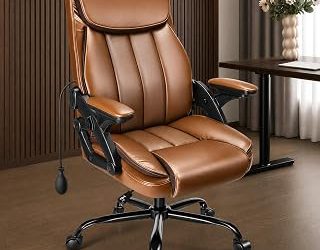
Brown Executive Swivel Chair with Lumbar Support
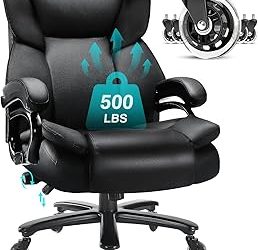
A proper executive look in a genuinely smaller footprint, with padded arms and pronounced lumbar shaping that suits anyone who wants the traditional aesthetic without swimming in the seat. Worth noting: the arms are fixed height, so measure your desk clearance before committing.
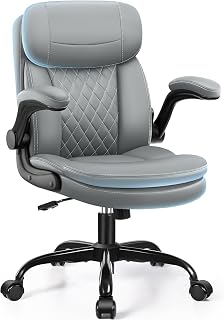
Executive Chair with Lumbar Support and Flip-up Armrest, Black
The flip-up arms are the standout feature — raise them and you can tuck fully under a fixed-height desk, which is often the difference between reaching your keyboard comfortably and hunching forward. Assembly is straightforward with the included hardware, and the lumbar block is firm enough to hold its shape after months of use.
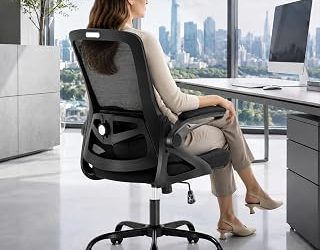
BestOffice Mid-Back Swivel Desk Chair, Dark Black
The value play in this lineup, and a genuinely good candidate for tinkering — the standard-thread gas cylinder means you can drop in a shorter aftermarket lift for well under twenty dollars if the stock minimum still sits high for you. The breathable backrest and sponge seat are honest, no-frills comfort at this price.
Frequently Asked Questions
What seat height should a 5’0″ person use?
Roughly 14.5 to 16 inches, measured from floor to the top of the compressed cushion. Most chairs bottom out near 17.5 inches, so plan on either a footrest or a replacement short gas cylinder to close the gap.
Can I shorten a seat pan that’s too deep?
Not easily, and I don’t recommend cutting the plywood base. A better fix is a firm lumbar cushion strapped to the backrest, which effectively pushes you forward and reduces functional depth by two to three inches.
Is mesh or leather better for a shorter frame?
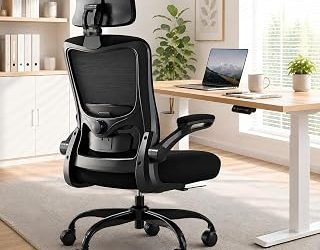
Mesh flexes to your spine’s actual curve and breathes better, which helps when a smaller body generates less airflow. PU leather gives firmer, more predictable support and cleans easily. The mesh high-back option with adjustable lumbar and a 330 lb capacity is the pick if breathability is your priority.
Do I need a footrest if the chair fits?
If your feet rest flat with thighs level, no. A footrest is a compensation for a chair that won’t go low enough, not an upgrade — solve the height problem first.
Final Thoughts
For most shorter users, the Upgraded PU Chair with Double-Layer Cushion delivers the best balance of correct dimensions and cushioning that holds up over time. If you work at a fixed-height desk, the Executive Chair with Flip-up Armrest is the smarter buy for the clearance alone, and the BestOffice Mid-Back is the one I’d point a tight budget toward — it takes aftermarket parts well and gets you 90 percent of the way there for a fraction of the cost.