Key takeaways
- Seat height range, not just max: Measure from the floor to the crease behind your knee while wearing your usual shoes. You want that number to sit in the middle of the chair’s range, not at the ceiling, so you have room to adjust. Tall users generally need 20 inches or more at the top end.
- Seat depth and pan width: Long femurs need 19 to 21 inches of usable depth with a waterfall front edge. If depth isn’t adjustable, look for a wide, thick cushion that lets you shift position rather than a narrow contoured pan that locks your hips in one spot.
- Backrest height and lumbar travel: A tall torso needs the lumbar support to slide vertically, ideally 3 inches or more. A fixed pillow strapped to the mesh will land in the wrong place and stay there. Check whether the support moves on a rail or is just Velcro’d on.
- Armrest range in every axis: 4D and 5D arms matter more at height, because your elbows sit higher relative to the seat. Look for at least 2.5 inches of vertical travel plus pivot, and flip-up arms if you need to roll under a low desk.
- Base diameter and rated capacity: A taller frame creates more leverage on the base. A 27 to 30 inch nylon or steel five-star base and a class 4 cylinder are worth prioritizing, and buying well above your actual weight buys you years of stability.
What's inside
If you’re over 6’2″, most office chairs feel like they were designed for someone else entirely. The seat pan cuts into the backs of your thighs, the lumbar curve lands somewhere near your kidneys, and the headrest tops out around your shoulder blades. I found this out the hard way after taking a tape measure to six chairs in my workshop and discovering that “high back” often means 22 inches of backrest, which is fine at 5’8″ and useless at 6’5″. Height for a tall body isn’t one number; it’s seat height, seat depth, backrest height, and armrest travel all working together.
This guide comes from actually pulling chairs apart: measuring gas cylinder stroke, weighing seat foam density by hand, checking whether the lumbar block slides on a real track or just flexes. Below are the models that hold up for long-legged, long-torsoed users, plus what to measure before you buy and which parts you can upgrade yourself if a chair is 90% right.
As an Amazon Associate we earn from qualifying purchases.


🛒 Best Price Today on Amazon
Prime members get fast, free shipping on everything above, plus member-only deals. New members get a 30-day free trial — cancel anytime.
How to Choose an Ergonomic Office Chair For Tall Person (2026)
- Seat height range, not just max: Measure from the floor to the crease behind your knee while wearing your usual shoes. You want that number to sit in the middle of the chair’s range, not at the ceiling, so you have room to adjust. Tall users generally need 20 inches or more at the top end.
- Seat depth and pan width: Long femurs need 19 to 21 inches of usable depth with a waterfall front edge. If depth isn’t adjustable, look for a wide, thick cushion that lets you shift position rather than a narrow contoured pan that locks your hips in one spot.
- Backrest height and lumbar travel: A tall torso needs the lumbar support to slide vertically, ideally 3 inches or more. A fixed pillow strapped to the mesh will land in the wrong place and stay there. Check whether the support moves on a rail or is just Velcro’d on.
- Armrest range in every axis: 4D and 5D arms matter more at height, because your elbows sit higher relative to the seat. Look for at least 2.5 inches of vertical travel plus pivot, and flip-up arms if you need to roll under a low desk.
- Base diameter and rated capacity: A taller frame creates more leverage on the base. A 27 to 30 inch nylon or steel five-star base and a class 4 cylinder are worth prioritizing, and buying well above your actual weight buys you years of stability.
The Best Ergonomic Office Chair For Tall Person (2026)s Reviewed
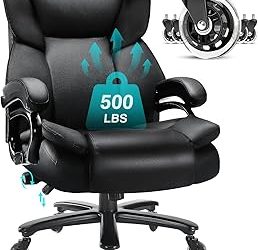
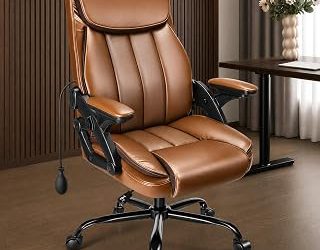
750lbs Big and Tall Mesh Office Chair with 4D Armrests
The standout here is the wide, genuinely thick seat cushion, which gives long thighs somewhere to spread out instead of perching. The 750 lb rating means the base and cylinder are overbuilt for most users, and that translates directly into less wobble when you lean back hard.
X100 Ergonomic Mesh Chair with Footrest and 5D Arms
Five axes of armrest movement plus flip-up capability makes this the most adaptable chair on the list for anyone with a long reach or a low desktop. The 3D lumbar block slides on a proper track, so you can actually park it at your L4 vertebra rather than guessing.
X100 Mesh Office Chair (First Light)
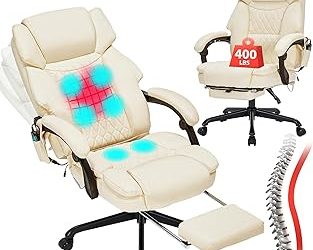
Mechanically the same platform as the standard X100 with a lighter finish that hides dust better in a bright home office. The retractable footrest is the sleeper feature for tall users, since it supports your legs during recline instead of leaving your heels hanging.
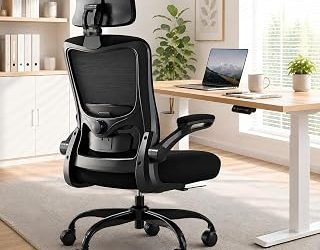
Mimoglad High Back Ergonomic Desk Chair
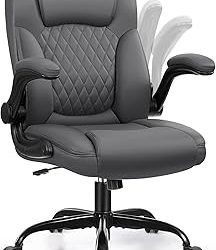
The adjustable headrest travels far enough to catch the base of a tall skull, which is rare at this price, and the five-year warranty signals real confidence in the cylinder and mechanism. Flip-up arms make it a smart pick if you play guitar or sketch at the desk.
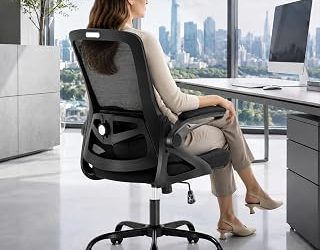
330LBS High Back Mesh Computer Chair with Flip-up Armrests
A tidy, no-drama mesh chair that hits the fundamentals: tall backrest, adjustable lumbar, breathable weave. Best suited to taller users at moderate weight who want function over bulk.
Frequently Asked Questions
How do I measure my ideal seat height?
Sit on a hard surface with feet flat and measure from the floor to the back of your knee. Subtract about an inch for cushion compression. That’s your target, and you want it mid-range on the chair’s spec.
Can I make a chair taller myself?
Yes. Swapping in a taller class 4 gas cylinder is a 20-minute job with a rubber mallet and a pipe wrench, and larger casters add another inch. Both are cheap fixes for an otherwise good chair.
Is mesh or foam better for tall users?
Mesh wins on heat and pressure distribution over long sessions. Foam wins if you need a deeper, more supportive pan under long thighs. A thick cushion with a mesh back is the practical compromise.
Does a footrest actually help?
It does when you recline, since it stops your legs dangling and taking load through your lower back. For upright typing, keep both feet on the floor instead.
Final Thoughts
If you want the most adjustability per dollar, the X100 with its 5D arms and sliding 3D lumbar is the one I’d fit to a tall frame first. Heavier users should go straight to the 750 lb big and tall model for its thick cushion and overbuilt base, while the Mimoglad is the smart choice if a properly high headrest and a five-year warranty top your list.