Key takeaways
- Minimum seat height: This is the single number that matters most. You want the seat to drop to roughly 16 inches or lower so your feet plant flat on the floor. Measure from your floor to the back of your knee while standing in the shoes you wear at your desk, then compare against the listing spec, not the maximum height.
- Seat depth: Leave two to three fingers of clearance between the seat edge and the back of your knees. Anything deeper presses into your calves and forces you to perch forward, which kills whatever lumbar support you paid for. Shorter pans in the 17 to 19 inch range fit most petite frames.
- Lumbar placement, not just presence: A fixed lumbar bump set for average torsos lands too high on a shorter back. Look for height-adjustable lumbar pads, or a backrest short enough that the natural curve falls at your beltline.
- Armrest travel and flip-up design: Elbows should rest at roughly 90 degrees without shrugging. Flip-up arms are a genuine win for small spaces since they let you tuck fully under the desk and free up the chair for cross-legged sitting.
- Base footprint and casters: A wide five-star base is stable but eats floor space. Check the diameter against your desk cutout, and consider swapping stock casters for soft rubber ones — a ten-dollar upgrade that quiets hard floors and adds about half an inch of ride height if you need it.
What's inside
Anyone under about 5’4″ knows the ritual: crank the gas lift all the way down, and your heels still dangle like you’re perched on a bar stool. Standard task chairs are built around a 5’9″ frame, which means the seat pan runs too deep, the lumbar curve lands somewhere near your shoulder blades, and the armrests hover two inches above where your elbows actually rest. The result is thigh pressure that cuts off circulation, a forward slouch you can’t correct, and a low-grade backache by 3pm that has nothing to do with your posture and everything to do with your furniture.
I’ve spent years shimming, swapping cylinders, and rebuilding chairs on my shop bench to make them fit smaller bodies, and the short version is this: geometry beats padding every time. This guide focuses on chairs with genuinely low minimum seat heights, shorter seat depths, and adjustable contact points, so you can sit with your feet flat and your spine stacked without aftermarket surgery. Below you’ll find the models worth your money, plus the specs to check before you click buy.
As an Amazon Associate we earn from qualifying purchases.




🛒 Best Price Today on Amazon
Prime members get fast, free shipping on everything above, plus member-only deals. New members get a 30-day free trial — cancel anytime.
How to Choose a/an Office Chair For Short Person (2026)
- Minimum seat height: This is the single number that matters most. You want the seat to drop to roughly 16 inches or lower so your feet plant flat on the floor. Measure from your floor to the back of your knee while standing in the shoes you wear at your desk, then compare against the listing spec, not the maximum height.
- Seat depth: Leave two to three fingers of clearance between the seat edge and the back of your knees. Anything deeper presses into your calves and forces you to perch forward, which kills whatever lumbar support you paid for. Shorter pans in the 17 to 19 inch range fit most petite frames.
- Lumbar placement, not just presence: A fixed lumbar bump set for average torsos lands too high on a shorter back. Look for height-adjustable lumbar pads, or a backrest short enough that the natural curve falls at your beltline.
- Armrest travel and flip-up design: Elbows should rest at roughly 90 degrees without shrugging. Flip-up arms are a genuine win for small spaces since they let you tuck fully under the desk and free up the chair for cross-legged sitting.
- Base footprint and casters: A wide five-star base is stable but eats floor space. Check the diameter against your desk cutout, and consider swapping stock casters for soft rubber ones — a ten-dollar upgrade that quiets hard floors and adds about half an inch of ride height if you need it.
The Best Office Chair For Short Person (2026)s Reviewed
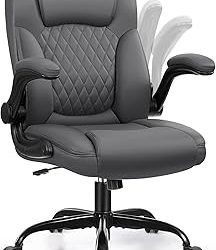
Leather Office Chair with Ergonomic Back Support, 360° Swivel
A tidy, compact build with a genuinely low starting seat height and a shallow pan that stops well short of the knee crease. The PU upholstery wipes clean in seconds, and the adjustable armrests have enough downward travel to actually reach a petite elbow.
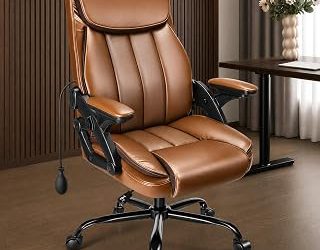
Leather Office Chair Swivel Lumbar Support, Brown
This one earns its keep on the lumbar pad, which sits low enough to catch a shorter spine rather than pushing between the shoulder blades. Padded arms and a warm brown finish make it the pick if your workspace doubles as a living room and you’d rather not stare at black mesh.
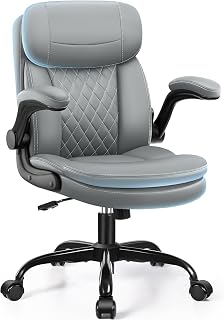
Upgraded PU Chair with Double-Layer Cushion and Neckrest, Grey
The double-layer cushion is the standout here: firm base foam under a softer top layer, which resists the pancaking that plagues cheap seats after six months. Worth noting that the neckrest sits high for very short users, so treat it as a lean-back bonus rather than a daily contact point.
Executive Office Chair with Lumbar Support & Flip-up Armrest, Black
An executive look without the oversized executive footprint, and the flip-up arms let you roll all the way under a shallow desk. The lumbar support is firm and well placed, making this a solid choice for full-day desk work in a small home office.
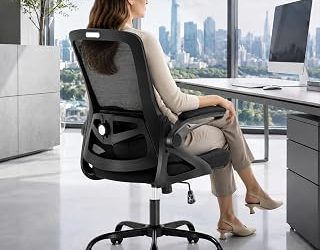
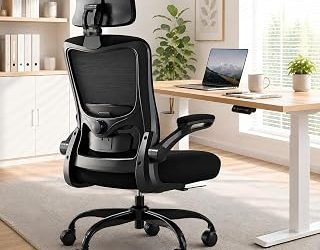
Office Chair Ergonomic Desk Chair with Swivel Mesh Back
The mesh back keeps things cool through long sessions while the adjustable lumbar lets you dial in support at the right vertical position. Flip-up arms and a modest base make it the most space-conscious option in this lineup.
Frequently Asked Questions
What seat height should I look for if I’m 5 feet tall?
Aim for a chair that adjusts down to about 15 to 16 inches. At 5’0″ your popliteal height is typically around 15 inches, and you want the seat at or slightly below that so your thighs stay parallel to the floor with feet fully planted.
Is a footrest a legitimate fix, or just a workaround?
It’s a legitimate fix when the chair otherwise fits, and a bandage when it doesn’t. A footrest solves dangling feet but does nothing about a seat pan that’s too deep or lumbar support landing in the wrong place. Get the geometry right first, then add a footrest if you still need a few inches.
Can I shorten the gas cylinder on an existing chair?
You can swap in a shorter-stroke cylinder, and it’s a straightforward job with a pipe wrench and a rubber mallet. Just confirm the cylinder taper matches your base, and expect to lose some of your height range at the top end.
Mesh or PU leather for a small chair?
Mesh breathes better and suits warm rooms or long sessions. PU leather cleans easier, feels more substantial, and generally offers thicker seat padding, which helps if you’re on the lighter side and need cushioning rather than tension support.
Final Thoughts
For most short users, the Upgraded PU Chair with Double-Layer Cushion delivers the best balance of low seat height and cushioning that holds up, while the Executive Office Chair with Flip-up Armrest is the smarter buy if you need to tuck fully under a shallow desk. If your room runs warm or you sit for eight-hour stretches, the Ergonomic Desk Chair with Swivel Mesh Back gives you breathability plus adjustable lumbar placement — the combination that makes the difference over a full workday.