Key takeaways
- Rated capacity with headroom: Pick a chair rated at least 75 to 100 pounds above your weight. Manufacturer numbers come from short static tests, not eight hours a day for years, so buying at the ceiling means living at the failure point.
- Base material and diameter: Steel or aluminum beats reinforced nylon every time on a heavy-capacity chair. Look for a footprint of 28 inches or wider — the extra span cuts leverage on the caster stems, which is where cheap bases split first.
- Seat width and cushion construction: Measure your hips seated, then add three inches of clearance per side. Pocket-spring or high-density molded foam holds its shape far longer than the cut-sheet foam used in budget seats, which bottoms out and stops supporting your pelvis.
- Gas cylinder class: Class 4 cylinders are the standard worth insisting on for heavy-duty use. If a listing won’t state the class, treat that as an answer — a sinking chair is the single most common complaint on underspecified models.
- Caster type and floor surface: Rubber or PU-coated wheels roll under load without gouging hardwood and stay quiet as bearings wear. Hard nylon casters on a heavy chair chew through floors and start squealing within months.
What's inside
If you’ve ever felt a chair flex under you, heard that hollow plastic creak from the base, or watched a seam split after four months of ordinary use, you already know the problem: most office chairs are engineered around a 250-pound assumption. Swap in a heavier user and the weak links surface fast. Nylon bases crack at the caster sockets, thin foam compresses to a pancake, and undersized gas cylinders start sinking mid-afternoon. It’s not a durability mystery so much as a spec sheet mismatch, and the marketing copy rarely tells you where the shortcuts are.
This guide comes from the perspective of someone who takes chairs apart. I care about what the base is made of, how the cylinder is rated, whether the seat pan is a real welded frame or a stamped panel with staples, and how many contact points the backrest actually has. Below you’ll find heavy-capacity chairs rated from 330 to 750 pounds, plus a breakdown of the specs that predict whether a chair lasts five years or five months, and answers to the questions that come up most when buyers start comparing.
As an Amazon Associate we earn from qualifying purchases.




🛒 Best Price Today on Amazon
Prime members get fast, free shipping on everything above, plus member-only deals. New members get a 30-day free trial — cancel anytime.
How to Choose a/an Office Chair For Obese Person (2026)
- Rated capacity with headroom: Pick a chair rated at least 75 to 100 pounds above your weight. Manufacturer numbers come from short static tests, not eight hours a day for years, so buying at the ceiling means living at the failure point.
- Base material and diameter: Steel or aluminum beats reinforced nylon every time on a heavy-capacity chair. Look for a footprint of 28 inches or wider — the extra span cuts leverage on the caster stems, which is where cheap bases split first.
- Seat width and cushion construction: Measure your hips seated, then add three inches of clearance per side. Pocket-spring or high-density molded foam holds its shape far longer than the cut-sheet foam used in budget seats, which bottoms out and stops supporting your pelvis.
- Gas cylinder class: Class 4 cylinders are the standard worth insisting on for heavy-duty use. If a listing won’t state the class, treat that as an answer — a sinking chair is the single most common complaint on underspecified models.
- Caster type and floor surface: Rubber or PU-coated wheels roll under load without gouging hardwood and stay quiet as bearings wear. Hard nylon casters on a heavy chair chew through floors and start squealing within months.
The Best Office Chair For Obese Person (2026)s Reviewed
750lbs Big and Tall Mesh Desk Chair
The highest capacity here, and it earns the number with a wide, thick seat cushion and a frame built for genuine all-day sessions rather than occasional use. The 4D armrests and adjustable lumbar support give you enough fitting range to dial in posture instead of adapting to the chair.
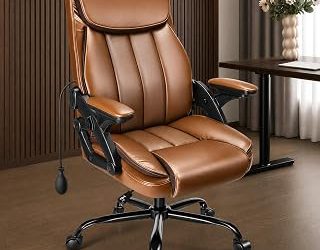
600LBS Heavy Duty Executive Chair with 5D Flip Arms
A pocket-spring cushion is the standout spec — it behaves like good mattress construction, distributing load across independent coils rather than compressing as one mass. Dual rubber wheels spread weight across more contact points, and the 5D flip arms clear a desk edge cleanly when you need to pull in close.
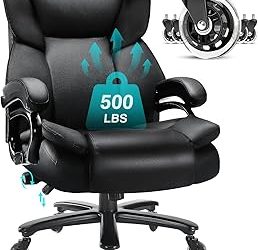
500lbs Big and Tall Executive Desk Chair
The sensible middle of the range: high back, adjustable lumbar support, pocket-spring seat, and quiet rubber casters, without the bulk of a 750-pound frame. If you’re under about 375 pounds and want margin without dominating the room, this is the proportion that fits most home offices.
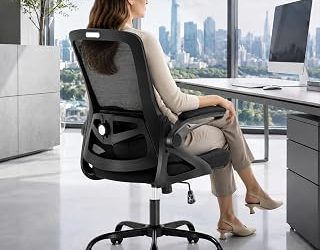
X100 Ergonomic Mesh Chair with Footrest
Breathable mesh plus 3D lumbar support makes this the pick for warm rooms or long stretches where a padded back turns into a heat trap. The retractable footrest is genuinely useful for reclined reading breaks, though I’d treat it as a bonus rather than a load-bearing feature.
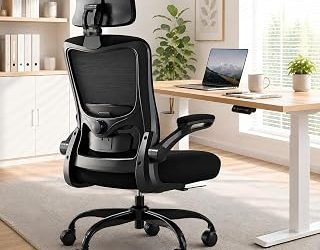
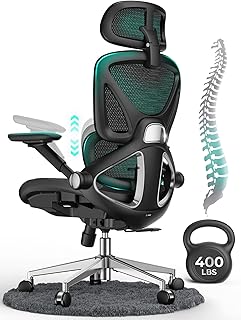
Ergonomic Mesh Chair 400lbs with 3D Headrest
Strong adjustability for the capacity class: 4D flip-up arms, a three-level tilt backrest, and a headrest that moves in three planes so taller users can actually reach it. PU wheels keep it quiet and floor-friendly on hardwood or tile.
Frequently Asked Questions
How much weight capacity do I actually need?
Add roughly 75 to 100 pounds to your body weight. Ratings reflect controlled static testing, not repeated dynamic loading from sitting down, leaning back, and rolling across a floor thousands of times.
Why do office chairs sink after a few months?
The gas cylinder seal fails under sustained load. Class 4 cylinders resist this far better than the Class 3 units in standard chairs, and cylinders are usually a cheap, straightforward DIY replacement if yours goes.
Is mesh or padded upholstery better for heavier users?
Mesh backs breathe well and suit warm rooms, but the seat should be foam or pocket spring regardless. Mesh seat pans concentrate pressure along the frame edges under higher loads.
Can I reinforce a chair I already own?
Swapping a nylon base for a steel one and upgrading the cylinder solves most weak points for well under the cost of a new chair. What you can’t fix is an undersized seat pan or a backrest frame that’s already flexing.
Final Thoughts
For maximum margin and all-day comfort, the 750lbs Big and Tall mesh chair is the one I’d build a workday around. The 600LBS Heavy Duty Executive with its pocket-spring cushion and dual rubber wheels is the best-balanced pick for most buyers, and the X100 Ergonomic Mesh with footrest is the smart call if you run warm and want airflow over padding.