Key takeaways
- Tooth count: For trim, 80 to 120 teeth is the useful range. More teeth generally produce a smoother crosscut, although an ultra-high-count blade cuts more slowly and benefits from a controlled feed.
- Tooth geometry: Alternate-top-bevel (ATB) teeth are versatile for wood and plywood. Triple-chip-grind (TCG) designs are especially useful when you also cut laminate, plastic, aluminum, or composite materials.
- Blade diameter: Match the blade diameter to your saw’s specification. A 10-inch saw needs a 10-inch blade, while a 12-inch model typically uses a 12-inch blade; never substitute based only on arbor size.
- Arbor fit: Check the arbor hole before ordering. Many 10-inch blades use a 5/8-inch arbor, while several 12-inch options use a 1-inch arbor, and the blade must seat securely on the saw.
- Cut quality: A sharp blade matters, but so do blade alignment, workpiece support, and a steady plunge. Even an excellent trim blade can chip material if the stock vibrates or the cut is rushed.
Trim work exposes every weakness in a saw blade. A blade that is acceptable for framing can leave chipped veneer, fuzzy crosscuts, or a ragged edge on painted molding. The right trim blade needs a high tooth count, stable carbide teeth, and a kerf that cuts cleanly without making your miter saw labor.
This guide focuses on fine-finish blades for common 10-inch and 12-inch miter saws. I’m looking at tooth geometry, material compatibility, arbor fit, and the kind of edge you can realistically expect in a home workshop—especially when cutting baseboard, casing, furniture parts, and prefinished stock.
Our top picks



As an Amazon Associate we earn from qualifying purchases at no extra cost to you. Ratings are shown as listed on Amazon.
🛒 Best Price Today on Amazon
Prime members get fast, free shipping on everything above, plus member-only deals. New members get a 30-day free trial — cancel anytime.
How to Choose a Miter Saw Blade For Trim (2026)
- Tooth count: For trim, 80 to 120 teeth is the useful range. More teeth generally produce a smoother crosscut, although an ultra-high-count blade cuts more slowly and benefits from a controlled feed.
- Tooth geometry: Alternate-top-bevel (ATB) teeth are versatile for wood and plywood. Triple-chip-grind (TCG) designs are especially useful when you also cut laminate, plastic, aluminum, or composite materials.
- Blade diameter: Match the blade diameter to your saw’s specification. A 10-inch saw needs a 10-inch blade, while a 12-inch model typically uses a 12-inch blade; never substitute based only on arbor size.
- Arbor fit: Check the arbor hole before ordering. Many 10-inch blades use a 5/8-inch arbor, while several 12-inch options use a 1-inch arbor, and the blade must seat securely on the saw.
- Cut quality: A sharp blade matters, but so do blade alignment, workpiece support, and a steady plunge. Even an excellent trim blade can chip material if the stock vibrates or the cut is rushed.
The Best Miter Saw Blade For Trim (2026)s Reviewed
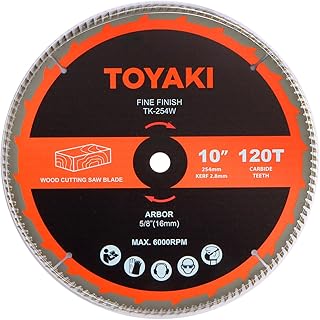
10-Inch 120-Tooth Fine-Finish Blade
This 120-tooth 10-inch blade is aimed squarely at delicate crosscuts in molding, hardwood, plywood, and furniture components. Its high tooth count should leave a notably clean edge when paired with a properly aligned saw, making it a strong choice for visible trim and painted parts.
WEN BL1080 10-Inch 80-Tooth Blade
The WEN BL1080 is a practical all-around trim blade for makers who want a fine finish without moving to an extremely slow 100- or 120-tooth pattern. Its carbide-tipped teeth make it suitable for repeated wood crosscuts, and the 80-tooth layout offers a useful balance of smoothness, feed speed, and value.
10-Inch 120-Tooth TCG Aluminum-Working Blade
This 120-tooth blade uses a TCG-style design intended for ultra-fine work and broader material compatibility. It is an appealing option for a mixed-material shop where trim projects occasionally include aluminum, plastic, or composite pieces, though careful setup and a controlled feed remain essential.
DEWALT DWA112100 12-Inch 100-Tooth Blade
For a 12-inch miter saw, the DEWALT DWA112100 is a dependable fine-finish choice with 100 carbide teeth and an ultra-sharp cutting profile. It suits baseboard, casing, hardwood, and other finish work where a clean crosscut matters, provided your saw accepts its 1-inch arbor configuration.
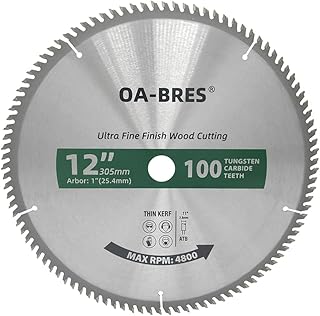
12-Inch 100-Tooth ATB TCT Blade
This 12-inch ATB TCT blade is built for smooth wood cutting on compatible miter and table saws. The 100-tooth arrangement is well matched to trim and furniture work, while the larger diameter gives 12-inch saw owners a high-tooth-count option for long molding and wider stock.
Frequently Asked Questions
Is a higher tooth count always better for trim?
Not always. A 100- or 120-tooth blade can produce a cleaner edge, but it cuts more slowly and may generate extra heat if pushed aggressively. An 80-tooth blade is often the better everyday choice for general molding and furniture work.
Can I use a trim blade to cut plastic or composite material?
Some can, but check the manufacturer’s intended materials first. TCG blades are generally better suited to mixed materials than standard wood-focused ATB blades, and you should use a steady feed to avoid melting or chipping.
Why is my new blade still chipping the trim?
Check that the blade is installed in the correct direction, the workpiece is firmly supported, and the saw is cutting square. A sacrificial backer, painter’s tape over the cut line, and a controlled plunge can also reduce breakout on fragile molding.
Should I choose a 10-inch or 12-inch blade?
Choose the diameter specified by your saw rather than selecting purely by finish quality. A 10-inch blade is common on compact miter saws, while a 12-inch blade offers greater cutting capacity on larger machines but must match the saw’s arbor and guard clearance.
Final Thoughts
For the smoothest visible trim cuts, the 10-Inch 120-Tooth Fine-Finish Blade and the DEWALT DWA112100 are compelling high-tooth-count picks for their respective saw sizes. The WEN BL1080 is the sensible everyday option, while the TCG aluminum-working blade stands out for a workshop that cuts more than wood.