A miter saw is only as accurate as the surface guiding the workpiece. Factory tables are often short, fences can be too low for tall stock, and a small shift at the stop can turn a batch of cabinet parts into a pile of “almost right” cuts. A dependable fence system adds length, support, and repeatability where the saw needs it most.
This guide looks at the best miter saw fence systems for a practical home workshop, with attention to installation, adjustability, stop design, measuring scales, and compatibility with sliding saws. These picks also suit broader shop setups, including drill presses, radial arm saws, and woodworking stations.
Our top picks




As an Amazon Associate we earn from qualifying purchases at no extra cost to you.
🛒 Best Price Today on Amazon
Prime members get fast, free shipping on everything above, plus member-only deals. New members get a 30-day free trial — cancel anytime.
How to Choose a Miter Saw Fence System (2026)
- Compatibility: Check the saw’s table dimensions, mounting holes, fence height, and slide path before buying. Sliding compound saws need extra clearance behind and above the workpiece.
- Length: Longer tracks support trim, shelving, and furniture parts more securely, but they also need a bench or stand wide enough to carry them without sagging.
- Stops: A rigid flip stop is essential for repeat cuts. Look for smooth adjustment, a positive lock, and enough contact area to register narrow stock accurately.
- Measuring system: Clear tape scales save setup time, especially when they can be read from either direction. Confirm that the tape can be repositioned or replaced if your layout requires it.
- Zero clearance: A close-fitting auxiliary fence helps support small pieces and reduces tear-out, but it must leave the blade and sliding mechanism completely unobstructed.
The Best Miter Saw Fence System (2026)s Reviewed
O’SKOOL 68-Inch Expandable Fence System
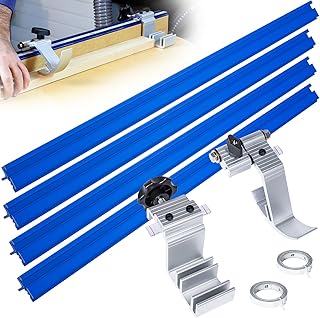
The O’SKOOL RTS024 is a strong all-around choice for a growing furniture shop. Its 68-inch expandable aluminum track provides generous support, while the adjustable flip stop and dual-direction tape make it practical for both left- and right-handed layouts. The design also adapts well to radial arm saws, drill presses, and custom woodworking stations.
POWERTEC 71742 Miter Saw Fence
POWERTEC’s 71742 is aimed at makers who want a flexible T-track-based setup rather than a fixed, one-purpose fence. The included stop kit, tape measures, and fence cap give you the pieces needed for repeatable cuts, and the modular track format makes future shop upgrades less awkward.
Aluminum Zero-Clearance Fence for Dewalt Sliding Saws
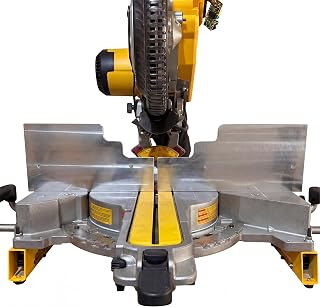
This aluminum zero-clearance fence is a smart fit for compatible Dewalt sliding compound miter saws, including the DHS780, DHS790, DWS779, DWS782, and DWS780. Its stairstep cutout preserves full sliding function while bringing the support closer to the blade, which is especially useful when cutting narrow trim or small furniture components.
Kreg KMS8000 Precision Trak & Stops Kit
Kreg’s KMS8000 emphasizes repeatability and a polished installation. The track guide and stops are well suited to makers who frequently cut batches of identical parts, and the system’s precision-focused layout is a good match for cabinetry, face frames, and other work where consistency matters more than maximum fence length.
KMS8000 Precision Trak and Stops Measuring System
This similarly named KMS8000 track-and-stops system is worth considering when you need a measuring setup that can serve a miter saw, radial arm saw, or drill press table. Its appeal is the combination of a guided track, adjustable stops, and a repeatable measuring reference—provided the listing’s hardware and dimensions match your intended installation.
Frequently Asked Questions
Do I need a fence system for a miter saw?
Not every user needs one, but a longer auxiliary fence and reliable stop make a major difference when cutting furniture parts, trim, or repeated lengths. They improve support and workflow even when the saw itself is already accurate.
Can these fence systems fit any miter saw?
No. Mounting patterns, table width, fence height, and rear clearance vary considerably. Measure the saw and compare those dimensions with the manufacturer’s instructions before drilling or attaching a track.
Is a zero-clearance fence safer?
It can better support small offcuts and reduce tear-out, but safety depends on correct installation. The fence must not contact the blade, restrict the guard, or interfere with the saw’s bevel and sliding movements.
Can I build a miter saw fence from plywood?
Absolutely. A shop-built plywood or hardwood fence can work very well, particularly when paired with aluminum T-track and a replaceable sacrificial face. Use straight material, verify it is square to the table, and recheck alignment after tightening.
Final Thoughts
For a versatile home workshop, the O’SKOOL 68-inch system is the most broadly useful starting point, while the POWERTEC 71742 suits makers who prefer modular T-track accessories. Choose the aluminum zero-clearance fence when you own a compatible Dewalt slider and regularly cut small or delicate parts; it offers focused support that a long universal fence cannot always provide.