Key takeaways
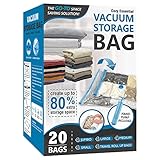
- Vacuum-sealed bags or plastic bins for off-season knitwear, noting that sealing only protects items that are already clean.
- Regular airing and brushing of wool coats before storage.
- Professional pest control for persistent problems or when moths appear in carpet and upholstery.
For most wardrobes, the best moth plan combines a pheromone trap to monitor and reduce adult males, cedar blocks or sachets for ongoing deterrence, and sealed garment bags for wool and cashmere you wear rarely; use a labelled spray only on an active problem, and treat traditional mothballs as a last resort because of their strong odor and handling cautions. Cedar alone repels but does not kill, and traps alone do not remove larvae from fabric, so each option suits a different stage of the problem.
Our top picks


As an Amazon Associate we earn from qualifying purchases at no extra cost to you.
What You Are Actually Fighting
Clothing damage is caused mainly by the larvae of webbing clothes moths and casemaking clothes moths, which feed on wool, cashmere, silk, fur and feathers, particularly on fabric with food, sweat or skin oils. Adult moths do not eat fabric. That is why pest-control writers stress that traps catch adult males and help reveal activity, while cleaning and storage are what stop larvae. Holes in knitwear, small silky tubes or cases on fabric, and tiny pale moths in a dark wardrobe are the usual signs.
At a Glance: Moth Control Options
| Option | Best for | What reviewers and makers state | Limits |
|---|---|---|---|
| Cedar blocks and hangers (Homode, Household Essentials) | Prevention in a clean wardrobe | Bob Vila lists Homode as a 40-piece set and Household Essentials as a 96-piece pack; scent can be refreshed by light sanding | Repels but does not kill; weaker in open spaces |
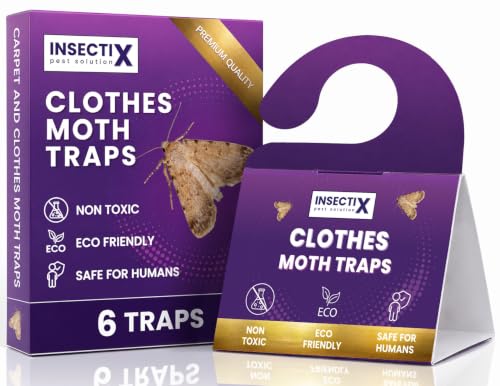
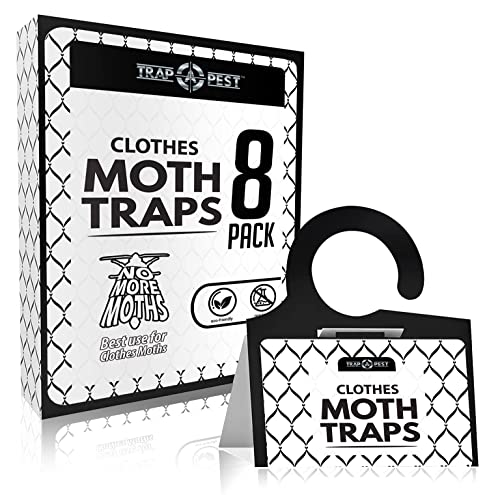
| Pheromone traps (MaxGuard, MothPrevention, Safer Brand Clothes Moth Alert) | Monitoring and reducing adult males | MothPrevention is described as odorless, refillable, about three months per trap; PestsGuide names MaxGuard as best overall | Catch adult males only; larvae and eggs remain |
| Lavender or cedar-lavender sachets | Drawers and small shelves | Retail sets list packs rated for around two years | Scent fades; mild deterrent |
| Cedar-scented spray (Reefer-Galler SLA) | Treating shelves and corners during an outbreak | Bob Vila reports it is water-based and targets adults, eggs and larvae, but the label warns against inhalation or skin contact | Needs ventilation and care; follow the label |
| Cedarwood surface spray (Wondercide) | Gentle, plant-based surface treatment | Marketed as safe around pets and children when used as directed | Strong scent; not a trap |
| Mothballs (Enoz) | Sealed seasonal storage | Described as acting on all life stages when sealed | Strong odor; handling and ventilation cautions |
| Cotton garment bags with cedar | Long-term storage of wool and good coats | Provide a physical barrier | Clothes must go in clean |
Cedar: Pleasant, Natural and Limited
Cedar blocks and hangers release aromatic oil that moths dislike. Bob Vila picks the Homode set for its range of shapes, including hanger rings and balls, while Household Essentials supplies a large mixed pack. Reviewers note the scent weakens over time and recommend lightly sanding the surface to bring it back. Several outlets point out that cedar works better inside a sealed bag or box than in an open wardrobe, and that it will not clear an active infestation. Use it as the ongoing layer after you have cleaned.
Pheromone Traps: The Best Early Warning
These glue-board traps release a scent that draws in male clothes moths. Because males are trapped, fewer matings occur, and the catch tells you whether moths are present and where. PestsGuide recommends placing them inside wardrobes where wool, cashmere, silk or fur is stored and toward the back, where moths are less disturbed. Bob Vila lists MothPrevention traps as odorless and refillable with about three months of life per trap. The limitation is clear: traps do not repair holes, remove larvae or clear eggs from cracks, so keep cleaning on the schedule.
If the traps catch nothing for several months, that is useful information. If they keep catching moths, search seams, the back panel, old woollens, a shed fur or a stray bird nest in the roof void; the source is often an undisturbed item.
Sprays and Mothballs: Use With Care
Sprays can reach cracks and shelves. Read the label before use: the maker’s instructions control where you may apply it, how long to ventilate and when clothes can go back. Keep pets and children out of the area while treating, and do not spray directly on fabrics unless the label says you may. Traditional mothballs, such as Enoz, are described as active on every life stage but are meant for sealed containers; they have a pungent odor and should not be left loose in a living area. If you are pregnant, have respiratory issues or have young children or pets at home, ask a pharmacist or your pest-control professional about alternatives. For a serious infestation, contact a licensed pest-control provider.
How to Set Up a Wardrobe Defense
- Empty the wardrobe, vacuum the floor, corners, seams and the back panel, and empty the vacuum outdoors.
- Wash or dry-clean vulnerable items according to their care labels. Some garments can be frozen in a sealed bag for a few days; follow the garment’s care instructions.
- Wipe surfaces with a mild cleaner and let them dry fully.
- Place one pheromone trap per wardrobe at eye level or on a shelf, away from strong odors.
- Hang cedar blocks or hangers and refresh them by sanding as the maker advises.
- Store rarely worn wool and cashmere in tightly sealed cotton garment bags or boxes with cedar.
- Check traps monthly and replace them when the maker states.
Pick X If You Want Y
| Pick this | If you want |
|---|---|
| Pheromone trap | To confirm activity and reduce adult males |
| Cedar blocks or hangers | Ongoing natural deterrence in a clean wardrobe |
| Lavender or cedar sachets | Scent in drawers and shoe shelves |
| Cotton garment bags | Protecting wool coats and suits long term |
| Labelled spray | To treat surfaces after an outbreak |
| Mothballs in sealed box | Seasonal storage and you accept the odor |
Budget Tiers
Budget: cedar blocks, sachets and a basic trap pack. Mid-range: refillable pheromone traps and cotton garment bags with cedar. Premium: a professional inspection and treatment for repeat infestations, plus sealed storage furniture for valuable knitwear.
Alternatives and Extras
- Vacuum-sealed bags or plastic bins for off-season knitwear, noting that sealing only protects items that are already clean.
- Regular airing and brushing of wool coats before storage.
- Professional pest control for persistent problems or when moths appear in carpet and upholstery.
Natural Versus Chemical: What to Expect
Natural options such as cedar, lavender and plant-oil sprays are popular because they are pleasant and widely sold. Roundups agree they are best at prevention, not eradication. Chemical products can act on all life stages, but they require stricter handling: ventilation, keeping the item away from skin contact, and following the label for how long treated spaces must air out. Whichever route you choose, read the label and manual, store products out of reach of children and pets, and do not mix products.
Where to Put Products in a Wardrobe
- Traps: Hang or stand them inside at eye level, away from strong competing scents and out of direct heat.
- Cedar blocks: Place on shelves and between folded knitwear, and hang cedar rings on rails. Do not let raw cedar rest directly on delicate silk if it could stain.
- Sachets: Tuck them into drawers and shoes.
- Garment bags: Zip fully, with no gaps at the hanger opening.
Seasonal Habits That Help
Moths prefer undisturbed, dark places, so use the wardrobe. Rotate clothes regularly, shake and brush wool before storing, and wash items that have been worn even briefly because body oils and food residue attract larvae. Keep an eye on carpets, under beds and any pet bedding, which can host a population that moves into your wardrobe. Reduce humidity if the room is damp. Fix any wardrobe back panels that leave gaps.
When to Call a Professional
If traps keep catching moths after several months of cleaning, if you see damage in carpet or upholstery as well as clothes, or if you cannot find the source, a licensed pest-control professional can inspect the home and propose a treatment suited to the building.
Reading Labels and Claims
Product pages often use words such as natural, safe and long-lasting. Treat these as the maker’s descriptions and compare them with the stated details: how many pieces are in the pack, how long a trap is said to last, whether the product is a repellent or an insecticide, and what the precautions say. A set with many cedar pieces gives wider coverage across rails and shelves, but a trap pack with a few boards may be more useful for monitoring. Look for clear instructions on replacement timing, because any scent-based product weakens over time.
Frequently Asked Questions
Does cedar really kill moths?
Reviewers describe cedar as a repellent rather than a killer, and it will not eliminate larvae already in fabric. It works best in enclosed spaces and as prevention after cleaning.
How many pheromone traps do I need?
Makers vary. A common approach is one trap per wardrobe or storage area, placed inside. Larger spaces or several wardrobes can use more. Follow the pack instructions.
Are mothballs safe to use around pets and children?
They are pesticides with a strong vapor, so use only as labelled, in sealed containers, out of reach of children and pets. Consider alternatives and contact a vet, doctor or poison center if there is any ingestion or exposure concern.
How long do traps last?
Some makers state about three months per trap, while others do not specify. Replace them when the lure weakens or the board is full.
Can I reuse clothes after a moth problem?
Items that can be laundered or dry-cleaned according to their labels can usually be treated and returned. Damaged garments should be repaired or discarded, and anything infested should be isolated before it goes back.
Do lavender sachets work?
They may deter adults mildly, but reviewers rarely treat them as stand-alone solutions. Use them with cleaning, traps and sealed storage.
More from Amazon
Programs that pair well with the guide above. Offers and eligibility are set by Amazon and may change.
A free business account with business pricing and bulk-buying tools for work, shop or home office.
Create a business accountFree shipping on eligible items, Prime Video and more. Eligible new members can start with a free trial.
Start a Prime free trialAudiobooks and podcasts to listen to on the go. Eligible new members can start with a free trial.
Try Audible freeAd-free music streaming. Eligible new subscribers can start with a free trial.
Try Music Unlimited freeAs an Amazon Associate we earn from qualifying purchases.